
Immigration 'Corridor Gate' Service Speeds Up Hajj Arrivals at Soetta
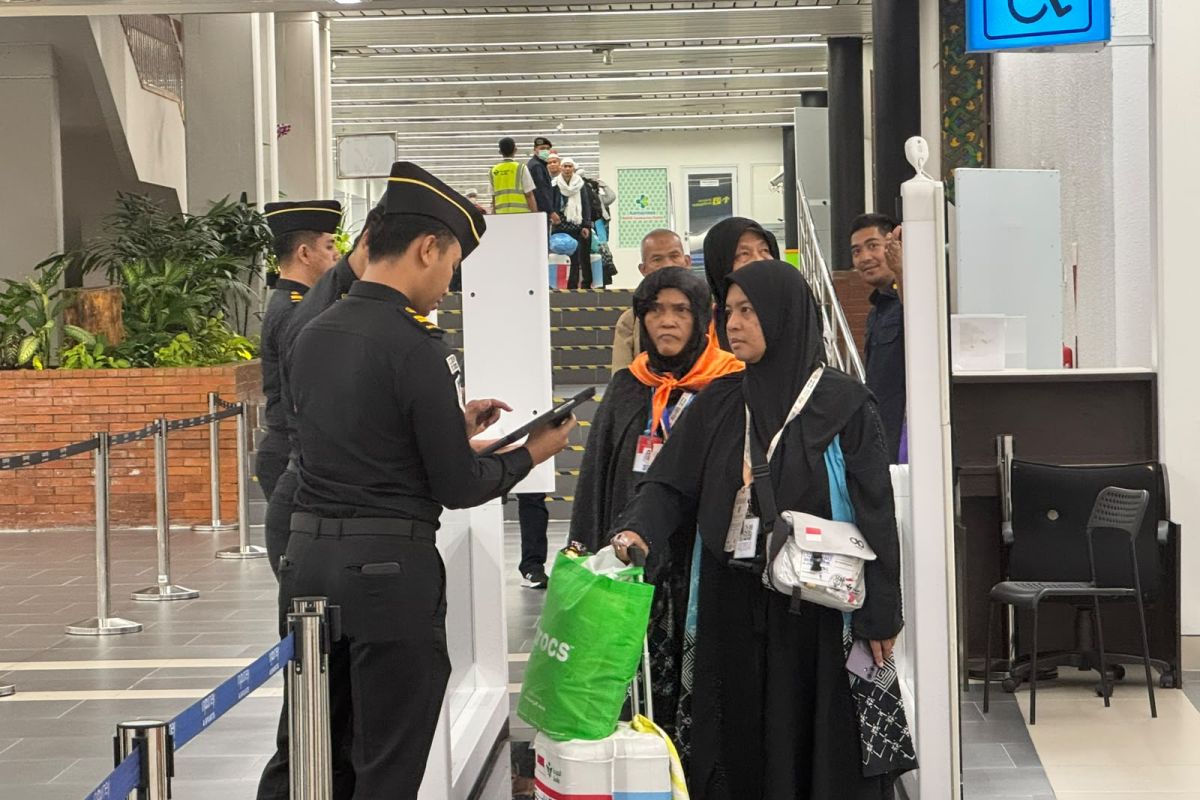
The Class I Special TPI Immigration Office at Soekarno-Hatta Airport in Tangerang, Banten, has stated that the implementation of a service innovation known as the corridor gate—an automated system—is helping to speed up the arrival process for Hajj pilgrims at the airport. Head of the Class I Special TPI Immigration Office at Soekarno-Hatta Airport, Galih P. Kartika Perdhana, said on Thursday that the corridor gate, a seamless immigration inspection system, has proven successful in accelerating service time by up to 90 per cent for Hajj debarkations returning to the homeland. He noted that the success rate for using the corridor gate currently stands at around 90 per cent, while the remaining 10 per cent utilise manual inspection at immigration counters due to technical obstacles encountered during biometric data capture. According to him, the presence of this service acceleration technology is intended to provide comfort for pilgrims who have just completed a long journey from Saudi Arabia to Indonesia. He added that those who are not successfully processed are immediately directed to manual counters located near the corridor gate so as not to disrupt the queue of other pilgrims. He explained that this innovation is one of the state’s efforts to deliver the best service to the public, from departure facilitated by Makkah Route cooperation through to the return of Hajj pilgrims arriving at Soekarno-Hatta Airport. Meanwhile, Head of the Immigration Inspection Division at Soekarno-Hatta Airport, Jerry Prima, added that up to the tenth day of debarkation, the system was used to serve the arrival of Group 25, which totalled around 441 pilgrims. He said most issues occurred because the user’s facial position or angle had not been optimally captured by the camera while passing through the inspection corridor. Compared to the auto gates currently in use at international airports, the corridor gate is considered much faster. If an auto gate has a maximum service standard of 15 seconds per person, the seamless system takes only about three to five seconds. This means the process can be more than three times faster than the auto gate, which greatly helps in reducing queues, especially during the arrival of large numbers of Hajj pilgrims. Previously, General Manager of Soekarno-Hatta International Airport, Heru Karyadi, disclosed that a total of 34,853 Hajj pilgrims will return to the homeland from 1 to 30 June 2026 through Indonesia’s largest airport. The total of 34,853 returning pilgrims will commence with two debarkations, namely Pondok Gede and Bekasi, totalling 836 people. Overall, the Hajj repatriation phase via Soekarno-Hatta International Airport will serve the arrival of 84 flight groups.