
Immigration Chief: Tightened Visa-Free Policy and Selective Approach Do Not Deter Tourists
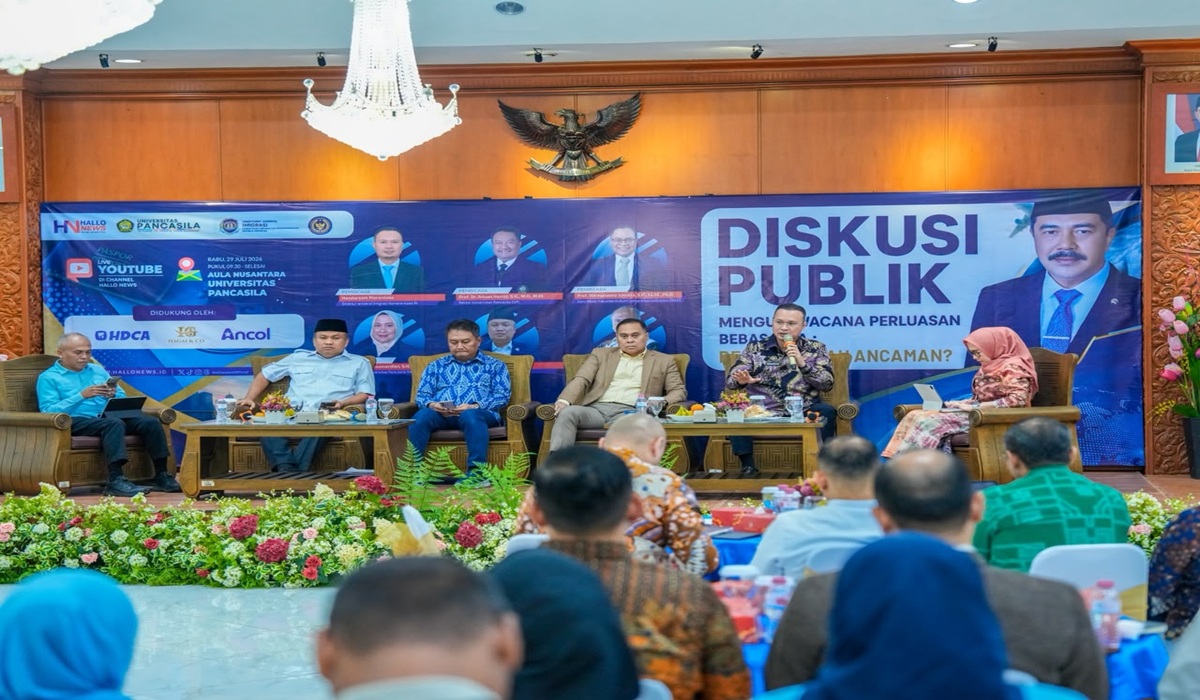
Director General of Immigration, Hendarsam Marantoko, has stated that the tightening of the Visa-Free Visit (BVK) policy and the implementation of a selective policy are not obstacles for foreign tourists wishing to come to Indonesia. The statement was made during a public discussion at the Nusantara Hall of Pancasila University on Wednesday (29/07/2026), as part of efforts to explain the direction of immigration policy which balances security, sovereignty, and economic growth.
“Immigration is the gatekeeper of the country, with functions in service, security supervision, law enforcement, and as a facilitator of development in the tourism and investment sectors. We have two faces: firm in guarding sovereignty and friendly in supporting investment and tourism. We continuously maintain this balance,” he said.
He emphasised that the selective policy is a strategic instrument to ensure that only foreign nationals who provide benefits to Indonesia are allowed to enter and conduct activities. This policy is not intended to restrict, but rather to improve the quality of tourists and maintain national stability. “We are not anti-foreign tourists. In fact, we want to bring in quality tourists who contribute to the economy and respect the nation’s values,” he asserted.
Regarding the BVK policy, the Director General explained that Indonesia previously granted visa-free access to around 190 countries in 2019. However, following the Covid-19 pandemic, the policy was evaluated and is now applied more selectively to 20 countries, considering the principles of reciprocity, diplomatic relations, and security and order risks.
Despite the reduction in the number of countries receiving visa-free access, data indicates that the policy has not hindered foreign tourist visits. “In the period from 2019 to 2024, the number of foreign arrivals actually increased by about 14 per cent. This shows that visa policy is not the main inhibiting factor,” he explained. He added that the relatively affordable Visa on Arrival (VoA) fee is also not considered a significant obstacle for tourists.
As part of its support for economic development, the Immigration department has also issued policies such as the golden visa, which has successfully attracted hundreds of quality foreign nationals with a foreign exchange contribution reaching Rp52.1 trillion. This demonstrates that a selective immigration policy can go hand in hand with increased investment and Indonesia’s global appeal.
Other panellists enriched the discussion by stressing the importance of balancing economic interests with national sovereignty. Professor Hikmahanto Juwana, a legal expert from the University of Indonesia, stated that the BVK policy should not be solely oriented towards increasing foreign exchange, but must also consider the quality and social impact of the presence of foreign nationals, including the principle of reciprocity and economic indicators in determining recipient countries.
Meanwhile, the Rector of Pancasila University, Prof. Dr. Adnan Hamid, highlighted the potential misuse of the BVK as a mode for illegal work by foreign nationals, which has implications for the protection of domestic workers, and urged stronger law enforcement against such violations. From the legislative side, Deputy Chairman of Commission XIII of the Indonesian House of Representatives, Sugiat Santoso, underscored the need for a comprehensive evaluation of the visa-free policy, including assessing its effectiveness on foreign exchange contributions and considering other factors such as the tourism ecosystem, culture, and destination attractiveness as the main determinants of foreign tourist visits.
Hendarsam concluded by affirming that all immigration policies are based on national interest. “Sovereignty is non-negotiable. However, at the same time, we ensure that Indonesia remains open to the world, especially to tourists and investors who provide real benefits to the nation,” he said.