
Immigration Allocates New Autogate Units for Multiple Border Points
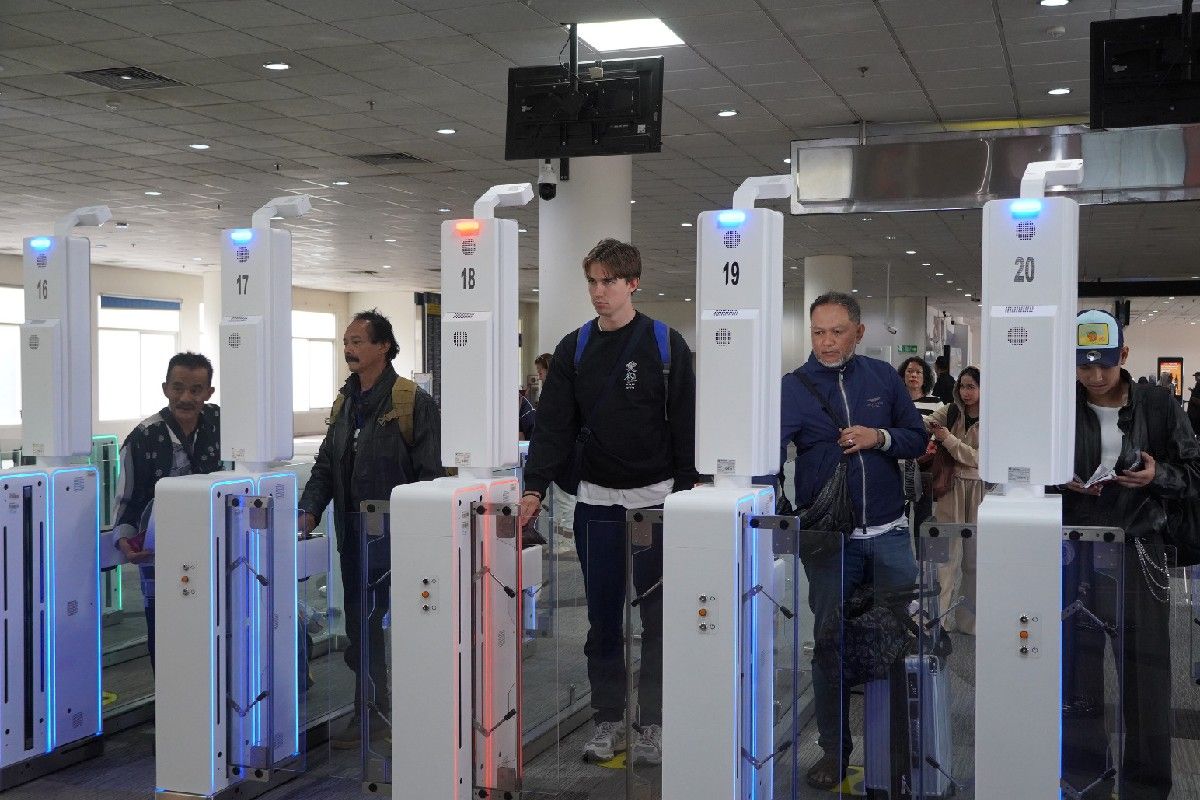
The Directorate General of Immigration under the Ministry of Immigration and Correctional Services has allocated funds for the installation of new autogate units, or automated crossing systems, at several locations for the year 2026.
To date, Indonesian Immigration has been operating 306 autogate units spread across 11 immigration checkpoints (TPI), comprising 288 units at air checkpoints and 18 units at sea checkpoints.
“Through the plan to add new devices, it is projected that we will have a total of 403 autogate units spread across 28 air, sea, and land checkpoints throughout Indonesia by this year,” said Director General of Immigration Hendarsam Marantoko, as confirmed in Jakarta on Saturday.
He explained that the installation of new autogates will be carried out in several stages. The first stage involves the installation of 10 units at Ahmad Yani Airport in Semarang.
Subsequently, the second stage will focus on digitalisation at Integrated Border Posts (PLBN), with new autogates to be installed at the Skouw Border Post (4 units), Motaain Border Post (4 units), and Entikong Border Post (4 units).
Hendarsam stated that this expansion step was taken to anticipate surges in international mobility, noting that in the first quarter of 2026, total arrivals reached 3.36 million people and departures reached 3.50 million people.
“Digital immigration sovereignty must not only be centred in the major airports of Java and Bali. By placing autogates at border posts such as Motaain, Skouw, and Entikong, we are equalising security standards and service quality across the entire nation,” he said.
“This is part of the transformation of immigration checkpoint governance to protect national sovereignty while providing fair service to all citizens,” added Hendarsam.
The use of autogate facilities is intended to facilitate crossings efficiently and transparently, free from illegal levies, while providing maximum comfort for both citizens and international travellers entering Indonesian territory.
Hendarsam noted that this support for immigration service infrastructure also prevents the potential abuse of authority by officials during traffic processing at checkpoints.
Autogate technology is designed with high-level security standards that are directly integrated with prevention and interception databases, as well as Interpol.
The devices utilise facial recognition technology capable of instantly validating the authenticity of travel documents. The system will automatically reject and lock out travellers who are on blacklist lists or have criminal records.
“Public preference for automated services continues to increase. The use of autogates currently averages between 63 to 64 per cent of the total number of travellers at major checkpoints,” he said.
“The modernisation of the system is projected to maintain service stability amidst the trend of rising international passenger flows, which continue to grow consistently every year,” Hendarsam added.