
Imipas Implements Multi-Layered Oversight to Maintain Stability Amid Conflict
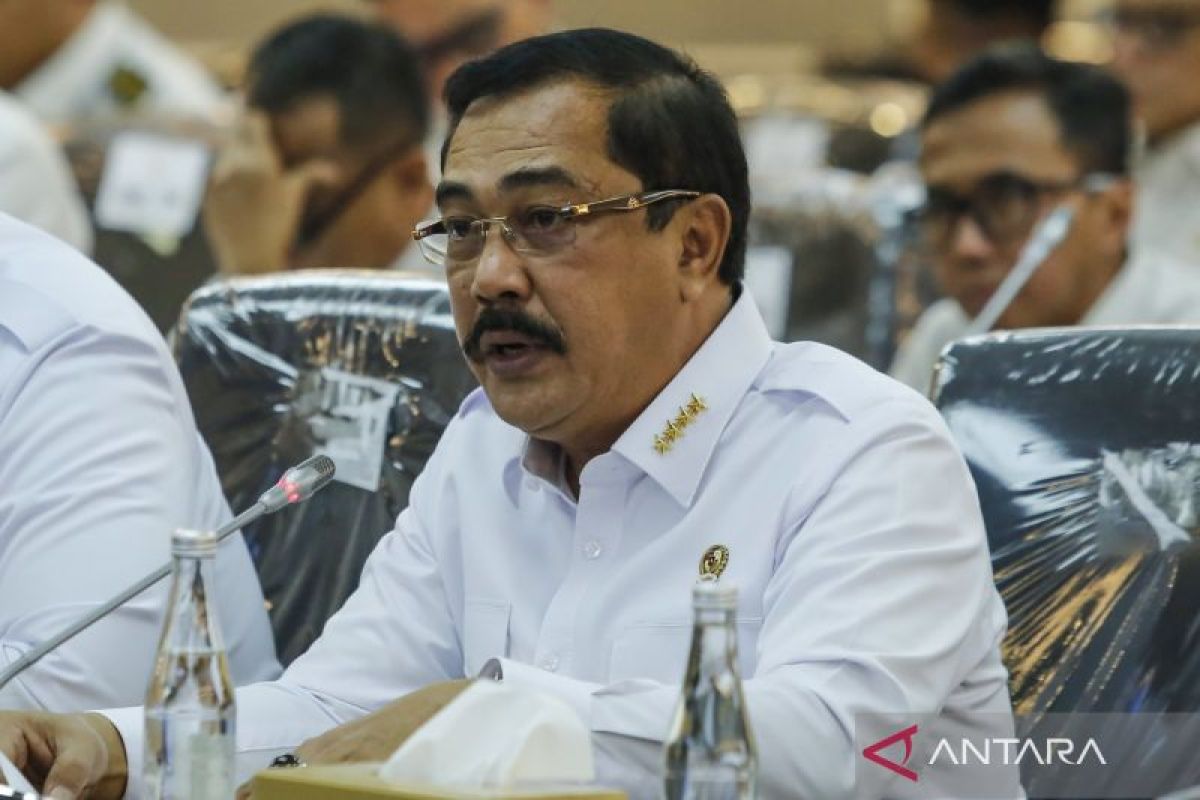
Jakarta (ANTARA) - The Ministry of Immigration and Community Affairs (Imipas) is implementing multi-layered oversight to maintain domestic immigration stability amid the escalation of the Middle East conflict.
Minister Agus Andrianto stated that this layered oversight is conducted from before arrival, during checks at immigration points, and while foreigners are present and active in Indonesian territory.
“Global geopolitical dynamics, particularly the escalation of the Middle East regional conflict, have created new pressures on immigration governance in various countries, including Indonesia,” he said during a working meeting with Commission XIII of the House of Representatives (DPR RI) at the parliamentary complex in Senayan, Jakarta, on Thursday.
Agus explained that in the pre-arrival stage, the Ministry of Imipas conducts risk-based screening through periodic evaluation of visa policies, particularly for countries and subjects with certain risk levels.
“And identity verification utilising integrated databases, such as blacklisted data, subjects of interest, and Interpol,” he added.
At the immigration checkpoint stage, officers perform identity and document verification. This process is supported by technology, such as blacklist and alert systems, passenger profiling, and autogates.
According to him, with this technology, checks can be conducted quickly, accurately, and precisely.
Meanwhile, in the post-arrival stage, the Ministry of Imipas monitors administratively and in the field through compliance monitoring of residence permits, oversight operations, cyber patrols, and strengthened cross-sectoral coordination.
In addition to domestic oversight, strengthening the readiness of Indonesian representations abroad is also crucial.
Agus explained that the Directorate General of Immigration ensures that immigration functions at Indonesian representations continue to operate optimally amid global crises through travel document services, identity verification, data access security, and coordination with local authorities.
“To ensure service continuity and protection for Indonesian citizens affected,” he said.
To date, there has been no significant decline in international crossings compared to the same period last year. Agus stated that the number of arrivals has even increased by 5.73 percent, and departures by 3.49 percent.
Nevertheless, the complexity of immigration risks has increased significantly due to air connectivity disruptions, flight route changes, international travel cancellations, and cross-border mobility uncertainties.
He detailed that as of 31 March 2026, 216 international flights from Indonesia to the Middle East region have been affected. Meanwhile, 29,025 international passengers, consisting of 24,334 foreigners and 4,691 Indonesians, have experienced departure cancellations.
“This situation indicates that although international mobility flows remain high, the level of vulnerability and travel uncertainty is also increasing, thus requiring quick, measured, and adaptive policy responses,” he stated.