
Imipas Food Security Programme Assessed as Contributing to National Development Targets
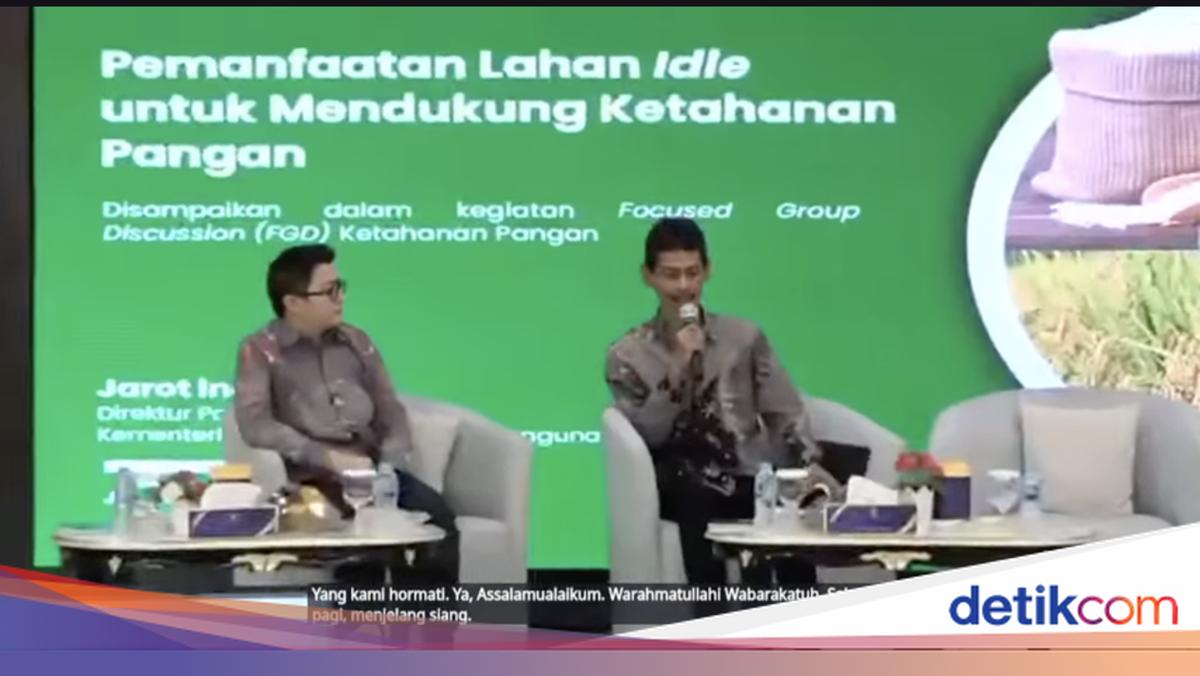
The food security programme of the Ministry of Immigration and Corrections (Imipas) is considered not only to support the rehabilitation of inmates but also to contribute to the achievement of national development targets. This contribution can be seen from its connection to a number of indicators in the National Medium-Term Development Plan (RPJMN).
“In the structure of food self-sufficiency within our RPJMN, there are several indicators that we have outlined, indicators that we must achieve by the end of 2029, from the food security index to the farmer welfare index at the very end. These are national development indicators that need to be achieved,” said Jarot Indarto, Director of Food and Agriculture at Bappenas, opening his presentation at an FGD on Food Security at the Ministry of Immigration and Corrections, broadcast on YouTube on Tuesday (23/6/2026).
“What is the connection to you? It would be very good to link what Imipas is implementing to contribute to these national indicators, how the strong link between production on each plot of land relates to the food security index, for example with the desirable dietary pattern, both availability and consumption, and so on,” he added.
He stated that the Imipas food security programme is a tangible manifestation and contribution to the national medium-term development plan. “Thus, the context will be stronger that what we are doing is in the framework of fully supporting and making a real contribution to the national medium-term development plan,” he said.
Nevertheless, Jarot provided notes for the programme to improve further. His suggestion was for Imipas to focus on human resources. “We have several notes, the essence is perhaps the grand narrative that this activity is in the context of strengthening the main duties and functions of Imipas. What can we focus on? We propose several things, firstly on human resources, related to natural resources, land is a very potential resource to be developed within Imipas,” he said.
He revealed that within this human resources point, there are also derivatives such as fulfilling food and nutrition for inmates, strengthening inmates’ skills, and also psychology. “Agricultural activities can improve the psychology of inmates, so that they will later be easier to rehabilitate, and they will be ready after they are released,” said Jarot.