
IMIP Enlists Bahodopi Residents in Sustainable Waste Management
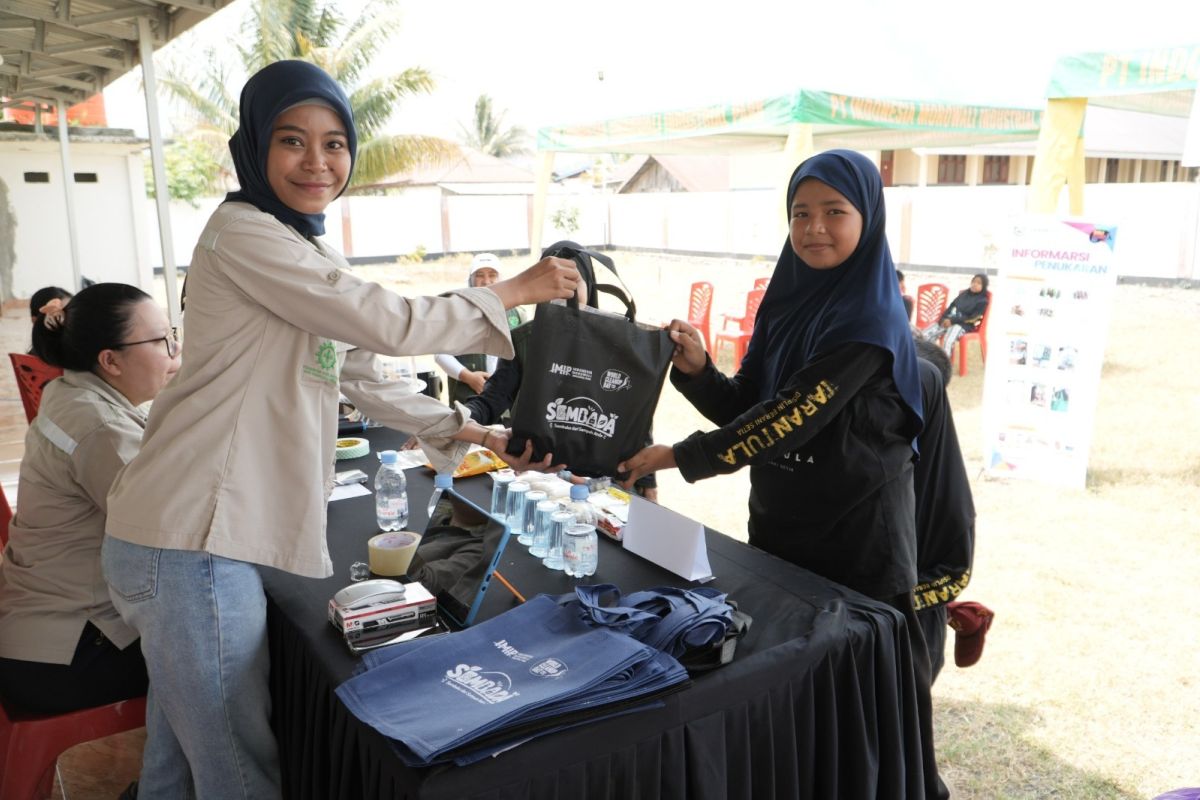
Morowali, Central Sulawesi (ANTARA) – PT Indonesia Morowali Industrial Park (IMIP) has involved residents of Bahodopi sub-district, Morowali regency, Central Sulawesi, in sustainable waste management through its Sembako dari Sampah Anda (Sembada, or Groceries from Your Waste) programme.
“Sembada is designed as a waste-management activity whose benefits can be felt directly by residents. This approach is expected to raise awareness of sorting waste at source, particularly household non-organic waste that still has resale value,” said Ferdi Eka Saputra, head of the Environmental Pillar at IMIP’s Community Development and CSR Department, in Morowali on Monday.
He explained that the programme was facilitated by IMIP’s CSR team as part of activities marking World Cleanup Day 2026, held from 17 August to 28 October 2026 in Bahodopi sub-district.
Under the theme “Act Today, Build Tomorrow’s Culture”, the programme aims to increase active community participation in establishing sustainable waste-management habits in residential areas.
Sembada ran for three days in the villages of Bahomakmur, Le-Le and Labota. Residents took part by exchanging waste for basic necessities. Residents from Dampala, Makarti Jaya and Padabaho villages also participated.
Ferdi said the collected non-organic waste included 133.69 kilogrammes of plastic bottles, 312.38 kilogrammes of cardboard, 2.86 kilogrammes of aluminium cans, 4.47 kilogrammes of other cans, and 1,615 glass bottles.
Based on the purchase prices offered by material buyers, or offtakers, the waste collected had an estimated economic value of Rp1,443,500.
Ferdi said IMIP’s CSR team worked with several community partners to process the collected waste further: the Lestari Mandiri Waste Bank in Bahomakmur; the Sidaya Waste Bank and Ara Sinergi Berdaya Community Self-Help Group in Labota; and the management team of the Le-Le village Reduce, Reuse and Recycle Waste Processing Facility (TPS3R).
“The recyclable waste collected is then distributed to the management groups in each village. It can be sold to offtakers for further processing, used as production raw material, or resold to other parties in Morowali and as far afield as Makassar and Surabaya,” he said.
He explained that waste is valued by quantity and multiplied by its sale price. For example, one glass bottle is valued at Rp500.
Each resident can exchange waste for up to three types of goods, such as one kilogramme of rice, one litre of cooking oil and ground coffee. The value of the waste brought in is calculated according to the market purchase price for the materials. The accumulated value is then exchanged for basic necessities rather than cash.
“The available groceries are subsidised by 40–50 per cent, making them more affordable than market prices,” he said.
During Sembada, the goods distributed included 64 kilogrammes of rice, 36 litres of packaged cooking oil, 48 half-kilogramme packets of sugar, 34 boxes of tea bags, 27 packets of ground coffee, 11 tins of sardines, as well as several packets of instant noodles and salt.
Ferdi said the exchange scheme gives added value to waste that might otherwise be discarded, while providing direct benefits to participating residents.
Since 2024, waste-bank activities in communities surrounding the IMIP industrial area have involved hundreds of housewives in several villages in Bahodopi sub-district, with total customer savings of more than Rp35 million.
Source: jawawa.id (https://jawawa.id/newsitem/imip-enlists-bahodopi-residents-in-sustainable-waste-management-1792407103)
Originally published by Antara (Indonesian) (https://www.antaranews.com/berita/5796677/imip-libatkan-warga-bahodopi-kelola-sampah-secara-berkelanjutan), translated from Indonesian