
Illegal wiretapping can carry a 10-year prison sentence: what the law says
Jakarta (ANTARA) — Wiretapping is one method law-enforcement officials can use to uncover crimes. However, it cannot be carried out arbitrarily because it involves a person’s privacy and the confidentiality of their communications.
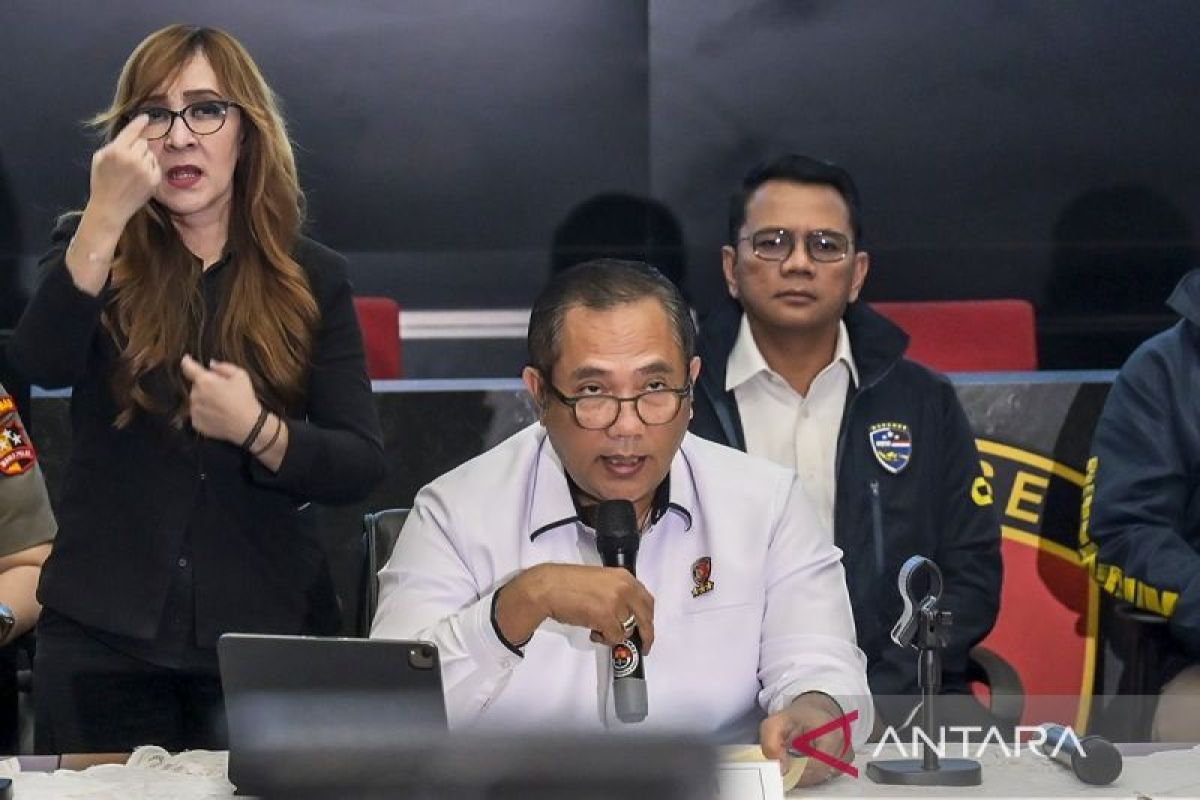
The issue has drawn renewed attention following a suspected illegal wiretapping case in Indonesia. On 3 November 2026, police announced the detention of three senior National Police officers suspected of being involved in tapping several telephone numbers without following procedures, including the number belonging to President Prabowo Subianto. The case remains under investigation, so the allegations against those named cannot yet be treated as facts established by a court.
In Indonesia, wiretapping is governed by several legal instruments, including the Telecommunications Law, the Electronic Information and Transactions (ITE) Law, and the Criminal Code, which came into force on 2 January 2026.
So what does Indonesian law say about wiretapping, who is authorised to conduct it, and what limits apply?
What is wiretapping?
Wiretapping is the secret acquisition of a person’s information or communications, for example by listening to, recording or noting electronic information transmitted without the knowledge of the people communicating.
Article 1(36) of Law No. 20 of 2025 on the Criminal Procedure Code (KUHAP) defines wiretapping as the secret acquisition of personal information for law-enforcement purposes.
Its scope includes communications transmitted through wired and wireless networks, as well as electronic information systems on the internet. Wiretapping is therefore not limited to telephone conversations; it can also cover other electronic transmissions.
Several regulations provide the legal basis for wiretapping. They set out prohibitions, powers and legal consequences relating to the practice.
1. Telecommunications Law
Law No. 36 of 1999 on Telecommunications prohibits wiretapping through telecommunications networks.
Article 40 states that everyone is prohibited from intercepting information transmitted through a telecommunications network in any form.
However, the law also provides an exception for criminal proceedings. Article 42 requires telecommunications service providers to record information in accordance with the law when requested by investigators in connection with certain offences.
This means the prohibition does not rule out every form of information gathering for law-enforcement purposes. Any such action must have a valid legal basis and comply with statutory requirements.
2. Electronic Information and Transactions Law
Law No. 11 of 2008 on Electronic Information and Transactions has been amended, most recently by Law No. 1 of 2024.
Under Article 5(2) of the amended ITE Law, electronic information or documents in the form of interception, wiretapping or recording that forms part of wiretapping must be obtained for law-enforcement purposes at the request of the police, prosecutors or another institution whose authority is established by law.
This provision makes clear that the results of wiretapping for law-enforcement purposes cannot be obtained or used freely by just anyone. The relevant authority must be provided for by legislation.
3. Criminal Code
The new Criminal Code, under Law No. 1 of 2023, came into force on 2 January 2026. Article 258 contains a provision relating to wiretapping.
It sets out criminal penalties for anyone who unlawfully listens to, records, diverts, alters, obstructs or notes the transmission of non-public electronic information or documents.
The offence is punishable by up to 10 years in prison. The provision provides a legal basis for taking action against unlawful interception or wiretapping.
4. Criminal Procedure Code
The new Criminal Procedure Code, under Law No. 20 of 2025, also addresses wiretapping in Article 136.
Paragraph (1) states that investigators may conduct wiretapping for investigative purposes. Paragraph (2) says that the rules governing wiretapping are to be set out in a separate law on wiretapping.
The Criminal Procedure Code therefore provides a basis for wiretapping during investigations, while leaving the implementation mechanism to a dedicated law. Article 136 itself does not set out all the procedures, such as application requirements, time limits, oversight or the handling and storage of intercepted material.
Not every person or institution may conduct wiretapping for law-enforcement purposes. Such authority must be expressly granted by law.
Several institutions have wiretapping powers under sector-specific legislation, including:
The National Police, which may wiretap to support inquiries or investigations within its legal authority and in accordance with the law.
The Corruption Eradication Commission (KPK), which has wiretapping powers as part of its statutory duty to combat corruption.
The National Narcotics Agency (BNN), which may wiretap for investigations into narcotics offences in accordance with the law.
The State Intelligence Agency (BIN), which may wiretap for intelligence purposes under the State Intelligence Law.
The Attorney General’s Office, which has certain powers under legislation, including provisions relating to its law-enforcement duties.
These powers do not mean that any institution may tap anyone without cause. The purpose, targets, procedures and limits of its authority must be governed by the law that provides its legal basis.
Although wiretapping may be used for law-enforcement purposes, it remains subject to limits. The following principles must be observed:
1. It must have a valid legal basis
Wiretapping may be conducted only by officials or institutions granted authority under the law. A person cannot tap someone else’s private communications simply because they have access to a device or telecommunications network.
2. It must have a clear law-enforcement purpose
Wiretapping must relate to law enforcement or to a specific institutional duty established by law. It cannot be justified when carried out for personal reasons, intimidation, gathering information on an opponent or monitoring someone without a legal basis.
3. It must follow the applicable procedures
Each institution must follow the mechanisms set out in its sector-specific legislation and implementing regulations. Requirements for authorisation, approval and oversight may differ depending on the institution’s powers.
It is therefore inaccurate to conclude that all wiretapping by officials must always receive court approval under the same process. The requirements must be assessed in light of the relevant legal basis and the type of offence being investigated.
4. It must respect privacy and communications confidentiality
The right to privacy is part of human rights. Article 28G(1) of the 1945 Constitution guarantees protection of personal and family life, honour, dignity and property.
Indonesia has also ratified the International Covenant on Civil and Political Rights through Law No. 12 of 2005. Article 17 of the covenant protects people from arbitrary or unlawful interference with their private lives and correspondence.
Law-enforcement needs must therefore be balanced against the protection of citizens’ privacy rights.
5. The results must not be misused
Information obtained through wiretapping must not be used for purposes beyond those authorised by the law on which the action is based.
Intercepted data must also be kept confidential so that it is not disseminated, used for personal gain or deployed to harm others.
One issue with Indonesia’s rules on wiretapping is that there is no single dedicated law governing the entire process in a unified way.
Wiretapping powers are currently spread across several sector-specific laws. As a result, procedures and oversight mechanisms may differ from one institution to another.
Article 136(2) of the new Criminal Procedure Code does mandate that wiretapping be regulated by a dedicated law. However, drafting that legislation remains part of the legislative agenda.
On 7 July 2026, the House of Representatives’ Legislative Body said that the preparation of a Wiretapping Bill remained at an early stage and that input was still being gathered from various stakeholders. Topics under discussion include the scope of wiretapping, authorisation mechanisms and which institutions may conduct it.
The proposed law is expected to establish clearer standards, including requirements for wiretapping, time limits, oversight, data protection and accountability in cases of abuse of authority.
Unlawful wiretapping can attract criminal penalties. One legal basis is Article 258 of the Criminal Code under Law No. 1 of 2023.
The provision covers unlawfully listening to, recording, diverting, altering, obstructing and/or noting the transmission of non-public electronic information or documents.
The maximum penalty is 10 years in prison. Whether the provision applies in a particular case will depend on the elements of the offence and the evidence presented in legal proceedings.
In addition, actions involving unauthorised access to an electronic system, or the alteration or deletion of electronic information, may carry penalties under other relevant provisions.
Wiretapping in Indonesia is not entirely prohibited, but its use is restricted by law. Law-enforcement officials and certain institutions may conduct it if they have valid authority and comply with the applicable rules.
By contrast, wiretapping for personal purposes, or without authority and in violation of the law, may lead to criminal penalties.
The absence of a single law comprehensively governing wiretapping procedures also remains a challenge to legal certainty. More detailed rules are needed to ensure that law enforcement can proceed without overlooking the public’s right to privacy.
Source: jawawa.id (https://jawawa.id/newsitem/illegal-wiretapping-can-carry-a-10-year-prison-sentence-what-the-law-says-1793839979)
Originally published by Antara (Indonesian) (https://www.antaranews.com/berita/5832887/pelaku-penyadapan-ilegal-bisa-dipenjara-10-tahun-ini-aturan-hukumnya), translated from Indonesian