
Illegal Level Crossings and the Shortcut Culture: A Problem That Never Ends
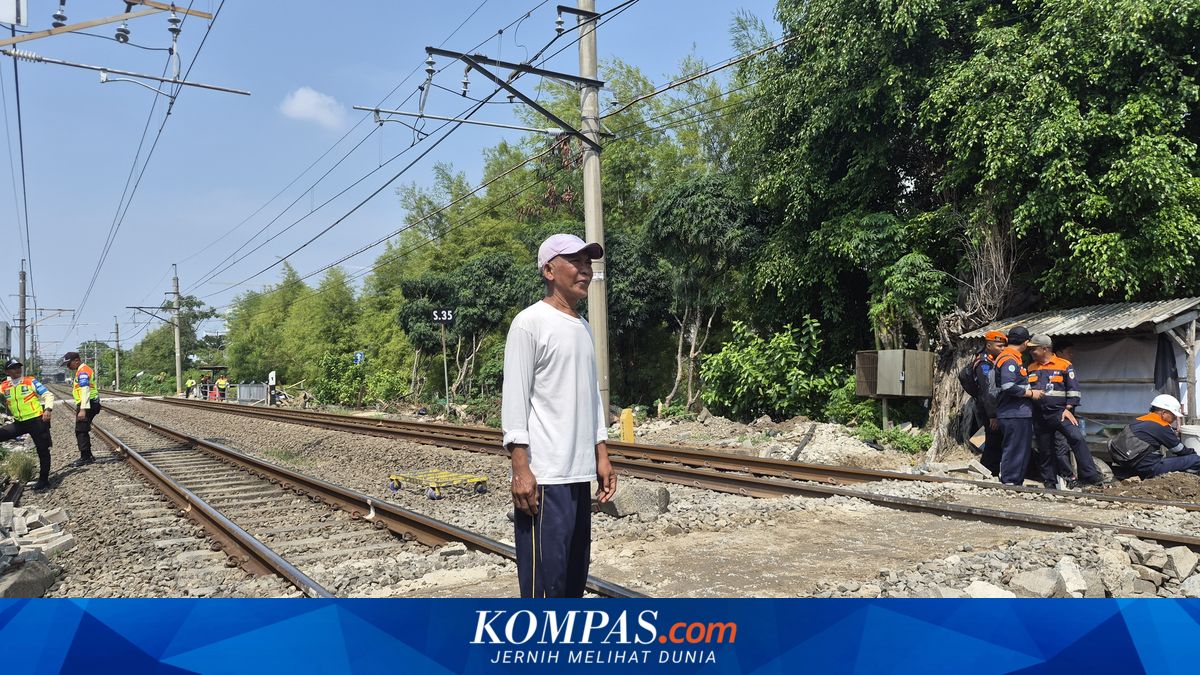
The closure of illegal level crossings is being intensified by PT KAI in the Daop 1 Jakarta area to improve the safety of railway travel. However on the ground, many crossings that have been closed have been reopened by residents illegally. The phenomenon shows that illegal crossings are not merely about fences or gates, but also about the daily mobility needs that have developed over many years.
Djoko Setijowarno, an academic at the Civil Engineering Department of Unika Soegijopranata and a member of the Advisory Board of the Indonesian Transportation Society (MTI), says many illegal crossings arise because residents require rapid access for daily activities.
The latest case occurred in Kebon Baru, Tebet, South Jakarta, in May 2026. PT KAI Daop 1 closed one of the illegal crossings on the Cawang–Tebet line, which residents had used as a link between settlements. However the closure faced objections as the route was considered vital for daily mobility. The final closure point was relocated after mediation between residents, local authorities, police, and KAI.
A similar phenomenon had occurred previously near the underpass beneath the Roxy Flyover in Central Jakarta. The crossing that had been closed was reopened because the alternative route was judged too long and circuitous for motorbike riders.
In the Depok-Citayam area, the illegal crossing that had been closed by PT KAI after a minibus was struck by a train was reportedly reopened by residents. Meanwhile in Tanah Abang, Central Jakarta, an area where barriers had been installed, the access was dismantled so that two-wheeled vehicles could still pass.
According to Djoko, the situation shows that illegal crossings often arise because the mobility needs of people exceed the availability of adequate alternative routes. When access is closed without a replacement solution, people tend to find ways to cross. It is not uncommon for barrier fences to be removed or for a new route to appear at another point that is deemed more practical.
Apart from mobility needs, weak supervision is also a problem. Many illegal crossings lie in densely populated areas with high activity, making continuous monitoring difficult.
Djoko argues closures should not be physical alone but should be accompanied by social engagement with nearby residents. After all, the habit of using shortcut routes has long been part of daily routines.
“If closures are implemented without communication and solutions for alternative access, new illegal crossings tend to emerge, because people feel their mobility needs are not being met,” he said.
On the other hand, illegal crossings do carry significant risks. PT KAI Daop 1 data indicate that incidents of vehicles colliding with trains still occur every year, including at unofficial crossing points.
Closing remains important for safety, but replacement access and region-wide connectivity planning must also be considered to prevent residents from reopening illegal routes.