
Iksan Kiat Represents Energy Minister at Regional Energy Talks
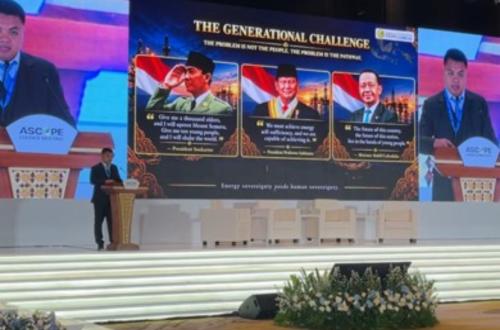
JAKARTA — Strengthening energy security in Southeast Asia cannot rely solely on the availability of oil and gas; it also requires human resources capable of managing technology, driving innovation and addressing the challenges of future industries. LEMIGAS chief M. Muhammad Iksan Kiat delivered this message while representing Energy and Mineral Resources Minister Bahlil Lahadalia as a keynote speaker at the 51st ASCOPE Council Meeting (ACM 2026) in Bali.
Held from 26 to 28 October 2026 at The Meru Hotel in Sanur, Bali, the meeting brought together leaders of national oil and gas companies and energy authorities from ASEAN countries. The ASEAN Council on Petroleum (ASCOPE) forum serves as a strategic platform for discussing developments in the energy industry, geopolitical challenges, supply security and opportunities to strengthen regional co-operation.
Addressing delegates from 11 countries, Iksan delivered a presentation entitled “Human Energy Security: Empowering the Next Generation to Power ASEAN and the World”. He emphasised that the sustainability of the energy industry is determined not only by natural resource reserves, but also by the preparedness of the next generation to manage and develop them.
At the start of his presentation, Iksan asked participants to consider two possible threats to the future of the energy sector: what would happen if all oil and gas resources were depleted, and who would manage the sector if there were no longer competent engineers, scientists, technicians and leaders?
Through these questions, Iksan stressed that people are the main asset in building energy security. Technological expertise must go hand in hand with the development of skills, character, leadership and the courage to face change.
He said geopolitical tensions, global economic instability and technological competition were creating increasingly complex challenges for ASEAN countries. Investment in education, research, technological expertise and young talent development was therefore a strategic necessity for strengthening regional energy security.
Introducing the 8³P Model for industrialisation
Iksan also introduced the 8³P Model as a strategic framework for accelerating national industrialisation and downstream development. The model promotes a collaborative and sustainable approach to development, aimed at enhancing Indonesia’s competitiveness globally.
Iksan explained that the 8³P Model connects three main components — 8 Properties, 8 Pillars and 8 Pavilions — within an integrated industrial development ecosystem. Together, they are designed to bring human resource capacity, stakeholder roles and strategic areas requiring reinforcement into a unified industrialisation process.
The first component, 8 Properties, comprises the foundational capacities to be developed in people. Its eight elements are physical resilience, adaptability, social connectedness, leadership, value creation, technological proficiency, intellectual ability, and moral and spiritual integrity.
The 8 Pillars represent the eight stakeholder groups that drive development: industry, practitioners, academia, government, the financial sector, entrepreneurs, civil society and the media.
The 8 Pavilions, meanwhile, are the strategic fields in which industrialisation capacity can be developed. They comprise engineering, economy, electrics/energy, environment, education, ethics, empowerment and entrepreneurship.
According to Iksan, the connections between these elements should be built with due regard to the characteristics and contributions of each actor. This approach enables resources and authority to be directed according to need, making the industrialisation process more effective.
“Each actor contributes according to its function and strategic needs, so the success of industrialisation is not determined by an equal distribution of roles, but by the appropriate balance and interconnection between the elements,” Iksan said.
He stressed that the model’s principle is to involve all parties, without requiring them to make equal contributions. Each element is positioned according to its capacity and strategic role in building a mutually supportive industrial ecosystem.
In practice, industry plays an important role in creating production scale, while practitioners contribute to the execution of activities and the application of technology. Academia provides a foundation of knowledge and research, the government develops policy, and the financial sector supports funding needs.
At the same time, entrepreneurs, civil society and the media contribute to innovation, strengthening social legitimacy and communicating development. These roles are directed towards reinforcing the eight strategic fields, enabling Indonesia’s resource potential to develop into productive and sustainable industrial capacity.
Source: jawawa.id (https://jawawa.id/newsitem/iksan-kiat-represents-energy-minister-at-regional-energy-talks-1793278294)
Originally published by Republika (https://ekonomi.republika.co.id/berita/tnnw6e451/iksan-kiat-wakili-menteri-esdm-bahas-energi-kawasan), translated from Indonesian