
IKPI: Tax Incentives Alone Insufficient for Establishing Indonesia's International Financial Centre
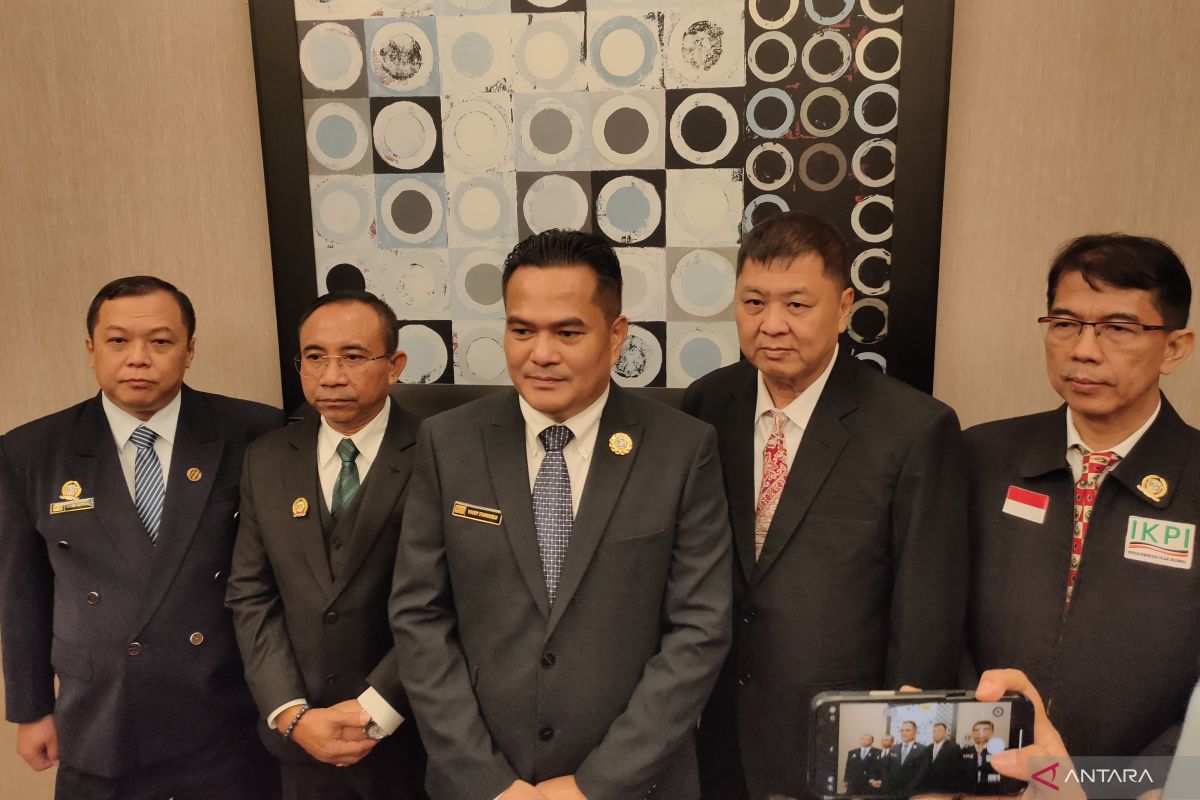
Jakarta (ANTARA) — The Indonesian Tax Consultants Association (IKPI) has stated that the successful establishment of the Indonesia International Financial Centre (PFII) cannot be achieved by relying on tax incentives alone.
According to IKPI Chairman Vaudy Starworld, beyond tax incentives, the regulations drawn up must be able to strike a balance between investment competitiveness and the protection of national fiscal interests.
“Five aspects that must be given attention are the competitiveness of the tax regime, legal certainty, simplicity of tax administration, alignment with international taxation standards, and fiscal sustainability,” Vaudy said during a Public Hearing (RDPU) with Commission XI of the House of Representatives on the deliberation of the PFII Bill in Jakarta on Thursday.
He said these five elements are interconnected and form the foundation for the success of an international financial centre.
He explained that tax competitiveness is needed to attract global investment. However, such a policy must be balanced with legal certainty so that investors have assurance in running their business activities.
“On the other hand, simple tax administration is also an important factor because it can reduce compliance costs and improve ease of doing business,” he said.
Vaudy added that Indonesia must also ensure that the tax policies within the PFII remain aligned with developments in international standards.
“That way, Indonesia can enhance its competitiveness without creating the risk of disputes or tax avoidance practices,” Vaudy said.
Meanwhile, Head of IKPI’s Fiscal Research and Policy Department, Pino Siddharta, said the five aspects cannot be separated in formulating PFII policy.
In his view, the success of an international financial centre is largely determined by the government’s ability to present regulations that are consistent, credible, and provide certainty for businesses.
“If we rely solely on tax incentives without legal certainty, efficient administration, and good governance, Indonesia’s competitiveness will struggle to improve. Conversely, if all these aspects are built in an integrated manner, Indonesia has a great opportunity to become a competitive international financial centre,” Pino said.
He added that fiscal sustainability must also be a primary concern in drafting the PFII Bill.
“So every tax policy must be able to attract quality investment while safeguarding the state revenue base, so that the economic benefits generated can last over the long term,” he said.
Pino also assessed that a balanced approach would create certainty for investors while strengthening Indonesia’s credibility in the eyes of the international financial community.
“Thus, the PFII would not only become an investment hub, but also a centre of financial activity that makes a real contribution to national economic growth,” he added.
Through the input provided to Commission XI of the House of Representatives, IKPI hopes the five factors will serve as the foundation for drafting the PFII Bill, so that the resulting regulations can enhance Indonesia’s competitiveness, strengthen the national financial services sector, and establish Indonesia as one of the most competitive international financial centres in the Asian region.
Source: jawawa.id (https://jawawa.id/newsitem/ikpi-tax-incentives-alone-insufficient-for-establishing-indonesias-international-financial-centre-1783601733)
Originally published by Antara (Indonesian) (https://www.antaranews.com/berita/5642772/ikpi-pembentukan-pfii-tidak-cukup-hanya-andalkan-insentif-perpajakan), translated from Indonesian