
IKN Tax Holiday Lacks Interest, Economists Highlight Issues Beyond Taxation
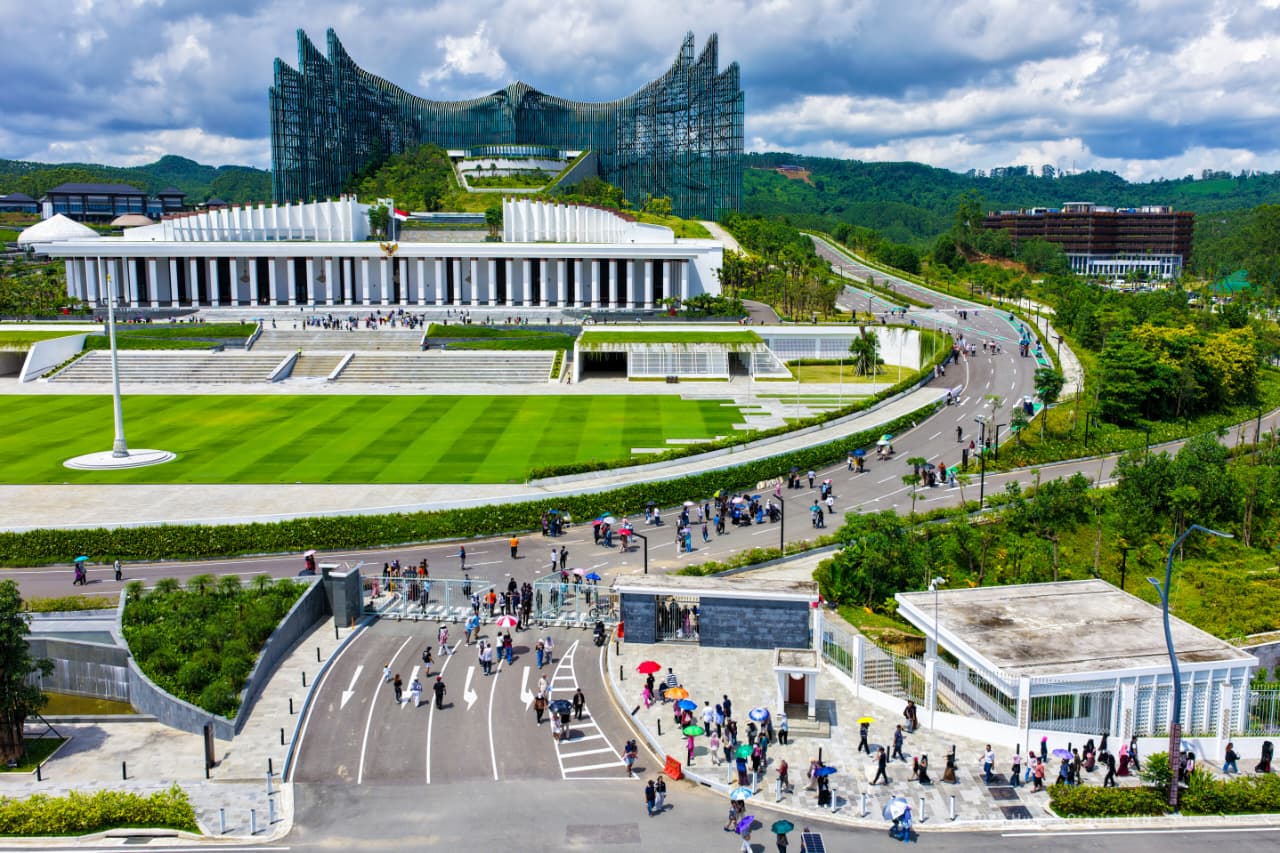
Jakarta: The absence of investors utilising tax holiday facilities for investment in the Nusantara Capital City (IKN) throughout 2025 suggests that fiscal incentives are no longer the primary determining factor in attracting capital. Investors are reportedly prioritising regulatory certainty, business prospects, and the quality of the investment ecosystem.
This follows data from the Directorate General of Taxes (DGT) of the Ministry of Finance, which shows that not a single application for tax holiday facilities for investment in IKN or its partner regions was submitted during 2025. This occurs despite the government preparing various tax incentives, including a 100% Corporate Income Tax (PPh Badan) exemption for investors who meet the requirements.
According to the Audited 2025 Fiscal Year Financial Report of the DGT, the number of tax holiday applications for investment in IKN and partner regions dropped drastically from seven applications in 2024 to zero in 2025. Furthermore, several other facilities, such as the IKN Tax Holiday Financial Centre (FC), IKN Tax Holiday Headquarters (HQ), Super Tax Deductions for vocational activities, research and development (R&D), and incentives for IKN development contributions, also received no applications throughout 2024-2025.
Yusuf Rendy Manilet, an economist at the Centre of Reform on Economic Studies (CORE) Indonesia, noted that the zero applications indicate that significant tax relief has not yet become a primary draw for investors. “The lack of investors applying for tax holidays for projects in IKN throughout 2025 shows that even very large tax incentives are not enough to be the main attraction. This is despite the government offering quite aggressive facilities, including tax holidays of up to 30 years for certain sectors and other investment eases,” Yusuf stated in a briefing on Friday.
However, Yusuf cautioned that the zero application figure should not immediately imply a lack of interest in IKN. He noted that some projects are still in the construction phase and have not yet met the administrative requirements to enjoy such facilities.
Nevertheless, he believes the situation signals that the investment issues in IKN are more fundamental than merely the scale of tax incentives. According to Yusuf, investors ultimately consider regulatory certainty, the consistency of government policy, infrastructure readiness, and long-term profit prospects before deciding to commit capital. “The issue is not just the size of the incentive, but more fundamental factors such as regulatory certainty, policy stability, infrastructure quality, and business prospects. Investors do not just look at tax savings; they calculate whether the investment environment can provide long-term returns,” he said.
He added that this is not a new phenomenon, as various tax incentives previously issued by the government have also not been optimally utilised, suggesting a structural problem. He warned the government to be cautious when offering even larger incentives through the Indonesia International Financial Centre (IIFC).
According to Yusuf, the IKN experience shows that massive tax incentives do not automatically attract investors if the business ecosystem is not yet robustly formed. While providing tax facilities for decades aims to increase competitiveness against financial hubs like Singapore, Hong Kong, and Dubai, the foundation must be strong.
In addition to effectiveness, Yusuf highlighted potential risks to state revenue. Providing long-term tax holidays means the government is forfeiting potential tax revenue that could be used for other fiscal needs. Furthermore, the implementation of the global minimum tax could reduce the benefits of the incentives provided by Indonesia, as the difference in tax rates not collected in Indonesia could be collected by the investor’s home country, thereby limiting the company’s net gains. He also noted the risk of abuse, such as domestic capital being routed through overseas entities to appear as foreign investment to gain facilities.