
IKN Authority promotes mangrove rehabilitation to protect coastal areas
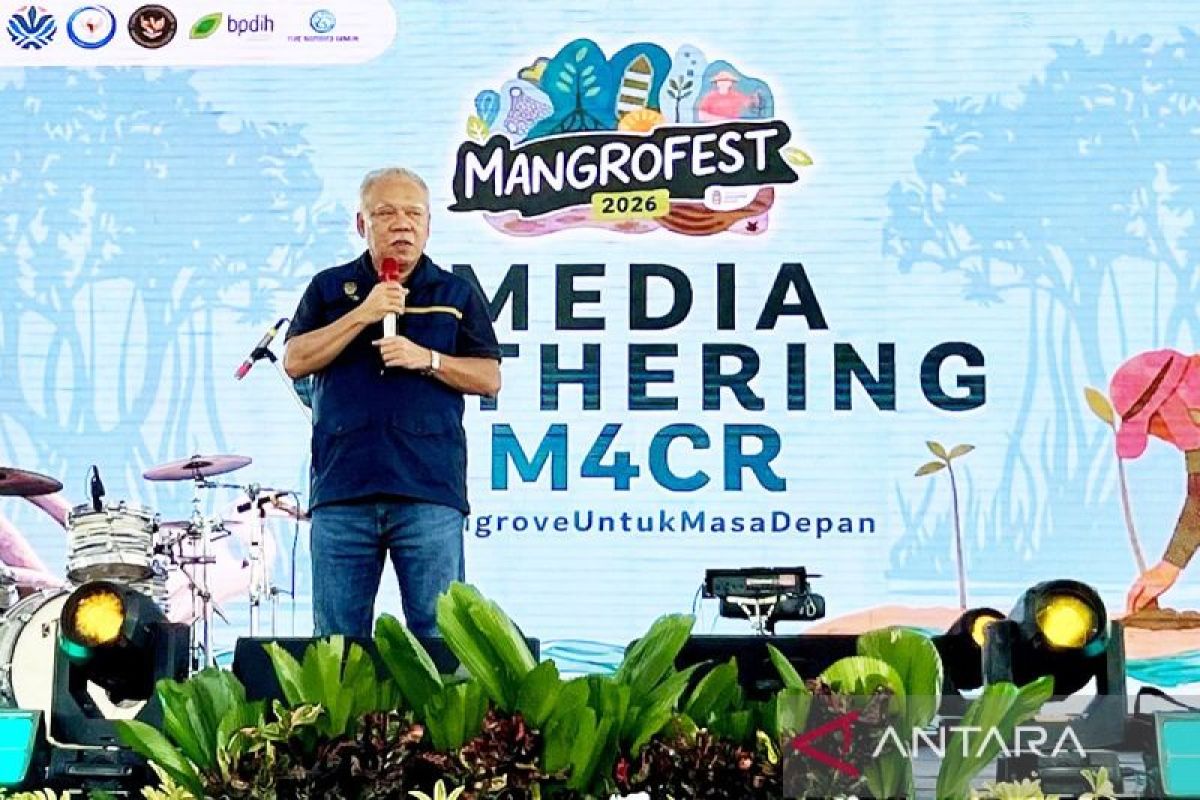
Penajam Paser Utara (ANTARA) - The Head of the Nusantara Capital City (IKN) Authority, Basuki Hadimuljono, stated that mangroves can serve as natural protectors for coastal areas, thereby reducing the need for infrastructure development to combat abrasion. According to Basuki, efforts to build coastal resilience have traditionally relied on physical structures or civil engineering. However, this function can also be achieved through natural or biological structures, namely mangrove forests.
“If we want to build coastal resilience, we tend to use physical structures or civil works. In reality, this can be achieved through natural or biological structures, which are mangroves,” Basuki said during his speech at the Mangroves for Coastal Resilience (M4CR) Media Gathering in the Nusantara Capital, Penajam Paser Utara, East Kalimantan, on Saturday.
“In my view, mangroves are very effective in protecting coasts from abrasion. If the coast is not protected, it will continue to be eroded by abrasion. The presence of mangroves reduces the need for physical construction as coastal protection,” he added.
In addition to protecting coastal areas, Basuki noted that mangroves can also help dampen tsunami waves. He further added that, based on various reports and publications, mangroves possess a greater capacity for carbon sequestration compared to terrestrial trees.
“Mangroves offer immense benefits, especially for us in this archipelagic nation,” he said.
Basuki expressed that the IKN Authority supports the implementation of the Mangroves for Coastal Resilience (M4CR) programme, which commences in the IKN region. He noted that the programme also provides economic benefits by involving local farmers as suppliers of mangrove seedlings.
The Mangroves for Coastal Resilience (M4CR) programme is a mangrove rehabilitation initiative implemented by the Directorate General of Watershed Management and Forest Rehabilitation (PDASRH) of the Ministry of Forestry, with funding support from the World Bank since 2024. The programme is being carried out across four provinces—East Kalimantan, North Kalimantan, Riau, and North Sumatra—through mangrove rehabilitation, governance strengthening, and the involvement of coastal communities.