
IJBNet: SAF Becomes New Business Field for Indonesia-Japan Partnership
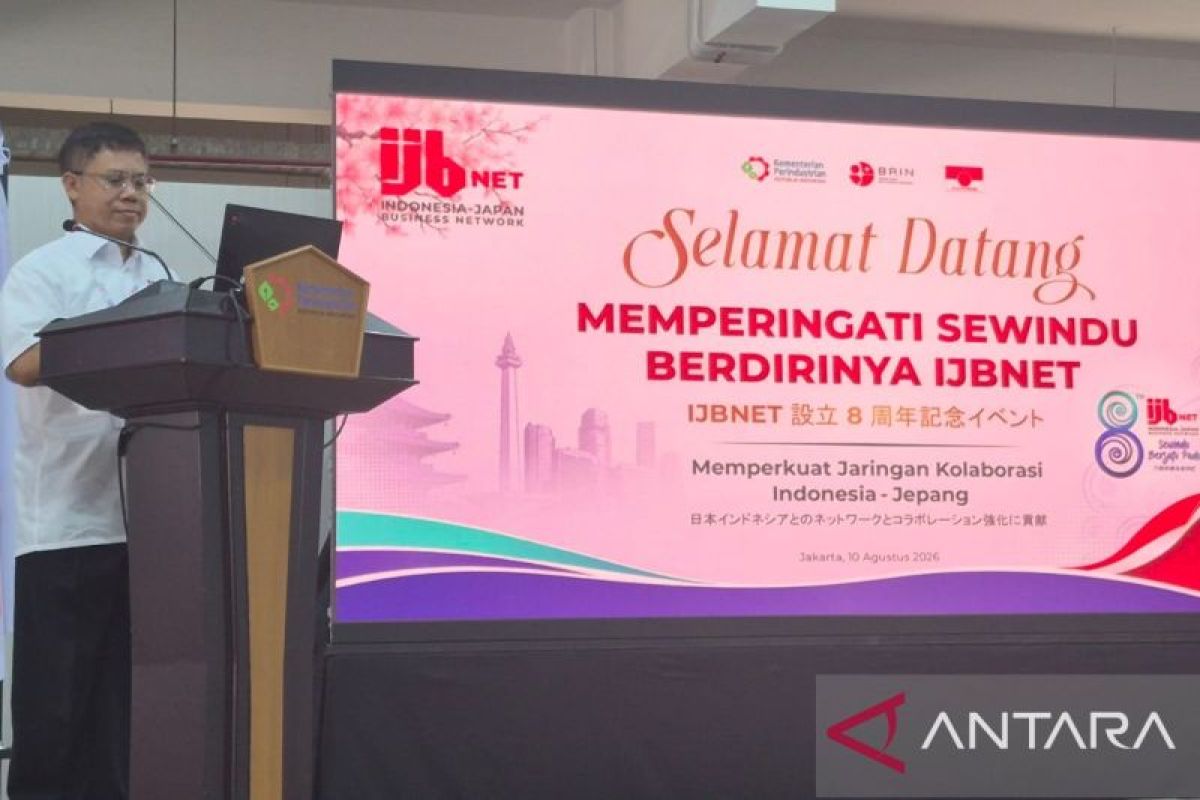
Jakarta (ANTARA) - Indonesia Japan Business Network (IJBNet) Chairman Dr. Suyoto Rais said the development of Sustainable Aviation Fuel (SAF) has the potential to become a new business field in strengthening economic partnership between Indonesia and Japan, amid the growing demand of the global aviation industry for more sustainable fuel.
“Indonesia has large resources, markets and talent. Japan has technology, industrial experience and strong business networks. The challenge is how to bring these two strengths together in the form of real and sustainable cooperation,” Suyoto said in a statement received on Wednesday.
IJBNet considers the development of SAF feedstock to be one of the important issues amid global demands for a more sustainable aviation industry.
The opportunity is one of the issues that brings together government, business players, research institutions and Japanese partners to encourage cooperation in various industrial sectors and discuss the potential development of feedstock and the SAF supply chain.
According to Suyoto, Indonesia-Japan relations have enormous potential. The two countries have needs and strengths that complement each other, ranging from industry, technology, investment, energy, environment to human resources.
At the IJBNet forum, Director General of Resilience, Regionalisation and International Industrial Access (KPAII) at the Ministry of Industry Tri Supondy said changes in the global industrial landscape, including demands for decarbonisation and the transition towards cleaner energy, create a need for collaboration between countries.
“The Indonesia-Japan partnership has a long history and continues to grow. Going forward, this cooperation must be increasingly directed towards increasing investment, strengthening technology, improving industrial competitiveness and developing human resources,” Tri said.
Tri said that in the context of SAF development, Indonesia-Japan cooperation can cover various aspects, from feedstock development and processing technology to building a supply chain that supports the production of sustainable aviation fuel.
SAF development is also seen as opening space for Indonesia to develop a new industry linked to the energy, agriculture, technology and aviation sectors.
“Collaboration between government, business, research institutions and international partners is becoming increasingly important. Indonesia needs strategic partners who can jointly build a strong, innovative and sustainable industry,” he said.
From the Japanese side, Chargé d’affaires ad interim of the Embassy of Japan in Indonesia Myochin Mitsuru said relations between the two countries have developed beyond conventional trade cooperation.
In addition to SAF, a number of Japanese companies and organisations present at the IJBNet forum introduced cooperation opportunities in the green power, renewable energy, environmental technology, space technology, business development and human resource development sectors.
This shows that the decarbonisation agenda is beginning to open up broader economic cooperation space between Indonesia and Japan. The transition towards a low-carbon industry is not only an environmental agenda, but also has the potential to create new investment and value chains.
IJBNet considers that future Indonesia-Japan cooperation development needs to be directed towards forming an industrial ecosystem that connects government, business, research institutions and the workforce.
With this approach, SAF development and other green industry sectors are expected not to stop at technological cooperation, but can develop into investment and business activities that provide added value for Indonesian industry.