
IIQ Promotes Qur'anic Ecotheology to Address Climate Crisis
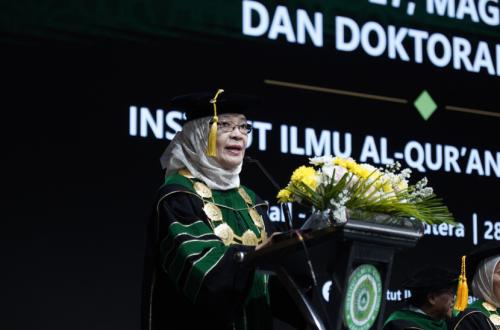
The Institute of Qur’anic Sciences (IIQ) Jakarta believes that women play a vital role in responding to environmental issues and the climate crisis through a Qur’anic ecotheology approach. This approach connects the understanding of the Al-Quran with the human responsibility to preserve nature and the sustainability of life.
The Rector of IIQ Jakarta, Nadjematul Faizah, stated that human responsibility to Allah SWT does not end with the ritual and spiritual dimensions; it also encompasses the mandate to protect nature.
“IIQ has a responsibility to produce knowledgeable women who are not only capable of reading texts but also reading the times; who do not only understand revealed verses (qauliyah) but are also sensitive to natural signs (kauniyah); and who do not only maintain the memorisation of the Al-Quran but also manifest its values in life,” Nadjematul said in a written statement received on Friday (2/10/2026).
According to Nadjematul, Qur’anic ecotheology is not merely an academic discourse. IIQ Jakarta implements this approach through national and international Field Study Programmes (KKL) involving 415 students, focusing on environmental conservation from a Qur’anic perspective.
Nadjematul noted that women hold a strategic position in maintaining the balance of life. This role can be exercised through the family, social activities, and academic environments.
“Women hold a central position—as the first educators in the family, as drivers of social change, and as scientific thinkers who maintain the balance of nature,” she said.
This message regarding Qur’anic ecotheology was highlighted during the Open Senate Session for the IIQ Jakarta Graduation, themed “Qur’anic Ecotheology: Strengthening the Role of Women in Nurturing Life” in Jakarta. A total of 583 graduates participated in the ceremony, consisting of 416 undergraduates, 155 masters, and 12 doctors.
With this addition, IIQ Jakarta now has 6,264 alumni spread across various regions. Nadjematul urged graduates to continue developing their knowledge while bringing Quranic values into life. “Nurture knowledge, nurture values, and nurture life,” she remarked.
Meanwhile, the Coordinator of Kopertais Region I DKI Jakarta and Banten, Asep Saepudin Jahar, stated that IIQ’s speciality in Quranic studies must be maintained and developed to keep pace with changing times. According to Asep, uniqueness and professionalism in Quranic studies serve as capital for higher education institutions amidst competition.
“IIQ possesses speciality and excellence. Therefore, continue to seek that excellence and strengthen it within that niche. Why? Because competition requires uniqueness and advantage,” said Asep.
Asep also assessed that the development of Quranic studies needs to follow advancements in digital technology and Artificial Intelligence (AI). Such technological adaptation must be accompanied by improvements in the quality of lecturers, educational staff, and quality assurance systems.
“In this context, let us consider how the development of the Quran can also adapt to AI and digital technology. It must begin, because without it, we will be left behind,” he said.
The General Chairperson of the IIQ Jakarta Foundation, Rully Chairul Azwar, stated that academic strengthening is ongoing to achieve the vision of becoming a globally reputable university by 2044. IIQ Jakarta is also enhancing academic quality through institutional accreditation and several study programmes that have achieved ‘Excellent’ status.
Students and alumni of IIQ Jakarta also secured 10 championship titles at the XXXI National MTQ in Semarang. In addition to academic strengthening, the IIQ Jakarta Foundation is preparing the construction of a Qur’anic Centre, an eight-storey building designed as a modern centre for Quranic studies.
“Infrastructure support is also being accelerated through the planned construction of the Qur’anic Centre—an eight-storey building with modern facilities initiated by the IIQ Jakarta Foundation as a Centre of Excellence for Quranic studies,” said Rully.
The development of Qur’anic ecotheology is one of IIQ Jakarta’s approaches to bringing Quranic studies to respond to environmental issues. This approach also positions women as key actors in preserving the environment and the sustainability of life.
Source: jawawa.id (https://jawawa.id/newsitem/iiq-promotes-quranic-ecotheology-to-address-climate-crisis-1790988754)
Originally published by Republika (https://news.republika.co.id/berita/tmagf0416/iiq-dorong-ekoteologi-qurani-atasi-krisis-iklim), translated from Indonesian