
IHSG Weakens 0.18% in First Session to 5,864 Level
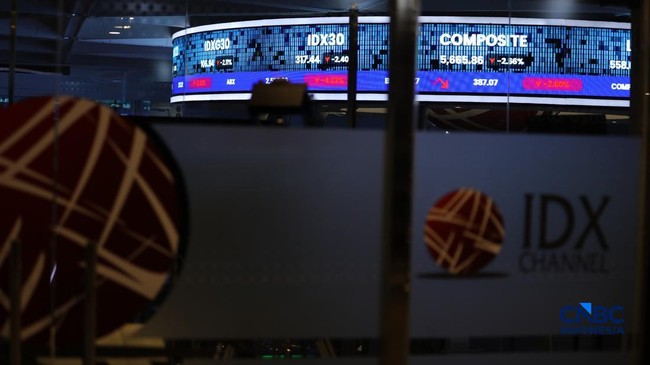
The Jakarta Composite Index (IHSG) weakened in the first trading session on Monday (6/7/2026), falling 11 points or 0.18% to 5,864.97, amid mixed movements in Asian stock markets and investor anticipation of the Federal Reserve’s meeting minutes.
Based on Indonesia Stock Exchange (BEI) data via IDX Mobile, the transaction value reached Rp 4.76 trillion with a trading volume of 10.72 billion shares in 912,000 transactions. The BEI market capitalisation stood at around Rp 10,297 trillion. A total of 265 stocks rose, 295 fell, and 198 remained stagnant.
According to Refinitiv, the majority of sectors weakened, with the deepest corrections recorded in the energy, consumer, and basic materials sectors. Meanwhile, the highest gains were posted by the technology, health, infrastructure, and energy sectors.
Several issuers that weighed on the IHSG’s performance included BMRI, ASII, BBRI, TLKM, and AMMN.
A number of important economic data points will determine the direction of global and domestic financial markets today and throughout the coming week. From the United States, investors will await service sector indicators and the Federal Reserve’s meeting minutes. Domestically, attention is focused on foreign exchange reserves, consumer confidence, and Bank Indonesia’s retail sales survey.
Meanwhile, OPEC+ has again agreed to increase oil production targets by 188,000 barrels per day (bpd) starting in August. The decision, announced on Sunday (5/7/2026), adds to global supply amid weakening oil prices and the recovery of exports through the Strait of Hormuz. This increase follows additional quotas of the same size in June and July. Cumulatively, the seven core OPEC+ members have raised production targets by nearly 800,000 bpd since April.
However, actual production has not fully increased due to the US-Israel-Iran war, which had disrupted tanker traffic in the Strait of Hormuz. OPEC+ production fell to 33.13 million bpd in May from 42.77 million bpd in February, before starting to recover in June. Oil prices have returned to around US$72 per barrel, far below the peak above US$120 per barrel. The price weakness was triggered by falling Chinese oil imports, increased supply from non-Middle Eastern producers, and the release of global strategic petroleum reserves.
OPEC+ also faces new challenges after the United Arab Emirates (UAE) left the alliance and Iraq pushed for a larger production quota. According to Reuters calculations, the seven core members still have about 379,000 bpd of production cuts that have not been returned to the market. If production is increased again at the next meeting on 2 August, the production cuts agreed in 2023 are expected to be fully unwound.