
IHSG Strengthens, Following Asian and Global Markets
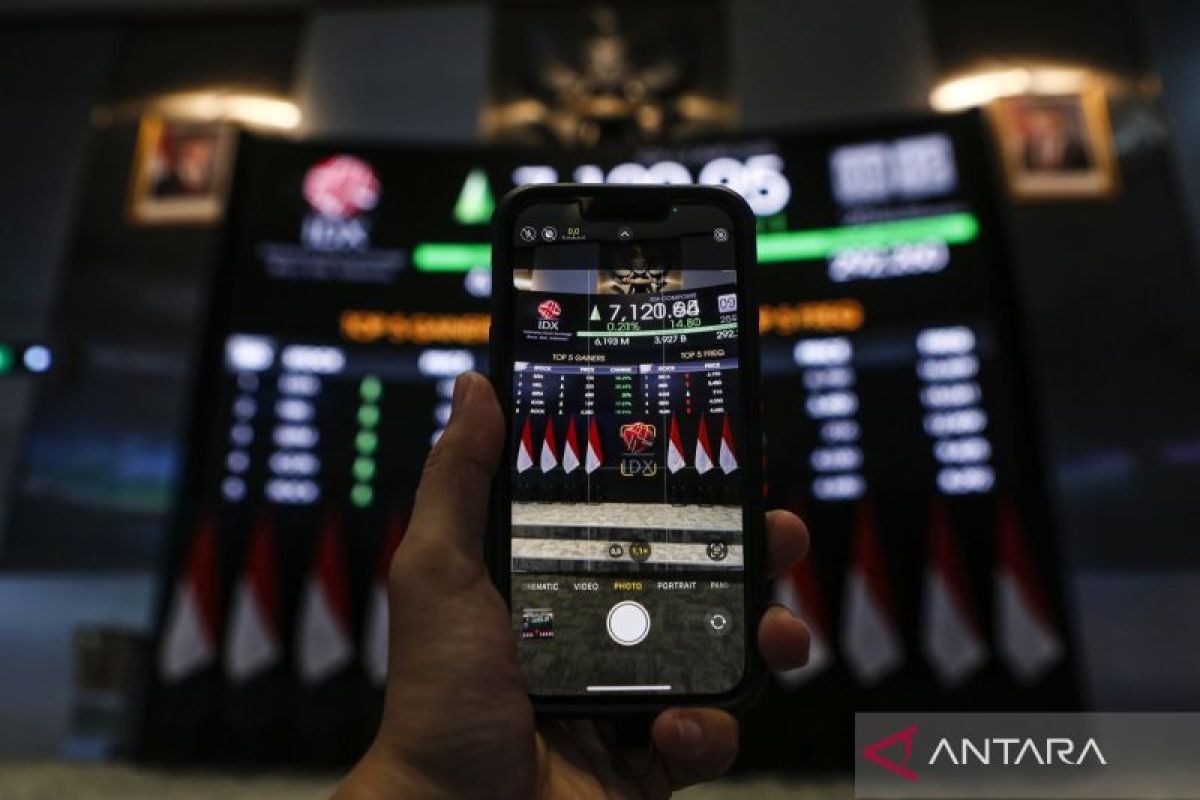
Jakarta (ANTARA) - The Composite Stock Price Index (IHSG) of the Indonesia Stock Exchange (BEI) moved higher on Wednesday, following the strengthening of stock markets in the Asian region and globally. The IHSG opened up 29.23 points or 0.41 percent to 7,086.34. Meanwhile, the LQ45 Index of 45 leading stocks rose 3.48 points or 0.51 percent to 685.06. “Based on technical analysis, we see the IHSG potentially strengthening in a limited manner with support and resistance at 6,950-7,160,” said Associate Director of Research and Investment at Pilarmas Investindo Sekuritas, Maximilianus Nico Demus, known as Nico, in his analysis in Jakarta on Wednesday. From abroad, geopolitical tensions are beginning to ease, with the United States (US) attempting to reduce escalation and focusing on protecting cargo ships crossing the Strait of Hormuz. Although tensions have decreased, an agreement to open the Strait of Hormuz is still far from reality. As of today, more than 1,550 commercial ships are trapped in the Strait of Hormuz, which will certainly attract the attention of global market players. On the other hand, the easing of tensions between the US and Iran has caused global oil prices to fall again. From the US, the ISM Services Index fell from 54 to 53.6 in April 2026, while the ISM Services Prices Paid stood at 70.7, indicating that raw material costs for production remain high, which will affect US inflation going forward. Then, the US JOLTS Quits Level rose from 3,046,000 to 3,171,000, or from 1.9 percent to 2 percent. Meanwhile, the US JOLTS Layoffs Level also increased from 1,714,000 to 1,867,000, or from 1.1 percent to 1.2 percent, in line with many private companies beginning to slow their expansion phase amid the war situation. Domestically, Indonesia’s economy was reported to have grown 5.61 percent year on year (yoy) in the first quarter of 2026. Then, the Consumer Price Index (CPI) inflation was maintained at 2.42 percent (yoy) in April 2026. Meanwhile, the State Revenue and Expenditure Budget (APBN) recorded a deficit of Rp240.1 trillion or 0.93 percent of GDP as of 31 March 2026. As an effort to maintain the rupiah exchange rate, Bank Indonesia Governor Perry Warjiyo outlined seven strategies, including strengthening interventions in the domestic and global foreign exchange markets, attracting foreign capital inflows through SRBI, purchasing government bonds in the secondary market, and keeping banking liquidity loose. In addition, BI is also tightening foreign exchange purchases without underlying transactions, encouraging the use of local currencies in international transactions, strengthening interventions in the offshore market, and increasing supervision of banking and corporate foreign exchange activities. Nico assessed that BI’s policies are a combination of defensive and stabilisation measures that have the potential to effectively safeguard the rupiah in the short term, particularly through foreign exchange market interventions and controlling dollar demand to suppress volatility. “If these efforts still do not yield results, we hope BI provides new ammunition to keep the rupiah at least stable, not full of volatility as it is now,” said Nico. On Tuesday’s trading (5/5/2026), European stock markets moved variably, including the Euro Stoxx 50 strengthening 1.83 percent, the UK’s FTSE 100 weakening 1.40 percent, Germany’s DAX strengthening 1.71 percent, and France’s CAC strengthening 1.08 percent. Meanwhile, US stock markets on Wall Street uniformly strengthened on Tuesday (5/5/2026), including the S&P 500 up 0.81 percent to 7,259.22, the Nasdaq up 1.31 percent to 28,015.06, and the Dow Jones up 0.73 percent to 49,297.25. This morning’s regional Asian stock markets included the Nikkei strengthening 228.20 points or 0.38 percent to 59,514.12, the Shanghai up 42.54 points or 1.03 percent to 4,154.12, the Hang Seng up 130.39 points or 0.50 percent to 26,025.50, and the Strait Times up 3.68 points or 0.07 percent to 4,923.95.