
IHSG Slumps as Regional Exchanges Stabilise, Analysts Say Indonesian Market Faces Domestic Pressure
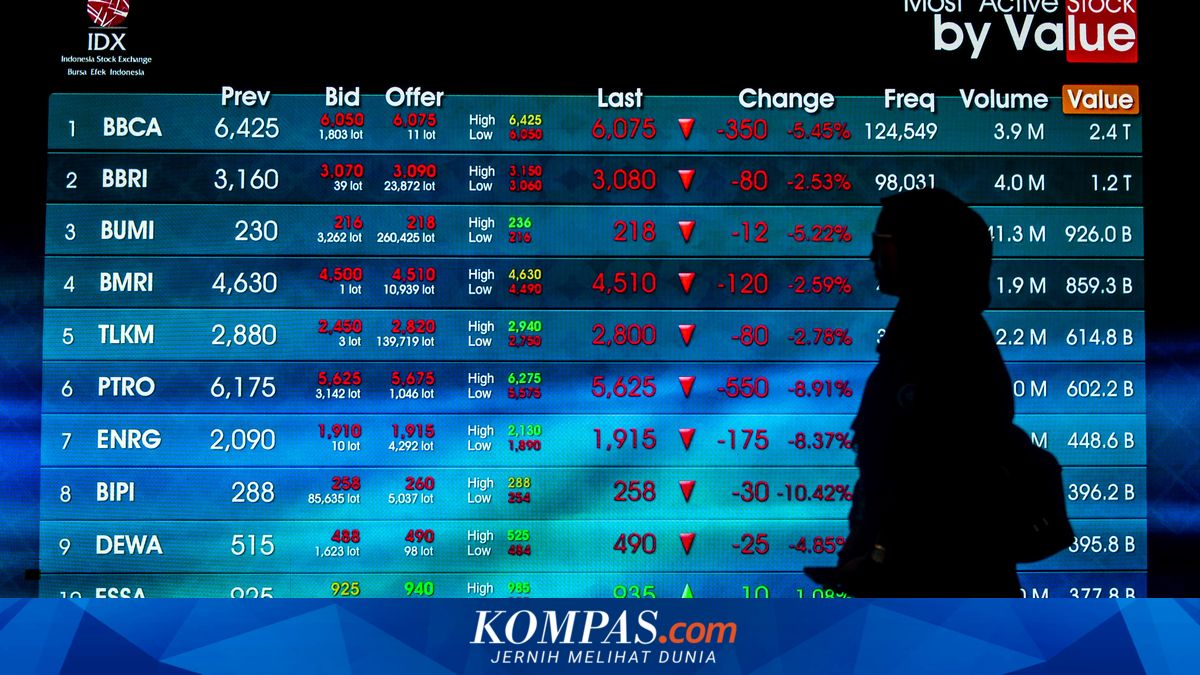
Amid easing geopolitical tensions in the Middle East, the Indonesian financial market has again come under heavy pressure. The IHSG fell 3.46 per cent to 6,370. The IHSG was among the region’s worst-performing indices, even as most regional exchanges were relatively stable, with some turning higher. Market observer and founder of Republik Investor, Hendra Wardana, said the domestic market conditions reflect not only external factors, but also a waning investor confidence in the economy’s prospects and the stability of the national financial markets in the near term. That statement immediately eased market concerns about potential disruptions to global oil supply and contributed to declines in crude oil prices. European stock markets opened higher, most Asia-Pacific indices moved steady, and global bond yields began to fall. However, the IHSG moved in the opposite direction. “This indicates that the Indonesian market is facing domestic pressures that are far more dominant than global sentiment,” Hendra told Kompas.com on Tuesday night (19 May 2026). He noted that the IHSG’s weakness this time was quite serious as it occurred across nearly all sectors, especially basic industries which fell as much as 7.30 per cent. Large-cap stocks such as PT Chandra Asri Pacific Tbk (TPIA), PT Barito Pacific Tbk (BRPT), PT Indah Kiat Pulp & Paper Tbk (INKP), PT Pabrik Kertas Tjiwi Kimia Tbk (TKIM), and PT Semen Indonesia Tbk (SMGR) faced aggressive selling pressure. The conditions suggest a large-scale risk-off by institutional and foreign investors. Meanwhile, commodity- and energy-related stocks were also hit by falling oil prices and rising concerns about a global economic slowdown. On the other hand, the health sector was the only sector able to stay green as it is seen as more defensive amid high market uncertainty. Another factor attracting investor attention is the movement of the rupiah. The rupiah weakened again to around Rp 17,706 per US dollar, a development seen as an important market warning signal.