
IHSG Short Week: Danantara, China and US Inflation in Focus
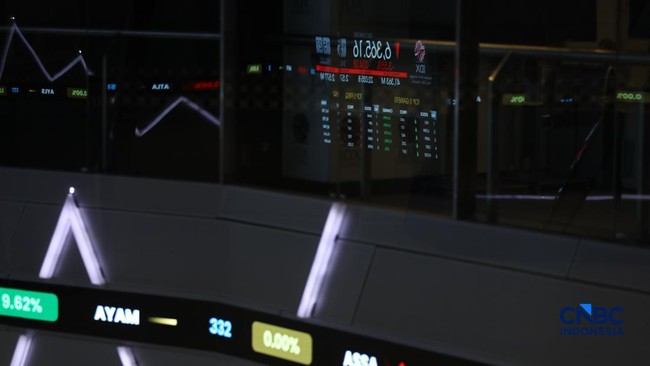
Domestic financial markets enter a shortened week, with the stock exchange active only for a few days before the Eid al-Adha holiday on 27-28 May 2026. Trading volumes typically decline in such periods.
However, market movements remain narrow, not yet calm, as a series of global events coincide with major changes in Indonesia’s commodity export governance.
Domestically, attention is on the government finalising operations of PT Danantara Sumber Daya Indonesia (DSI), a state-owned enterprise specifically for exports. It will become the primary channel for palm oil and coal exports from 1 September 2026, with transitional regulations in place from June to August.
Markets are assessing the policy direction. Commodity investors will recalibrate export routes, distribution rights, and the impact on national coal and CPO trade flows. Coal and palm oil stocks may become more sensitive in the coming sessions.
Danantara DSI Becomes New Market Focus
The Ministry of Trade confirmed that technical regulations under the PP on Natural Resource Export Governance will soon be issued. During the transition, exports will continue using previous export permits but under PT DSI’s name. From September, only state-owned export entities with DMO rights or transferred export licenses can conduct exports.
For markets, this is more significant than routine administrative changes. Indonesia is restructuring strategic commodity export distribution. The impact could ripple through benchmark prices, export dollar flows, Indonesia’s bargaining position globally, and margins for energy and plantation companies.
Coal and CPO stocks are expected to be most sensitive to these regulatory developments. Investors will begin to distinguish between companies with high export exposure and reliance on old distribution channels.
US Inflation Returns to Haunt Markets
Domestic sentiment comes amid global sensitivity to US inflation. Investors await April’s Core PCE data, set for release Thursday night in Indonesia time. This is the Federal Reserve’s preferred inflation gauge.
Previous Core PCE was 0.3% monthly. Markets want to see if price pressures ease or remain high after Middle East energy price spikes.
The data will directly influence the US dollar and US government bond yields, key indicators for foreign capital flows in emerging markets like Indonesia. If inflation heats up again, Fed rate cuts could be delayed, typically pressuring risk assets. The rupiah may weaken again, and foreign investors may hold back from expanding in domestic equity markets.
US Economy Remains Resilient
On the same day, markets will monitor the second revision of US Q1 2026 GDP growth. Previously, the economy grew 2.0% annually, up from 0.5% in the prior quarter. Household consumption is slowing, but business investment surged due to technology and AI spending.
Other US economic data under watch include personal income and spending. US personal income rose 0.6% in March, while spending jumped 0.9%.
This suggests markets are not fully convinced US inflation will fall quickly. Strong consumption could maintain price pressures in coming months.
China Supports Commodity Sentiment
From Asia, China is back in focus for commodity markets. Investors await China’s official NBS manufacturing PMI and Caixin/RatingDog PMI.
China’s official manufacturing PMI was 50.3 previously, indicating expansion despite slowing growth. The private PMI jumped to 52.2, the highest since late 2020.
Commodity traders note sharp rises in Chinese factory input prices due to supply chain disruptions and oil price hikes. Raw material purchasing activity has also increased.
China’s robust industrial demand remains crucial for Indonesian coal, nickel, copper, and CPO.
Markets will also watch the US ISM Manufacturing PMI in early June. The previous reading was 52.7, the highest since 2022, but production costs are rising due to energy price spikes during the Iran conflict.