
IHSG predicted to weaken amid profit-taking ahead of weekend
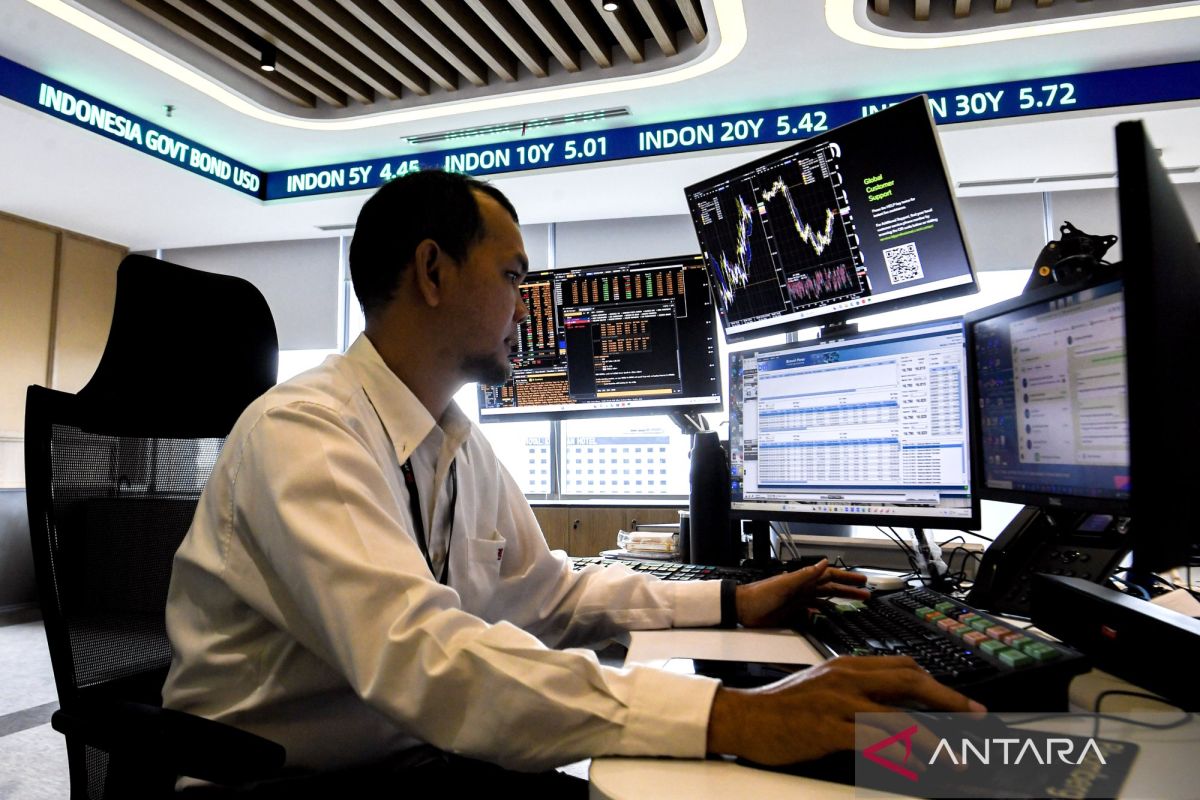
The Indonesian Stock Exchange (BEI) Composite Index (IHSG) is expected to move with a limited weakening bias on Friday, triggered by investor profit-taking ahead of the weekend. The IHSG opened up 4.63 points, or 0.08 percent, at 6,112.84. Meanwhile, the LQ45 index of 45 leading stocks rose 0.31 points, or 0.05 percent, to 608.89. “Based on technical analysis, we see the IHSG potentially weakening limitedly with support and resistance at 6,000-6,220,” said Maximilianus Nico Demus, Associate Director of Research and Investment at Pilarmas Investindo Sekuritas, in his analysis in Jakarta on Friday. From the global front, the United States continues to launch attacks on Iran aimed at weakening its military capabilities. In response, Iran retaliated by targeting US bases in Kuwait and Jordan and requested its ally, the Houthis in Yemen, to maintain the closure of the Strait of Hormuz. Consequently, oil shipments through the Strait of Hormuz decreased from 9.4 million barrels to 5.5 million barrels, causing oil prices to rise sharply, with WTI closing at 79.55 US dollars per barrel and Brent at 84.23 US dollars per barrel on Thursday (16/07). “Market participants and investors may face a difficult period, especially for the IHSG and the bond market to recover. Additionally, we see the probability of a US Federal Reserve interest rate hike potentially increasing rapidly if energy prices cannot be controlled due to the war,” Nico stated. Domestically, Bank Indonesia reported that Indonesia’s external debt in May 2026 reached 462.4 billion US dollars, or nearly 8,000 trillion rupiah (assuming an exchange rate of around 17,300 rupiah per US dollar), growing 2.1 percent year-on-year. The external debt-to-GDP ratio stood at around 30.6 percent, with approximately 84.6 percent being long-term debt, keeping refinancing risk relatively contained. Nico assessed that the increase in Indonesia’s external debt indicates the government is still utilising external financing to support the state budget and development, but the growth remains under control. He added that the debt structure is also healthy as it is dominated by long-term debt and the ratio to GDP is still relatively low, thus maintaining manageable refinancing risk. “However, the weakening of the rupiah and high global interest rates could increase the future debt repayment burden. As long as the debt funds are used for productive sectors and fiscal discipline is maintained, the increase in external debt is not expected to pose a significant risk to Indonesia’s economic stability,” Nico said. On Thursday’s trading, European bourses moved variably, with the Euro Stoxx 50 strengthening 0.25 percent, the UK’s FTSE 100 rising 0.54 percent, Germany’s DAX weakening 0.34 percent, and France’s CAC 40 falling 0.05 percent. Meanwhile, Wall Street in the US closed lower on Thursday, with the S&P 500 index falling 0.51 percent to 7,533.77, the Nasdaq Composite index weakening 1.62 percent to 29,025.77, and the Dow Jones Industrial Average declining 0.20 percent to 52,552.97. This morning, regional Asian stock markets saw the Nikkei index weaken 4.22 percent to 64,016.00, the Shanghai index fall 1.50 percent to 3,823.95, the Hang Seng index strengthen 1.55 percent to 24,602.00, the Shenzhen index drop 3.20 percent to 14,024.53, and the Strait Times index weaken 0.38 percent to 5,518.77.