
IHSG Outlook Following the MSCI Rebalancing Announcement
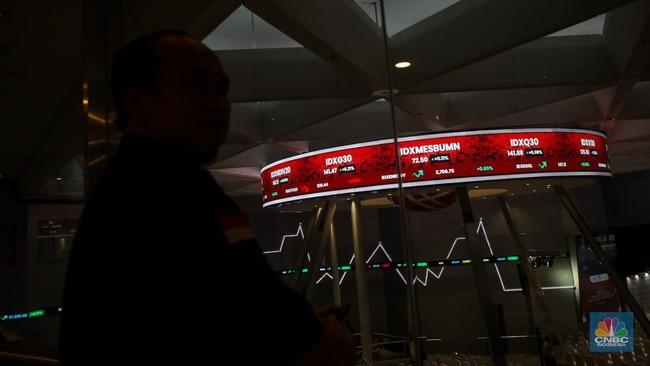
The Indonesian stock market remains in a phase of intense pressure after the results of the MSCI August 2026 review were announced. The IHSG, which is now moving around the 6,300 level, reflects that market participants remain cautious, especially ahead of the effective date of the MSCI rebalancing on 31 August 2026.
This pressure is not necessarily over within one or two trading days. In fact, the period towards the end of the month could become the most important phase because global passive funds that track the MSCI indices usually adjust their portfolios close to the effective date.
In the August 2026 review, MSCI removed GOTO and CPIN from the MSCI Global Standard Index. CPIN still entered the MSCI Global Small Cap, but its status was downgraded. In addition, a number of other stocks also exited the MSCI Global Small Cap, such as ARTO, BUKA, ESSA, FILM, HEAL, KPIG, RATU, SMGR, and TCPI.
As a result, these stocks have the potential to face technical selling pressure. This pressure is not solely because the issuers’ fundamentals have suddenly deteriorated, but because passive funds need to adjust their portfolio composition in line with the new index.
A similar situation was seen in previous MSCI rebalancings. When the effective day arrives, transaction volume can rise sharply and foreign selling pressure can intensify, especially on stocks that exit the index or experience a reduction in weight.
What needs to be noted is that the MSCI effect usually does not only pressure stocks that directly exit the index. In a risk-off market condition, other liquid stocks can also be caught up in the selling.
This happens because foreign and institutional investors often choose to offload the most easily liquidated stocks. As a result, stocks that actually still have good fundamentals can also be corrected simply because market sentiment is weak.
This is where opportunities begin to emerge. For investors who still have cash, the correction towards the end of August can be used to start rearranging their portfolios. However, the approach must remain selective.
A price correction does not automatically make all stocks attractive. Investors need to distinguish between stocks that fall due to temporary technical pressure and stocks that fall due to fundamental problems.
Stocks that exit the MSCI index still need to be re-evaluated. If the previous reason for buying was only because of expectations of index inclusion or potential foreign inflow, then the investment thesis has changed.
Conversely, stocks that still have solid earnings, healthy balance sheets, high liquidity, and strong positions in their sectors can become candidates to watch if they are also corrected due to MSCI sentiment.
Ahead of the end of the month, a more sensible strategy is not to enter all at once in large amounts, but rather gradually.
Investors can prepare cash and divide purchases into several phases. Some can be used when the IHSG begins to approach the support area, some can be prepared ahead of the effective rebalancing day, and the rest can be used after 31 August to see whether foreign pressure begins to ease.
The IHSG area of 6,200 is an important level to watch. If this area is able to hold, the opportunity for a rebound remains open. However, if it is breached, pressure can continue and open up room for a deeper discount at the 6,000 level.
In a situation like this, stocks that are more worthy of being on the watchlist are issuers that are liquid and have relatively strong fundamentals. The large bank, telecommunications, consumer defensive, infrastructure, and commodity groups with solid cash flow can be of interest.
The main focus is not simply looking for the stocks that have fallen the most, but looking for stocks that have fallen because they were dragged down by market sentiment, not because their business quality has deteriorated.
After the rebalancing becomes effective at the end of August, market attention will shift to the MSCI November 2026 review. This is important because MSCI will still assess the development of Indonesia’s capital market reforms, especially regarding ownership transparency, free float, and the investability quality of the market.
If progress is deemed good enough, the market could get a positive catalyst. However, if MSCI is not yet satisfied, the risk of pressure on the Indonesian market could continue.
Thus, the end of August is not only about facing outflows. This period can also be an opportunity to clean up portfolios, reduce stocks whose thesis has weakened, and start building positions in higher-quality issuers.
The key is not to rush into buying, but to be ready when the market offers more attractive prices, and it appears that this rebalancing could truly benefit patient investors.