
IHSG Opens Up 1%, Haji Isam Becomes 'Fuel' This Morning
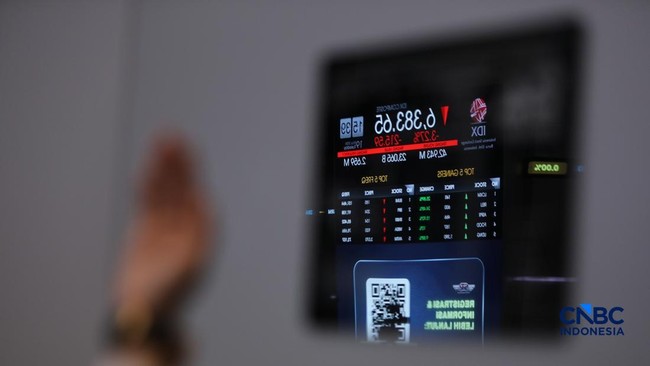
The Jakarta Composite Index (IHSG) strengthened by more than 1% in trading on Tuesday (18/8/2026), with a surge in energy stocks serving as the main driver of the index’s gains.
Based on trading data this morning, the IHSG rose around 1% to 6,466. The gain was mainly supported by the energy sector, which soared 7.33%, far outperforming other sectors.
One of the main drivers came from shares of PT Bayan Resources Tbk (BYAN), which jumped by more than 20%. The coal producer’s shares were at Rp17,275 in morning trading.
The surge in BYAN occurred amid circulating rumours that businessman Andi Syamsuddin Arsyad, also known as Haji Isam, through Jhonlin Group, is targeting a controlling stake in Bayan Resources. The market is discussing the possibility of an acquisition of around 62% of BYAN shares.
The rise in BYAN had a significant impact on the IHSG’s movement. Based on morning trading data, BYAN was the largest contributor to the index, at around 51.45 points.
Besides BYAN, a number of other shares also supported the IHSG with limited weight. Bank Mandiri (BMRI) contributed around 3.68 points, Bumi Resources Minerals (BRMS) 3.36 points, Bank Central Asia (BBCA) 2.49 points, and Bumi Resources (BUMI) around 2.07 points.
Gains were also seen in other energy shares such as Petrosea (PTRO), VKTR Teknologi Mobilitas (VKTR), Pradiksi Gunatama (PGUN), Energi Mega Persada (ENRG), and Japfa Comfeed Indonesia (JPFA).
Meanwhile, a number of shares that held back the IHSG also had limited contributions. Maha Properti Indonesia (MPRO), which experienced a correction, weighed on the index by -2.09 points. Mora Telematika Indonesia (MORA) contributed -2.07 points and Kalbe Farma (KLBF) -1.16 points.
Thus, the surge in BYAN and energy shares became the most dominant catalyst behind the IHSG’s morning gain, while investors also returned their attention to several important domestic agendas, especially the Bank Indonesia Board of Governors Meeting taking place on 18-19 August 2026.
BI is expected to keep its benchmark interest rate at 5.75% after previously raising the BI Rate aggressively by 75 basis points in April-June 2026.
Besides the interest rate decision, investors are also awaiting the release of the External Debt Statistics (SULNI) for June 2026 today. In May, Indonesia’s external debt position reached US$444.40 billion, the highest level in the data series since 2007.
Other domestic sentiment comes from the 2027 State Budget Draft (RAPBN). The government is targeting state revenue of Rp3,426 trillion and state expenditure of Rp4,097.2 trillion, with the budget deficit maintained at 2.40% of GDP. Investors will watch how this fiscal posture translates into economic growth and financial market prospects.
Meanwhile, the market remains overshadowed by the impact of the earthquake in East Nusa Tenggara (NTT). As of 17 August 2026, BNPB reported that the death toll had reached 68 people. The government stated that disaster management can still be carried out with domestic resources and has not yet opened the option of foreign aid.
From the external side, sentiment tends to be mixed. Japan’s economy grew 0.3% quarter-on-quarter in Q2-2026, below the 0.5% expectation, while China’s industrial production in July grew only 4.5% year-on-year and retail sales grew 0.6%, both slowing from the previous month and below market expectations.
Global investors will also await the minutes of the Fed meeting, or FOMC Minutes, on Thursday early morning Indonesia time. The minutes are important because at the July meeting there were three FOMC members who dissented and wanted a 25 basis point rate hike, opening speculation about the direction of Fed policy in September.
In the commodity market, Iran-US tensions also remain a risk to watch. The threat of escalation in the Strait of Hormuz could affect oil prices, exchange rates, inflation, and sentiment towards global risk assets.