
IHSG likely to move sideways as market monitors global interest rate direction
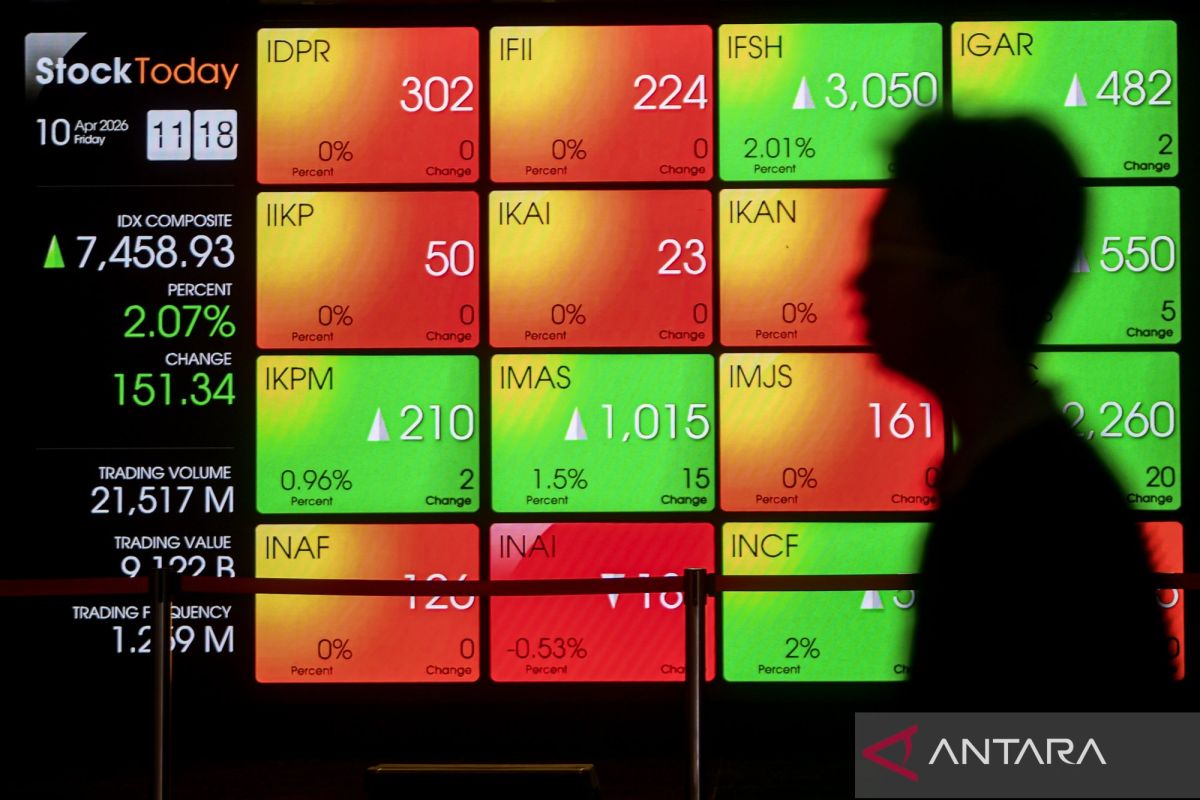
The Jakarta Composite Index (IHSG) of the Indonesia Stock Exchange (BEI) is likely to move sideways on Friday, as market participants continue to monitor the direction of global benchmark interest rate policy. The IHSG opened up 11.30 points, or 0.19 percent, at 6,010.34. Meanwhile, the LQ45 index of 45 leading stocks fell 0.71 points, or 0.12 percent, to 587.04.
Head of Research at Kiwoom Sekuritas Indonesia, Liza Camelia Suryanata, stated that the IHSG has the potential to continue its strengthening to retest the nearest resistance at 5,993–6,052 and has the opportunity to move towards the 6,117–6,226 area. However, it remains vulnerable to a correction if it fails to break through resistance, with a risk of decline towards the 5,720 level, and further support at 5,784 and 5,677.
From the global front, Liza noted that market participants continue to scrutinise the direction of the Federal Reserve’s monetary policy after the central bank adopted a more hawkish stance under the leadership of new Chair Kevin Warsh. Although inflation remains high, the market expects the Fed to hold interest rates at its July 2026 meeting, while awaiting further developments regarding inflation and the labour market. However, if core inflation remains at current levels until September 2026, the likelihood of an interest rate hike will increase again.
Geopolitical sentiment has also returned to the spotlight following reports of an attack on a Singapore-flagged cargo ship in the Strait of Hormuz near Oman. Two senior United States officials stated that the vessel was attacked by Iran’s Revolutionary Guard. The incident has the potential to disrupt the stability of global energy shipping routes and represents a setback for the temporary peace process between the US and Iran, which had previously helped lower oil prices and ease global inflation concerns.
From the US, the core Personal Consumption Expenditures (PCE) price index rose in May to 0.3 percent month-to-month and 3.4 percent year-on-year, in line with market expectations but still well above the Fed’s 2 percent inflation target. Investors remain focused on the prospects for the artificial intelligence (AI) sector amid the dynamics of higher interest rates. Micron’s financial report managed to allay concerns that massive capital expenditure in the AI sector would not yield adequate returns.
Domestically, the government is simultaneously implementing fiscal policy adjustments and priority programme changes, which include efficiency measures for the Free Nutritious Meal (MBG) programme and the withdrawal of Excess Budget Balance (SAL) funds from state-owned banks (Himbara) to maintain budget balance and financial system stability. The MBG programme is potentially being cut by around 15 percent, or Rp40–50 trillion, from its Rp268 trillion budget, with the number of beneficiaries reduced to around 49 million people from 62.5 million through stricter criteria, as well as a temporary halt to the addition of more than 13,000 new kitchens. Meanwhile, the Ministry of Finance has begun gradually withdrawing SAL funds of around Rp420 trillion, which were previously placed with Himbara banks and Bank Indonesia.