
IHSG in Session I Falls, Dragged by Basic Materials and Energy Sectors
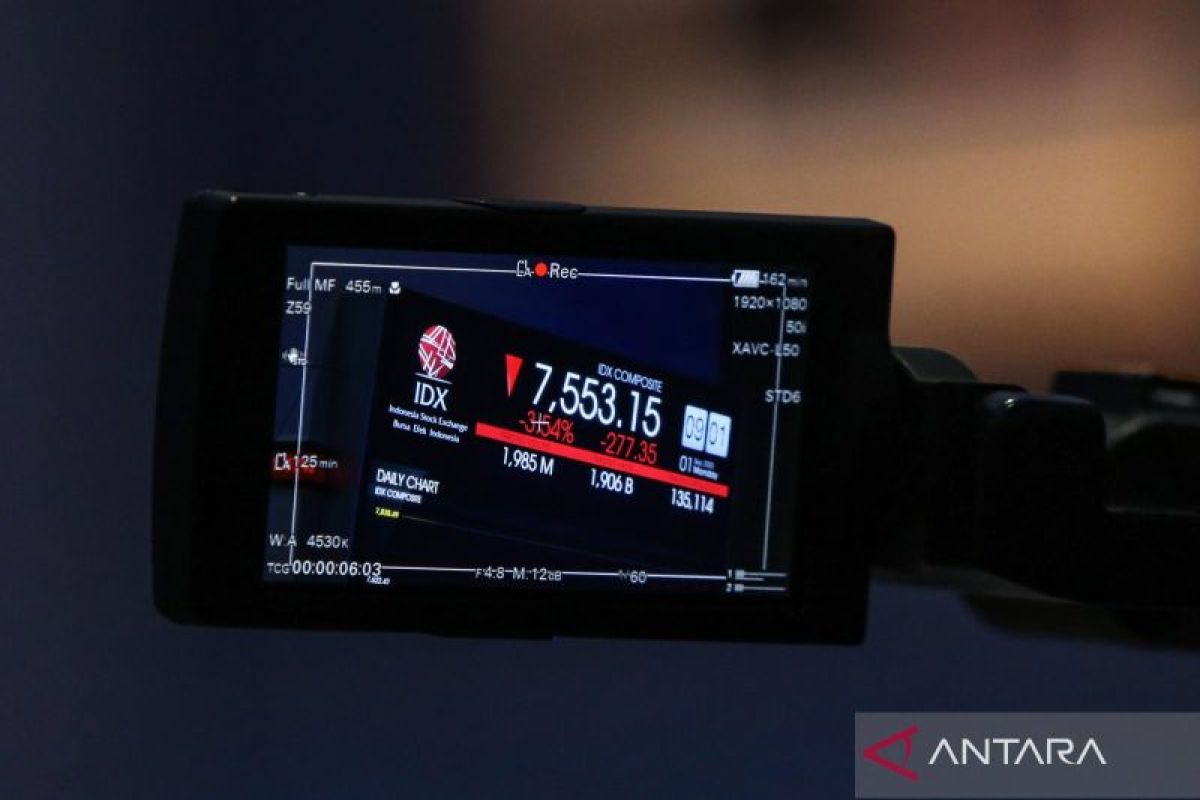
Jakarta — The Jakarta Composite Index (IHSG) of the Indonesia Stock Exchange (BEI) in the first trading session today, Wednesday (20 May), closed lower, weighed down by shares in the basic materials (commodities) and energy sectors.
IHSG in Session I closed down 38.50 points, or 0.60 percent, to 6,332.18. Meanwhile, the LQ45 index of 45 leading stocks rose by 0.23 points, or 0.04 percent, to 635.05.
“Markets are watching the President’s speech on the direction of economic and fiscal policy going forward, including the formation of a special body for commodity exports, which has sparked concerns in commodity-based stocks, as markets fear there may be intervention in export mechanisms or margins for emitents,” said market observer Elandry Pratama when contacted in Jakarta on Wednesday.
In addition, Elandry explained, traders are adopting a wait-and-see stance ahead of the Bank Indonesia (BI) Board of Governors (RDG) Meeting’s announcement on the BI-Rate later today.
“Markets are quite sensitive to the direction of monetary policy because it directly affects rupiah stability and foreign capital flows,” he said.
“Moreover, the efficiency of the budget for the Free Nutritious Meals (MBG) programme, estimated to fall from Rp335 trillion to around Rp268 trillion, is positive for Indonesia’s fiscal perception as it shows efforts to maintain the discipline of the APBN,” he added.
“However, sentiment is not strong enough to hold back selling pressure across the market,” he added.
“From overseas, the main pressure still stems from high uncertainty over the path of the Fed’s interest-rate trajectory and the strengthening dollar, which makes foreign funds tend to be more selective toward emerging markets, including Indonesia,” he explained.
“Additionally, rising US Treasury yields are prompting global investors to shift toward safer assets for now,” he added.
“Markets remain haunted by concerns about a global economic slowdown and geopolitical tensions, which reduces appetite for risk assets,” he said.
“For foreign investors, there is still a tendency to stay cautious and defensive, with relatively active profit-taking especially in big-cap banks and commodity stocks that previously supported the index,” he concluded.
“Foreign investors will remain highly dependent on Rupiah stability, the direction of the BI Rate, and perceptions of the government’s fiscal credibility going forward. If the rupiah stabilises and global pressures ease, the window for foreign inflows could reopen,” he added.
“In the short term, I project the IHSG will continue to move in a volatile pattern with a sideways to slightly downward bias as the market digests domestic and global sentiment. Yet if BI decisions help maintain Rupiah stability and the government sustains market confidence in fiscal policy, a technical rebound remains possible,” he added.
“I see defensive sectors, large banks, domestic consumption, and stocks with strong fundamentals as still likely to be the main choices for investors in the current market conditions,” he concluded.
At the close of Session I, trading frequency stood at 1,600,448 transactions, with 27.55 billion shares traded valued at Rp13.67 trillion. A total of 165 shares rose, 521 fell, and 128 remained unchanged.
According to the IDX-IC sector index (IDX-IC), nine sectors declined, led by Transport & Logistics (down 4.12%), followed by Basic Materials (down 4.07%) and Energy (down 2.73%).
The biggest gainers included INTD ZONE, APIC, MORA and INDR, while the biggest losers included UANG, RLCO, TPIA, WBSA, and SMMT.