
IHSG Heads Towards 6,500: Let Foreigners In, Don't Keep Propping It Up with Retail
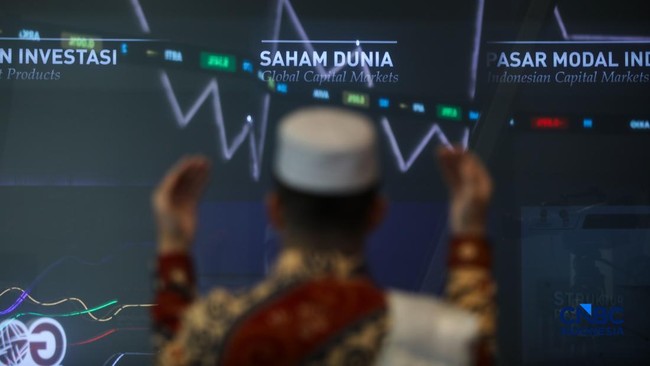
The direction of Indonesia’s stock market is beginning to change. After being battered by foreign outflows since the start of the year, the IHSG closed at 6,409.65 on Friday, 7 August 2026, up around 1.04% from the previous day’s position.
The rise brought the IHSG to within just 40.35 points, or around 0.63%, of the important resistance level of 6,450. From its lowest point of 5,342 on 8 June, the index has now rebounded by almost 20%.
The quality of the rise is also better. Foreign investors recorded net buying of Rp1.24 trillion across the entire market, with around Rp917.23 billion occurring in the regular market. This means that around 74.2% of foreign purchases genuinely entered through the regular trading mechanism, rather than merely being share transfers through the negotiated market.
At the same time, USD/IDR was around 17,885, improving from 17,910 in the previous session. The combination of a rising IHSG, foreign buying in the regular market, and a strengthening rupiah provides a more solid signal compared with the previous rebound.
Foreign Outflow YTD Begins to Narrow
With the additional purchases on Friday, the total net foreign sell year-to-date improved from Rp72.53 trillion to around Rp71.29 trillion.
August has also changed direction. Up to 6 August, foreigners were still recording net selling of Rp540.35 billion. After Friday’s purchases, August’s position reversed to a net buy of around Rp695.17 billion.
Of the 140 trading days since 2 January, foreigners still recorded net selling on 92 days and net buying on 48 days. So one large buying session has not erased the distribution trend throughout the year.
However, Friday’s buying is important because it occurred in the regular market and coincided with a strengthening of the index and the rupiah.
This differs from 29 July, when foreigners recorded net buying of Rp8.97 trillion but the IHSG actually fell by around 0.64%. That transaction most likely had a negotiated component or a large transfer of ownership that did not directly push prices in the regular market.
July had already proven that the IHSG could rise without consistent foreign buying. Friday’s trading provided a new development: domestic investors continued to provide support, but foreigners began to join in buying with better flow quality.
Domestic Investors Remain the Foundation
Domestic investors contributed around 64% of share transaction value year-to-date, compared with 36% from foreign investors. Therefore, the IHSG’s recovery since June cannot be explained by foreigners alone.
Retail activity is indeed high. Previous trading data showed transaction frequency above average even though transaction value was still below average. That pattern indicates more small-sized transactions, something compatible with high retail participation.
However, domestic does not equal retail. KSEI data shows local investors controlled 58.83% of share ownership as of May 2026. At the same time, around 82.32% of the total value of investor assets was still controlled by institutions.
Retail can drive momentum and increase trading frequency. But to absorb foreign outflows of tens of trillions of rupiah, the market still needs domestic institutions such as mutual funds, insurance companies, banks, securities firms, corporations, and pension funds.
Pension funds themselves have not yet been seen making sufficiently large purchases to close the gap. The value of pension fund share portfolios fell from Rp238.91 trillion in December 2025 to Rp172.66 trillion in May 2026. The decline is indeed in line with the market correction, but it does not yet show aggressive accumulation.
Foreigners Have Not Abandoned Indonesia
Foreign outflows from shares do not mean foreign investors have abandoned all Indonesian assets. Bank Indonesia recorded foreign portfolio inflows of US$8.5 billion in the second quarter of 2026, mainly into government bonds (SBN) and Bank Indonesia Rupiah Securities (SRBI).
Non-resident ownership of SRBI increased from Rp238.09 trillion on 15 June to Rp288.65 trillion on 20 July, equivalent to around 27.11% of total outstanding.
In conditions of high uncertainty, SBN and SRBI offer a more comfortable profile. Investors receive a coupon or carry that can be calculated without bearing the full risk of issuer earnings, share valuations, free float, governance, and IHSG volatility.
SBN and SRBI have become a “paid waiting room”. Foreigners still obtain rupiah exposure while waiting for MSCI certainty and stock market stability.
Friday’s share purchases may be an early sign that some investors are beginning to leave that waiting room. However, several additional sessions are needed to prove there is a real rotation from fixed income towards equity.
Rupiah at 17,885 Provides Breathing Room
The improvement in USD/IDR from 17,910 to around 17,885 looks small, but the direction is important. Foreign investors face two risks at once when buying Indonesian shares: share price risk and rupiah depreciation risk.
Since 2 January, the IHSG is still down around 26.7%, while USD/IDR has risen from 16,715 to 17,885. The rupiah has weakened by around 7%. After accounting for the exchange rate, dollar-based investor losses are still around 31.5%.
Therefore, a consistent strengthening of the rupiah could be a bigger catalyst than one day of foreign net buying. If USD/IDR can decline gradually and hold below 17,900, hedging needs are reduced and Indonesian share valuations become more attractive in US dollars.
Conversely, if USD/IDR moves back through 18,000-18,100, foreign inflows into shares risk stalling again even though issuer fundamentals are still growing.
MSCI Is Both a Catalyst and a Risk
The market is now approaching the MSCI Index Review announcement on 12 August, which will take effect on 1 September. It is reasonable that some of Friday’s foreign buying was related to positioning ahead of that announcement, although a direct link cannot yet be confirmed.
The MSCI issue is bigger than simply shares entering or leaving the index. MSCI is still highlighting ownership transparency, concentrated holdings, coordinated trading, and free float.
If Indonesia’s reforms are deemed insufficient by November 2026, MSCI could open a consultation regarding the potential reclassification of Indonesia from Emerging Market to Frontier Market.
Therefore, even neutral MSCI news could be positive because some of the uncertainty has already been reflected in prices. Conversely, a deteriorating signal could restore pressure on large-capitalisation shares.
Fundamentals Supportive, Now It Is About Money Flow
H1 2026 report data from 763 listed companies shows around 65.4% of companies recorded revenue growth. Around 60% also recorded improved earnings or turned from loss to profit. Median net profit growth reached around 10.2%.
These fundamentals provide a basis for the IHSG’s recovery. However, company performance is only translated into price increases if sufficient money flow is available.
Foreign buying in the regular market on Friday provided an early signal that fundamentals and flow are beginning to move in the same direction. If it continues, liquid shares with good earnings quality such as large banks, telecommunications, infrastructure, and recovering consumer issuers have the opportunity to become the next leaders.
Level 6,450 Is the Deciding Factor
The IHSG is now very close to 6,450. A daily close above that level would be the first positive signal. A stronger confirmation would be a weekly close above 6,500, accompanied by increased transaction value and foreign net buying in the regular market.
If those conditions are met, the next target is around 6,725, then 6,950-7,050. If the IHSG fails to break through 6,450 and falls back below 6,300, Friday’s buying was likely only tactical positioning ahead of MSCI.
Conviction towards the IHSG has now become slightly more constructive. The market is no longer entirely propped up by retail and domestic investors because foreigners have begun to join in buying through the regular market. The rupiah is also moving in a supportive direction.
However, one day is not enough to declare a foreign reversal. Level 6,450 is the door, while regular foreign inflows and a stable rupiah are the keys to keeping that door open.
Source: jawawa.id (https://jawawa.id/newsitem/ihsg-heads-towards-6-500-let-foreigners-in-dont-keep-propping-it-up-with-retail-1786333916)
Originally published by CNBC Indonesia (https://www.cnbcindonesia.com/research/20260809224447-128-757765/ihsg-menuju-6500-asing-silakan-masuk-jangan-ditopang-ritel-terus), translated from Indonesian