
IHSG Drops 0.21% at the End of Session I
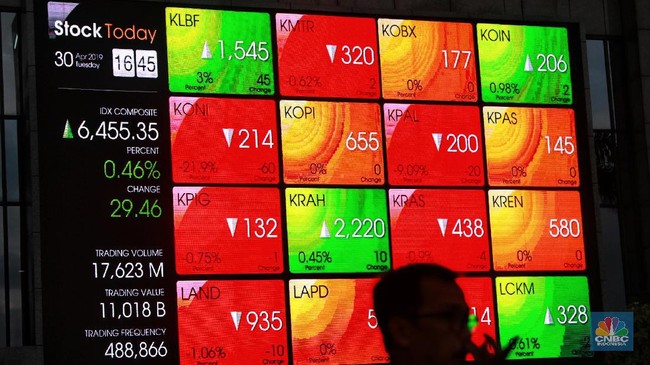
The Indonesia Composite Index (IHSG) moved fluctuated during trading on Tuesday, 29 September 2026. At the close of the first trading session today, the index fell by 12.86 points or 0.21% to the level of 6,135.
At the start of today’s trading, the IHSG opened at 6,118.81, lower than the previous day’s close. Selling pressure was felt immediately from the beginning of the session. The index continued to weaken, hitting a daily low of 6,013.08 at approximately 09:30 WIB.
Afterwards, the market began to show signs of recovery. The IHSG rose gradually and consolidated within the 6,040 to 6,100 range by 10:00 WIB.
Approaching 11:00 WIB, the index strengthened sharply, reaching a daily high of 6,150.55, slightly above the previous closing position. However, this gain did not last long. Profit-taking caused the index to correct slightly back to the 6,135 level, leaving the IHSG remaining in the red zone.
In terms of trading activity, transaction volume was recorded at 231 million lots with a transaction value reaching Rp7.34 trillion. The wide daily movement range of approximately 137 points from the low to the high reflects high volatility and a cautious stance among market participants.
Throughout today’s trading, the IHSG’s weakness was weighed down by 451 declining stocks, 262 unchanged stocks, and only 250 advancing stocks.
Pressure on the IHSG coincided with the commencement of the new Indonesia Stock Exchange (IDX) policy, which reduced the minimum share price from Rp50 to Rp1 per share in the regular and cash markets starting Monday (28/9/2026).
This change is accompanied by adjustments to the auto-rejection limits. For shares priced between Rp1 and Rp10, the Upper Auto Rejection (ARA) and Lower Auto Rejection (ARB) limits are set at Rp1, while the 15% asymmetric ARB remains applicable for shares priced above Rp10 until the end of 2026.
The IDX stated that the change in minimum price is intended to expand the trading range of stocks, improve the quality of price discovery, boost liquidity, and provide greater flexibility for investors in managing their portfolios.
At the same time, external pressures continue to shadow the domestic market. Tighter global monetary policies, the strengthening of the US dollar, rising energy prices, and high global interest rates still have the potential to drive volatility in emerging market financial markets, including Indonesia.
In the currency market, the rupiah weakened again against the US dollar during early week trading.