
IHSG Closes Session 1 Down 0.73% After Brief Morning Rally
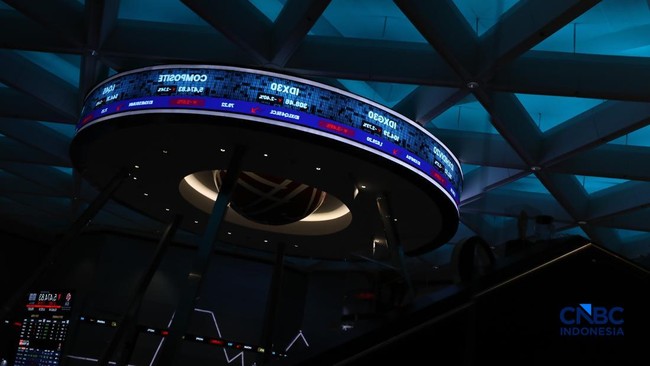
Jakarta, CNBC Indonesia — The Jakarta Composite Index (IHSG) closed down 45.02 points or 0.73% at the end of session 1 today, Friday (19/6/2026). The IHSG parked at 6,127.32 at 11:30 WIB. A total of 374 stocks fell, 311 rose, and 274 were unchanged. Transaction value reached Rp 8.23 trillion, involving 12.76 billion shares in 1 million transactions.
The IHSG had initially moved up to reach 6,215.06 (+0.69%) at the start of trading. However, the index did not stay long in the green zone and immediately slumped to -0.5%. Volatility remained high until the end of session 1. The IHSG repeatedly tried to trim its correction and even briefly touched the green zone again, but was still overwhelmed by selling pressure into the afternoon.
Citing Refinitiv, Telkom Indonesia (TLKM) was the main drag on the IHSG. TLKM continued its correction since the ex-date that fell on yesterday’s trading, Thursday (18/6/2026). TLKM contributed -18.79 points with a price correction of 6.47%. Additionally, banking stocks also featured on the top laggards list this afternoon. Bank Mandiri (BMRI) contributed -9.39 points, Bank Rakyat Indonesia (BBRI) -3.14 points, and Bank Permata (BNLI) -2.64 points. Several conglomerate stocks also contributed significantly to today’s IHSG correction, namely Amman Mineral (AMMN), Barito Pacific (BRPT), Barito Renewables Energy (BREN), Impack Pratama Industri (IMPC), and Bumi Resources Mineral (BRMS).
Today’s market volatility coincided with the latest announcement from MSCI. The global index provider released its Global Market Accessibility Review early Friday morning. In the annual evaluation report, the accessibility of Indonesia’s equity market officially recorded a deterioration in the information flow criteria. Based on the rating summary table in the document, the Information Flow criteria rating for Indonesia was downgraded from a positive rating without major issues in 2025 to a negative rating indicating urgency for improvement in 2026.
The accessibility rating downgrade was triggered by findings of structural problems related to opacity in share ownership structures in the domestic capital market. Furthermore, the global evaluation also highlighted indications of coordinated trading behaviour on the Indonesian bourse, which is directly assessed as damaging the fair price formation process in the regular market. These practices limiting the level of transparency are viewed as materially restricting the ability of international institutional investors to assess the real amount of shares circulating in the public (true free float). This condition also hinders foreign investors from being able to rely on objectively observed market prices in their portfolio construction and index replication processes.
Moreover, the evaluation report also noted that the criteria for Equal Rights to Foreign Investors remain hampered. This is because detailed information related to corporate actions and domestic stock market dynamics is not always readily available in English. Nevertheless, Indonesia’s operational framework in other aspects remains relatively stable, with very good ratings maintained for criteria on asset custody infrastructure, registration, trading mechanisms, and foreign ownership limit leniency. Although the trading infrastructure is systematically assessed as very adequate, the sharp spotlight on ownership transparency and price formation integrity will trigger a re-evaluation from various global index fund managers, potentially causing adjustment volatility pressure on foreign capital flow weights in large-capitalisation stocks throughout today’s trading session.
Despite the changes, the Indonesia Stock Exchange (BEI) has undertaken improvements in terms of information disclosure provided for both domestic and foreign investors. The BEI has opened share ownership data above 1%, released HSC data, and carried out various structural improvements on the exchange.