
IHSG Closes June with a 3% Plunge, Settling at the 5,600 Level
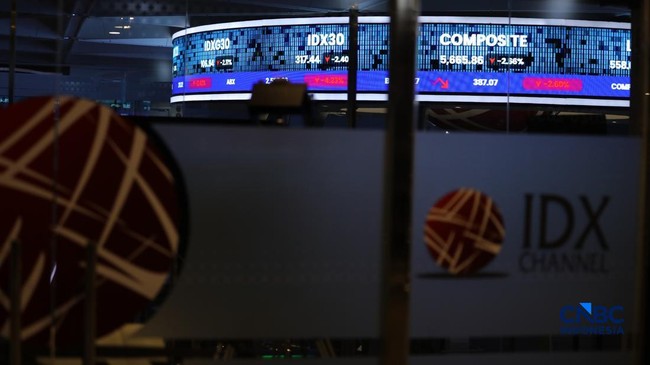
The Composite Stock Price Index (IHSG) closed down 177.6 points, or 3.05%, at 5,643.19 in trading today, Tuesday (30/6/2026). Throughout the day, the IHSG experienced significant pressure and remained consistently in the red, moving within a range of 5,638.57 to 5,811.67. For context, the IHSG closed at 5,820.79 in the previous session. By the end of trading, the transaction value was recorded at IDR 15.15 trillion, with a volume of 19.46 billion shares across 1.59 million transactions. Compared to the daily average in the last week of May 2026, the transaction value fell by 87.33% and volume plunged by 59.06%. According to Refinitiv, all sectors were crushed in today’s trading. The raw materials sector led the correction with a 4.35% drop, while the smallest decline was in the healthcare sector, down 0.9%. Two stocks were the main drags on the IHSG today, namely BBCA with a weight of -35.18 points and BBRI with -17.25 points. Additionally, MORA, ASII, and EMAS were also among the top laggards. Today’s correction extends the bearish trend the IHSG has experienced since the beginning of the month. Throughout the year to date, the IHSG has closed every month in negative territory. On a monthly basis, the IHSG fell 7.9% in June 2026 and has slumped 35.49% year-to-date. MNC Sekuritas analyst Herditya stated that the IHSG’s weakness occurred alongside the rupiah’s continued softness against the US dollar. Investors are also waiting for the release of Indonesian inflation data and US employment figures, which are considered to have the potential to influence market direction. From the commodity side, the decline in world gold prices to around US$3,958 per troy ounce provided negative sentiment for stocks correlated with the precious metal. Meanwhile, Doo Financial Sekuritas analyst Lukman Leong assessed that the market remains overshadowed by concerns over the results of the global rating agency MSCI’s review. ‘Although the rupiah has stabilised, the potential for a market status downgrade still exists,’ he told CNBC Indonesia on Tuesday (30/6/2026). Furthermore, geopolitical tensions in the Middle East have not fully subsided. Despite the United States and Iran reopening lines of communication, the high level of uncertainty has led foreign investors to prefer short-term, choppy trades. Pilarmas Investindo Sekuritas Associate Director Maximilianus Nicodemus also noted that investors’ primary focus remains on the results of S&P’s review of the Indonesian market. Separately, Indonesia Stock Exchange (BEI) President Director Jeffrey Hendrik opined that the issue of capital market liquidity cannot rely solely on the growth of retail investors. A balance is needed between the supply of quality issuers and a more diverse investor base. ‘The absorption cannot be entirely burdened on our retail investors,’ he said when met at the BEI building, as quoted on Tuesday (30/6/2026). Jeffrey explained that from the supply side, the market needs more companies with large market capitalisations to list on the exchange. The presence of large-cap issuers is believed to strengthen the market’s appeal while providing more investment options for market participants. On the demand side, the number of retail investors in Indonesia has grown tremendously in recent years. ‘One quality supply is certainly a large number of big-cap companies. From the demand side, our retail investor numbers are already extraordinary,’ he stated. He said that the BEI, together with stakeholders, hopes that capital market reforms will increase global investor confidence in the Indonesian capital market. ‘So that later, foreign investors together with our domestic institutional investors and supported by our retail investors will create healthy dynamics in our market,’ he said.