
Igniting Independence: Safeguarding Energy Sovereignty and the Mandate of Justice
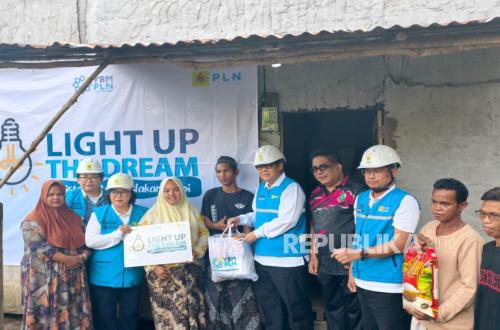
There is a question that almost always arises whenever we arrive in August. After so many decades of independence, what does independence mean for Indonesia today?
The question sounds simple. Yet the answer is never simple. For the generation of 1945, independence had a very tangible face. It was the courage to say that this nation has the right to determine its own destiny. It was paid for with sacrifice, blood, tears, and the determination to establish a sovereign state.
Eighty-one years later, we live in a different situation. There are no longer colonial troops to be driven from the homeland. There is no longer a proclamation to be read. The Red and White flag flies in every corner of the country.
However, independence has not lost its work. Every era gives birth to its own form of struggle.
Today, a nation’s sovereignty is not only tested by its ability to defend its territory. It is also tested by its ability to provide food for its people, master technology, manage natural resources, build industry, supply energy, protect the environment, and ensure that progress is not enjoyed only by those who live near the centres of power and the economy.
For that reason, the theme of this year’s 81st anniversary of the independence of the Republic of Indonesia, ‘Indonesia Berdaulat, Adil, dan Makmur’ (Indonesia Sovereign, Just, and Prosperous), carries a message that goes far beyond a celebratory theme. The theme actually brings us back to the fundamental reason why this Republic was founded.
Independence must produce sovereignty. Sovereignty must deliver justice. And justice must ultimately open the way to prosperity.
The three cannot stand alone.
A Great House Called Indonesia
In a number of my reflections on the state, Pancasila, and the constitution, I always depart from the reality that Indonesia is a highly plural nation.
We differ in religion, ethnicity, language, culture, region, and even in the way we view many issues. That diversity is a source of wealth, but in certain circumstances it can also become a source of division if there is no common ground capable of binding everything together.
For that reason, a nation as large as Indonesia needs a kalimatun sawa’, a meeting point accepted as a shared home. For Indonesia, that home is Pancasila.
I hold the view that Pancasila is not the result of a compromise that must be constantly viewed with suspicion by one group towards another. On the contrary, within Pancasila there is room for this nation to bring together religion and nationhood, freedom and responsibility, individual rights and the common interest, as well as democracy and deliberation.
In the book Prinsip-Prinsip Negara Indonesia: Syarah Konstitusi, I return to that question. A great nation must not be built on a fragile foundation. Pancasila, Bhinneka Tunggal Ika, the Unitary State of the Republic of Indonesia, and the 1945 Constitution are not merely a series of terms to be memorised in school lessons. It is there that the basic agreement for living together is laid down.
Independence, therefore, must not be interpreted as the freedom of every group to pull the state in its own direction. Independence actually demands the maturity to live together.
In the Nahdlatul Ulama tradition, we recognise tawassuth, tawazun, tasamuh, and i’tidal: the middle path, balance, tolerance, and justice. These values are not only important in religious life. They also carry great meaning in national life.
Indonesia will be strong not when everyone becomes the same, but when differences have a shared home.
In an increasingly open world, the challenges are even broader. The state no longer lives in an isolated space. Trade, technology, information, energy, the environment, and even conflict in one region can quickly affect the lives of people in another region.
That is why I have said that civil society such as NU must also have the ability to build soft diplomacy: to foster dialogue, bridge differences, and help create a peaceful global life, or peaceful coexistence.
Sovereignty in the present era does not mean closing the door.
A sovereign nation is precisely one that is confident enough to interact with the world without losing its national interest and its identity.
Sovereignty and Energy
It is from that point that I view the question of energy. Perhaps not many people imagine a direct connection between independence and a light switch at home.
Yet the two are very close. When a family turns on a lamp at night, there is a child who can study. When electricity is properly available in a village, economic activity can grow. When the electricity network reaches an industrial area, machines run and jobs are created. Hospitals, schools, data centres, transport, communications, and even modern worship activities require energy. Electricity, therefore, is not merely a commodity. It is part of the infrastructure of civilisation.
My experience within PLN has increasingly shown that behind something that appears highly technical lies a great national question.
PLN has the task of keeping the lights on today, but at the same time it must also think about where Indonesia’s energy will come from twenty, thirty, even fifty years from now.
It is here that the issue of energy transition finds a direct connection with national sovereignty. Indonesia has great and diverse energy potential. We have sun, water, geothermal, wind, bioenergy, and various other energy sources. But possessing resources does not automatically mean being sovereign.
Sovereignty is born when those resources can be managed into national capability.
We need technology. We need an electricity grid. We need financing. We need supporting industries. We need human resources. And no less important, we need consistent long-term policy.
PLN’s 2025-2034 Electricity Supply Business Plan (RUPTL) shows a significant change of direction. Of the planned additional generation capacity of 69.5 gigawatts, around 76 percent is designed to come from new and renewable energy and energy storage systems. Within that figure are around 42.6 GW of renewables and 10.3 GW of storage systems.
I do not see those figures merely as corporate statistics. Behind those numbers lies a great question: can Indonesia carry out an energy transformation without losing reliability, without making energy increasingly difficult for the public to access, and at the same time without sacrificing the future of our environment?
That is the real work.