
Igniting Hope and Guaranteeing Education Amid Disaster
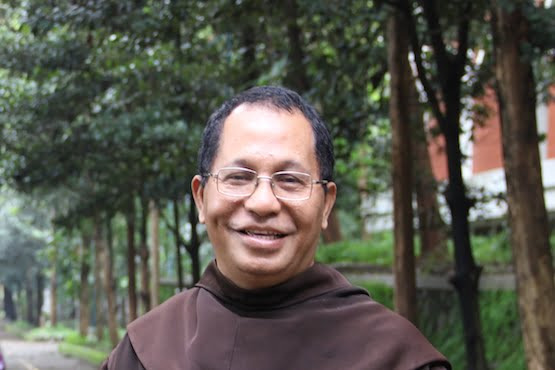
Children affected by disasters lose their homes, families and sense of safety, and are at risk of losing their futures. Amid disaster, the presence of educators reignites hope. Teachers become companions, strengtheners and guardians of spirit, while schools become spaces to restore a sense of safety and dignity.
However, the responsibility for education must not be placed on educators alone. The state is obliged to guarantee every child’s right to education, including when disasters occur. Education in disaster situations must continue holistically, humanely, inclusively and ecologically. School recovery must not merely involve rebuilding damaged buildings, but must restore life, social relations, health, the environment and children’s futures. Therefore, educators ignite hope, while the state ensures that hope has room to grow. Education must become a path to recovery and a strength for rising again.
Children in disaster situations must be helped to see that they have a future. The state must be present, together with educators, to build a future that is just, prosperous, healthy, peaceful and happy in a sustainable manner.
The earthquake in Flores and the haze in Pontianak are humanitarian tragedies that touch the lives of many children. The various disasters across the country are not merely numbers and statistics. Behind every disaster there are people, families, children and wounded lives.
Recovery must not stop at patchwork, short-term development projects. Recovery must be carried out holistically and humanely by delivering social justice and ecological justice. Therefore, every disaster must become a call to build a life that is more dignified, resilient, just, healthy and sustainable.
In situations like this, children’s right to education must not be ignored. Children still have the right to learn, grow and have a future. Education must be present as a safe space amid disaster, restoring hope and dignity for every child. We need education that does not lose hope amid disaster. Education that is holistic, humane and ecological, seeing the child as a whole person, and respecting their body, mind, heart, faith, relationships and living environment.
Education must instil care for others and the earth, and must also teach resilience, solidarity, love and responsibility. In this way, children are ready to face and build their futures. A future that is sovereign, just, prosperous, peaceful, healthy and happy in a sustainable manner.
The earthquake in Flores reminds us that humans are very fragile in the face of nature. The haze in Kalimantan also brings suffering. Children lose the comfort of learning, while families face fear and uncertainty. In such situations, education must not stop. Education must be present as a force to strengthen, heal, build hope and revive humanity amid disaster.
Education in disaster situations is not only about lessons in the classroom. Education teaches care and fosters solidarity. Pupils learn to help others, teachers become companions and sources of hope. Schools become safe spaces for all where every child can speak, play, learn and recover. Education also teaches disaster preparedness as knowledge that becomes a provision for protecting life.
Therefore, education must become a humanitarian movement. Education awakens the awareness that the suffering of others is a call to act. Aid must not stop at providing material goods, but must rebuild dignity and futures. The children of Flores and Kalimantan have the right to safe and quality education, and the right to have hope. Amid earthquakes and haze, education reignites humanity. Education says that no one should lose their future because of disaster.
Education is a humanitarian movement that honours the dignity of every human being. Education teaches care and fosters solidarity. Education opens opportunities for all. No child should be left behind because of poverty. No child should lose their future because of difference. Education must become a path towards a more just and humane life.
Education in the context of earthquakes and other natural disasters is a civilisation project of love. Education must foster the awareness that the earth is a shared home for all life. Amid earthquakes, haze, floods, droughts and various other disasters, education must not remain neutral towards suffering.
Disasters bring wounds to people, especially children and vulnerable groups. The impact is also felt by animals, plants and entire ecosystems. Therefore, education must build care for people and nature simultaneously. Children need to learn to love life and respect the diversity of creation. Every child needs to understand the relationship between ecological crisis, social injustice and humanitarian disaster. Teachers become drivers of awareness and real action. Schools become spaces to nurture solidarity, hope and shared responsibility.
Education must transform knowledge into care, and transform care into practice. In this way, education becomes a force for protecting the earth and restoring life. This is education as a civilisation project of love for a future that is just, healthy, peaceful, prosperous and happy in a sustainable manner.
Education must also look at the future of humanity and civilisation by producing intelligent people. However, intelligence alone is not enough. Intelligent people must be faithful and virtuous.
Source: jawawa.id (https://jawawa.id/newsitem/igniting-hope-and-guaranteeing-education-amid-disaster-1787784631)
Originally published by Media Indonesia (https://mediaindonesia.com/opini/926368/menyalakan-harapan-dan-menjamin-pendidikan-di-tengah-bencana), translated from Indonesian