
IGIC 2026: Mosques, Religious Diplomacy, and Global Peace through the Perspective of Maqāṣidī Interpretation
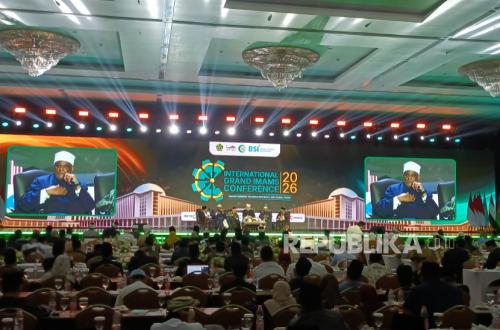
The International Grand Imams Conference (IGIC) 2026, scheduled to be held in Jakarta from 25–28 September 2026 under the theme ‘Mosque Harmony, Religious Diplomacy, and Global Peace’, arrives at a highly significant moment. This forum, which brings together grand imams and religious leaders from various countries, should not merely be viewed as a religious gathering, but as a space to reactivate the function of the mosque and the role of imams in addressing global humanitarian issues.
In this context, the Maqāṣidī interpretation approach becomes highly relevant. Maqāṣidī interpretation does not stop at the literal meaning of the text, but moves further to discover the objectives, values, and public interests (maslahah) intended by the Qur’an. Through such an approach, Qur’anic messages regarding peace, brotherhood, justice, respect for humanity, and the prevention of harm can be presented within the context of contemporary global life.
The Mosque as a Space for Building Public Interest
From a Maqāṣidī perspective, the mosque should ideally serve as a space that connects individual piety with social piety. Prayer performed in the mosque must not be limited to the vertical dimension but must foster concern for human life. The Qur’an reminds us that humanity shares a common origin. Surah al-Ḥujurāt [49]:13 emphasises that humans were created into tribes and nations so that they may know one another (li-ta‘ārafū), not to negate one another. This verse carries a powerful Maqāṣidī message: diversity is a space for building recognition, dialogue, and humanitarian cooperation.
Consequently, the mosque must be a home that provides a sense of security, rather than a space that exacerbates differences; a place that brings people together rather than separates them; and a centre of compassion (rahmah) rather than a source of hatred.
Imams and the Transformation of Religious Diplomacy
The theme of ‘Religious Diplomacy’ can also be interpreted through the Maqult Maqāṣidī lens. Diplomacy does not always have to occur through formal state channels. There is a form of diplomacy that operates through religious language, moral leadership, interfaith dialogue, and humanitarian relations. An imam is not merely a prayer leader; they can also serve as a moral leader, a community educator, a social mediator, and a messenger of peace. When an imam delivers a sermon on brotherhood, tolerance, justice, respect for humanity, and the prohibition of violence, they are effectively conducting religious diplomacy from the space closest to the community.
In the perspective of Maqāṣidī interpretation, the measure of successful proselytisation (dakwah) is not solely how much religious text is delivered, but the extent to which religious messages can bring about public benefit (maṣlaḥah) and prevent harm (mafsadah). Therefore, the mosque pulpit must be a source of serenity. Qur’anic verses must not be detached from their moral objectives. For instance, verses regarding jihad must be read alongside the principles of justice, the prohibition of transgression, and the protection of life. Similarly, verses regarding differences must be placed within the framework of mutual recognition, dialogue, and respect for human dignity.
Peace as Part of Maqāṣid
Global Peace is not merely an international political agenda. Peace has a fundamental dimension in Islamic teachings because it is directly related to the objective of preserving human life (ḥifẓ al-nafs). Therefore, peace must be understood not just as the absence of war, but as the presence of justice, security, respect for human dignity, and the opportunity for humans to live with dignity.
Within this framework, religious diplomacy has an important task: to transform the language of conflict into the language of dialogue, to transform prejudice into mutual recognition, and to transform hostility into humanitarian cooperation. This idea aligns with the preparations for IGIC 2026, which recognises that religion needs to be a force that unites humanity and that mosques can serve as spaces to discuss humanitarian issues.
From Protecting Religion to Protecting Humanity
Maqāṣidī interpretation helps us see that protecting religion (ḥifẓ al-dīn) cannot be separated from protecting human life (ḥifẓ al-nafs), intellect (ḥifẓ al-’aql), progeny (ḥifẓ al-nasl), and property (ḥifẓ al-māl). Even in the development of contemporary Maqāṣid thought, the scope of public interest has been expanded to respond to new challenges, including the environment, human rights, social justice, and the sustainability of life. Thus, protecting religion does not mean building barriers between people based on religious identity. On the contrary, religion must serve as a moral energy to protect humanity and all forms of life.
This is where I see the great relevance of IGIC 2026. The forum of the world’s grand imams should produce more than just normative agreements on peace. What is more important is how those agreements are translated into real movements at the level of the mosque and the community.
The Mosque as a Laboratory for Peace
If the mosque is to be a centre of harmony, then harmony must begin within the mosque itself. The mosque needs to be a laboratory for peace: a place where children learn to respect differences, where the younger generation gains moderate and profound religious literacy, where the community resolves issues through dialogue, and where social groups meet to find solutions to humanitarian problems. In this context, imams have the responsibility to present religious interpretations that are simultaneously textual and contextual, normative and solution-oriented, and personally pious as well as socially beneficial.
Source: jawawa.id (https://jawawa.id/newsitem/igic-2026-mosques-religious-diplomacy-and-global-peace-through-the-perspective-of-maqasidi-interpretation-1790589645)
Originally published by Republika (https://analisis.republika.co.id/berita/tm2i3r393/igic-2026-masjid-diplomasi-keagamaan-dan-perdamaian-global-dalam-perspektif-tafsir-maqid), translated from Indonesian