
If the Strait of Hormuz Reopens, Will Indonesia Import Oil from Saudi Arabia and Others Again?
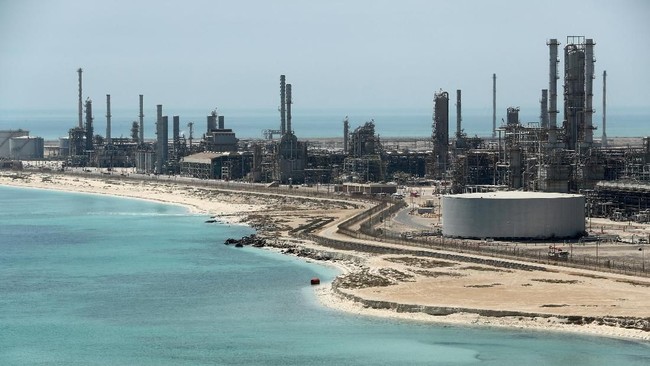
The Minister of Energy and Mineral Resources (ESDM), Bahlund Lahadalia, has emphasised that the government will continue to implement a diversification strategy for crude oil imports, even if shipping routes through the Strait of Hormuz return to normal.
According to the Minister, the government has established long-term contracts with several oil-supplying nations outside the Middle East as part of an effort to maintain national energy security and mitigate the risk of supply disruptions.
“Regarding the issue of crude imports, even if the Strait of Hormuz is reopened, we have already entered into long-term contracts with other countries,” Bahlil stated at the DPR RI Building, Jakarta, on Monday (15/06/2026).
Nevertheless, the government does not rule out the possibility of increasing oil imports from the Middle East region if the offered prices are more competitive.
“But if the price is competitive, we do not rule out the possibility of opening market access in the Middle East,” Bahlil added.
As is widely known, the United States and Iran are reportedly preparing for a high-level meeting in Switzerland this week. This meeting is said to be part of a diplomatic effort to end the ongoing conflict, reopen the strategic shipping lanes of the Strait of Hormuz, and find common ground regarding Tehran’s nuclear programme.
Citing reports from the French media outlet BFMTV, which refers to sources close to the negotiation process, the meeting is likely to be held this coming Thursday or Friday following the conclusion of the G7 Summit.
Discussions are expected to take place in a German-speaking region of Switzerland, although neither Washington nor Tehran has provided official confirmation thus far.
The plan for the meeting emerges amidst ongoing negotiations between the two nations. Iranian Foreign Ministry Spokesperson Esmaeil Baghaei previously stated that a memorandum of understanding between Iran and the US would not be signed in the immediate future, but could potentially be finalised within the next few days.
“The document will not be signed on Sunday, but it could be completed in the coming days,” said Baghaei, while emphasising that diplomatic channels between the two parties remain open.
However, concrete results from the potential meeting in Switzerland remain uncertain. It is not yet known whether the two nations will reach an official agreement or merely engage in direct contact to continue the negotiation process that has been underway recently.
Global oil prices plummeted at the start of trading this week following reports that the United States and Iran had reached a peace agreement, paving the way for the return of normal energy traffic through the Strait of Hormuz.
This sentiment immediately erased much of the geopolitical risk premium that had supported high oil prices over the past few weeks.
Based on Refinitiv data as of Monday (15/06/2026) at 08:00 WIB, Brent crude prices stood at US$83.92 per barrel, dropping 3.91% compared to last Friday’s close of US$87.33 per barrel. Meanwhile, West Texas Intermediate (WTI) crude fell even further, by 4.58%, to US$80.99 per barrel from its previous position of US$84.88 per barrel.
Source: jawawa.id (https://jawawa.id/newsitem/if-the-strait-of-hormuz-reopens-will-indonesia-import-oil-from-saudi-arabia-and-others-again-1781531488)
Originally published by CNBC Indonesia (https://www.cnbcindonesia.com/news/20260615193431-4-743059/andai-selat-hormuz-dibuka-ri-bakal-impor-minyak-dari-arab-cs-lagi), translated from Indonesian