
If Only Farmers Sold Rice, Not Unmilled Paddy
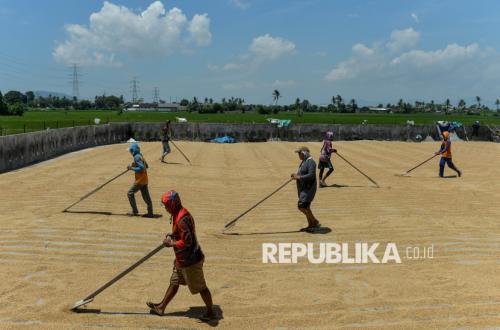
In a discussion, a question arose: is it true that most rice farmers in this country sell their harvest in the form of unmilled paddy? Yes, it is. Most farmers, especially smallholders, sell paddy directly, not rice. They are not yet able to sell it as rice. Why? There are at least three reasons. First, the supply chain is set up that way. After harvesting, farmers typically sell paddy to middlemen, who then collect it and take it to rice mills. The mills themselves receive paddy from farmers as raw material. Second, practical and economic reasons. Farmers need capital and equipment: milling into rice requires paying for milling services, usually 10 percent of the yield. Not all farmers want to bear the cost and risk of shrinkage or broken rice. Furthermore, farmers need quick cash; harvest time is synonymous with needing money to pay debts, buy fertiliser for the next season, and meet household needs. Farmers sell wet or dry paddy to middlemen and get paid immediately. If they mill it first, they must wait and find buyers for the rice themselves. Additionally, paddy is more durable and less prone to spoilage than rice. Small farmers usually lack proper warehouses to store large quantities of rice. Third, even Bulog focuses on absorbing paddy. During harvest, Bulog prioritises absorbing dry harvested paddy at Rp 6,500 per kilogramme and rice at Rp 12,000 per kilogramme. This means paddy is the main form traded at the farm level. There are exceptions: farmers with large landholdings and their own milling facilities, or those who sell directly to consumers, sometimes sell rice. But for small and medium farmers, the general pattern is to harvest, dry it into dry harvested paddy, and sell it. It is worth examining why more farmers choose to sell paddy rather than rice. The advantages of selling paddy include immediate liquidity; an afternoon harvest can be sold to a middleman that same afternoon without waiting in milling queues. There is no upfront capital needed for milling costs, which can be 10 percent of the rice yield, nor for sacks or transport. The risk is also lower: if rice prices drop after milling, the farmer bears the loss, whereas selling paddy transfers the price risk to the middleman or miller. The disadvantages include a lower price per kilogramme. With the 2026 government purchase price for dry harvested paddy at Rp 6,500 per kg, and 1 kg of paddy yielding 0.6-0.65 kg of rice, the equivalent rice value should be around Rp 7,800 per kg if rice is Rp 12,000 per kg, meaning farmers lose that margin. Moreover, prices at the farm gate are often depressed due to the farmer’s weak bargaining position. Selling rice, typically done by farmers with capital or large landholdings, offers higher margins, with retail rice prices at Rp 12,000 to Rp 15,000 per kg, and allows farmers to set their own price when market conditions are favourable. However, it requires upfront capital for milling, sacks, and transport; for a 2-tonne paddy harvest, milling costs alone can reach Rp 1 million to Rp 2 million. There is also extra work and risk, as rice is easily damaged, infested by weevils, or subject to shrinkage, and farmers must find their own buyers. The process from harvest to sale can take one to two weeks, requiring patience for the money to come in. A critical assessment suggests that for farmers with less than 0.5 hectares needing quick cash and lacking transport, selling paddy is more practical and safer despite a small loss. If a farmer has access to a mill or cheap milling services, selling rice puts the margin directly in their pocket. If they have market connections, selling rice at Rp 13,000 to Rp 14,000 per kg yields greater profit. To enable farmers to sell rice, the government must address three main obstacles: capital, equipment, and market access. Steps already underway include providing special KUR credit with a ceiling of up to Rp 2 billion at 3 percent annual interest for cooperatives or farmer groups to purchase rice milling units, subsidising agricultural machinery including mini RMUs so village cooperatives can offer cheaper milling, and simplifying licensing through the online OSS system where small-scale mills only require an environmental management statement. To guarantee a market and price, Bulog now directly purchases not only paddy but also rice from farmers at the farm or mill gate at a price of Rp 12,000 per kg. The national one-price SPHP rice distribution scheme stabilises prices and smooths the flow from surplus to deficit regions, ensuring farmers in production areas can sell their rice.