
If Farmers Go Bankrupt, Who Will Supply the Free Nutritious Meals?
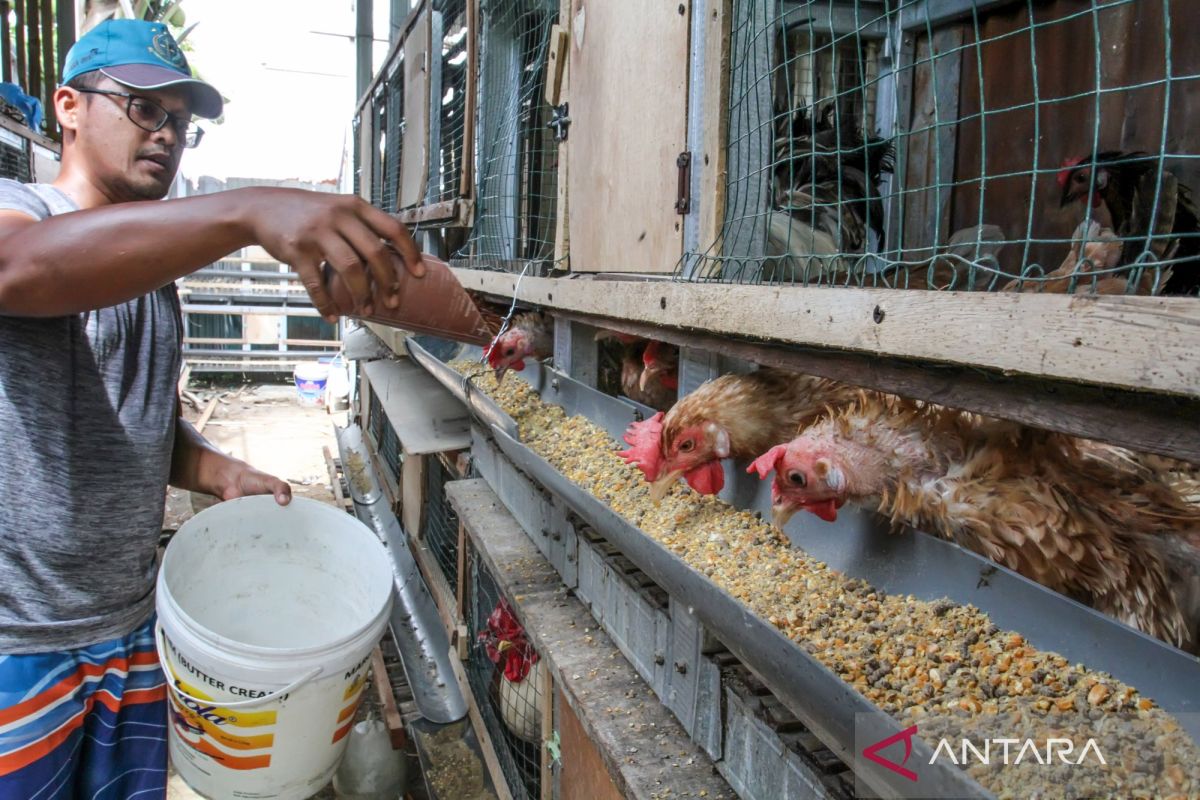
The Free Nutritious Meals (MBG) programme is being tested not only by how much food is successfully served to beneficiaries, but also by a far more fundamental question: who produces the food for the programme and can they survive?
This question found its relevance when, on 10 August 2026, poultry farmers in several regions took to the streets. In Makassar, Pati, and Grobogan, they voiced similar concerns: high feed prices, depressed egg and chicken prices, problematic corn supply, and a market that has yet to provide certainty.
In Grobogan, for instance, farmers reported that feed prices had risen from around Rp300,000 to Rp350,000 per sack to Rp400,000, while the price of eggs had fallen from around Rp25,000 to Rp19,000 per kilogramme. In Pati, the issue is even more intriguing because it is directly linked to the MBG programme. Farmers complained that the absorption of local eggs by the Nutritional Fulfilment Service Units (SPPG) has not been optimal. In fact, according to the local farmers’ association, some SPPG kitchens still source eggs from outside the region.
Herein lies the paradox. The state is running a large-scale nutritious food programme. Eggs are a crucial source of protein. The government requires a continuous supply of food, yet local egg producers claim they are struggling to secure market certainty. There is a flaw in the policy chain if a major food programme does not automatically create a healthy market for local food producers.
The Central Java provincial government has actually taken steps. Together with the National Nutrition Agency, associations and cooperatives of farmers have agreed that SPPG units will absorb local eggs and chicken meat. The agreement includes the use of eggs and chicken twice a week and direct purchasing through farmer associations or cooperatives. The agreed price is Rp26,000 per kilogramme for eggs and Rp35,000 per kilogramme for chicken carcasses. If all kitchens follow this pattern, the provincial government estimates the potential absorption of eggs could reach approximately 1,050 tonnes per week.
This means that, by design, a solution is actually available. The problem lies in implementation. A good policy on paper loses its meaning when the procurement chain at the SPPG level is not consistently executed. Therefore, the MBG programme must be viewed as more than just a nutrition initiative. It must become a local economic development policy.
Every rupiah spent on MBG should ideally create a multiplier effect: farmers gain a market, workers earn an income, cooperatives grow, local trade is stimulated, and ultimately, state money circulates back within the region.
Source: jawawa.id (https://jawawa.id/newsitem/if-farmers-go-bankrupt-who-will-supply-the-free-nutritious-meals-1786600458)
Originally published by Antara (Indonesian) (https://www.antaranews.com/berita/5692207/kalau-peternak-bangkrut-siapa-menyuplai-mbg), translated from Indonesian