
If a Turkey-Israel War Erupts, Whose Military Is Superior?
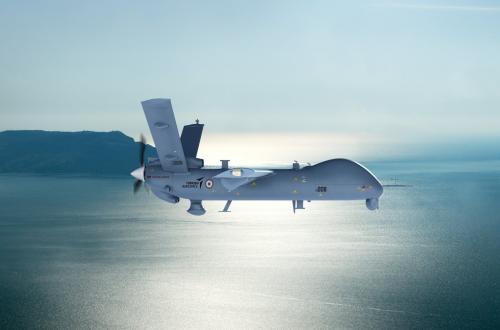
The potential for war between Israel and Turkey has increased following Israel’s attack on the Abu al-Duhur air base in Syria. How do the two countries’ militaries compare? How would the balance of power shift if the Makkah Pact triggered military support from Saudi Arabia and Pakistan for Turkey?
Turkey so far possesses a larger conventional military force than Israel. This comparison is reflected in Global Firepower (GFP) 2026 data, which places Turkey ninth out of 145 countries, while Israel is ranked fifteenth. In the GFP index, the smaller the Power Index score, the stronger a country’s position. Turkey recorded a score of 0.1975, while Israel scored 0.2707. GFP emphasises that the index is a theoretical depiction of conventional war-fighting strength and not a prediction of a conflict’s outcome.
The most striking difference lies in personnel numbers and demographic base. Turkey has a population of around 84.1 million, far above Israel’s approximately 9.4 million. In terms of active personnel, Turkey has around 481,000 soldiers, while Israel has about 169,500. Israel does have a larger reserve force, around 465,000 personnel, compared with Turkey’s 380,000.
Thus, in a prolonged war requiring large-scale mobilisation, Turkey has a far larger human resource base. GFP estimates Turkey’s population available for military service at 42.98 million, while Israel’s stands at around 3.95 million. The number of people deemed fit for military service shows a similar gap: 36.09 million in Turkey compared with 3.28 million in Israel.
Turkey’s numerical advantage does not automatically make it superior on every front. One sector where Israel’s main strength lies is the air force. GFP records Israel as having 597 military aircraft, while Turkey has 1,101. However, when narrowed to fighter aircraft, Israel is actually ahead of Turkey, with 239 fighters compared with 201. Israel also has 45 dedicated attack aircraft, while Turkey is recorded as having none in that category.
Israel also leads in the number of aerial tanker aircraft. GFP records Israel as having 13 tanker aircraft, while Turkey has seven. This capability is important because it allows fighter jets to conduct long-range operations with in-flight refuelling support.
Conversely, Turkey has a major advantage in its helicopter fleet. Turkey has 509 helicopters, including 111 attack helicopters. Israel has 127 helicopters, 48 of which are attack helicopters.
This composition shows different force characteristics. Israel has an air force that is relatively smaller in number but has a high concentration of combat capability and air power projection. Turkey, with a much larger fleet, has broader aviation and air support capacity.
In the land forces sector, Turkey’s advantage is clearer. GFP records Turkey as having 2,284 tanks, while Israel has 1,300. Turkey’s armoured vehicle count reaches 98,193 units, compared with Israel’s 62,380.