
IEU-CEPA to Take Effect Next Year, Indonesia Targets 94% of Tariff Lines Eliminated
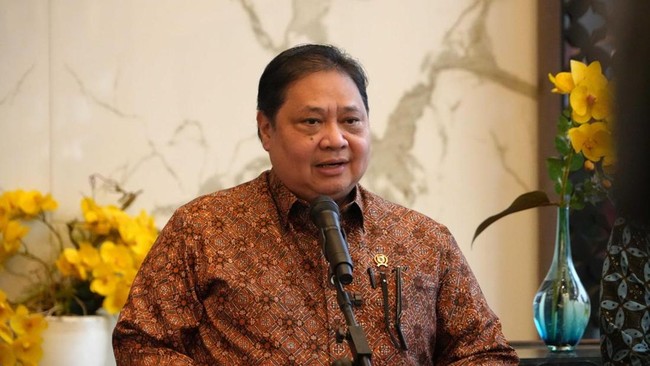
Coordinating Minister for Economic Affairs Airlangga Hartarto has said Indonesia views the Indonesia-European Union Comprehensive Economic Partnership Agreement (IEU-CEPA) as a game changer for strengthening trade, investment, supply chain diversification and bilateral economic resilience in the ASEAN/Indo-Pacific region.
“If IEU-CEPA is implemented from the beginning of next year, Indonesia will obtain market access in the form of 90.4% of tariff lines immediately becoming 0%, and 8.37% being reduced gradually, which is expected to expand exports of palm oil, footwear, coffee, furniture, agriculture/fisheries and telecommunications,” Airlangga said after a government dialogue with the European Union Delegation and ambassadors of EU member states on Friday (21/8/2026).
Airlangga said the European Union would gain broader access to the Indonesian market for European industry and consumers, as well as a supply of more competitive products.
“Regarding the progress of IEU-CEPA, the documentation in the English version is being finalised and is targeted to be signed in October. After it is signed, it will be brought to the European Parliament for ratification. In Indonesia, the Minister of Trade has already consulted with the DPR. Indonesia will use a Presidential Regulation mechanism because it has been discussed with the DPR, so implementation will be faster,” Airlangga explained.
With the ratification of the IEU-CEPA, Indonesia hopes to unlock investment potential flowing into the country. Indonesia is encouraging European Union investment in high-value-added sectors such as advanced manufacturing, renewable energy, electric vehicles, digital and pharmaceuticals, to support technology transfer and domestic industrial transformation.
“Europe is now also one of Indonesia’s investment partners, and vice versa. In recent times, Indonesia has received many visits from European countries bringing large business delegations,” Airlangga said.
Chairwoman of the Indonesian Employers Association (APINDO) Shinta Widjaja Kamdani said that besides electric vehicles and pharmaceuticals, sectors such as health, downstream processing, critical minerals, agriculture and fisheries are also of interest to European countries.
“There are actually many opportunities, and the EU is very large with many countries. Each country may have its own particular appeal for how it can enter, and we can attract them to come into Indonesia,” she told reporters.
Shinta added that investment from European countries is also expected to flow into the real sector so that it can have a positive economic impact.