
IEU-CEPA to Take Effect January 2027, Trade Minister Sets Ambitious Export Target
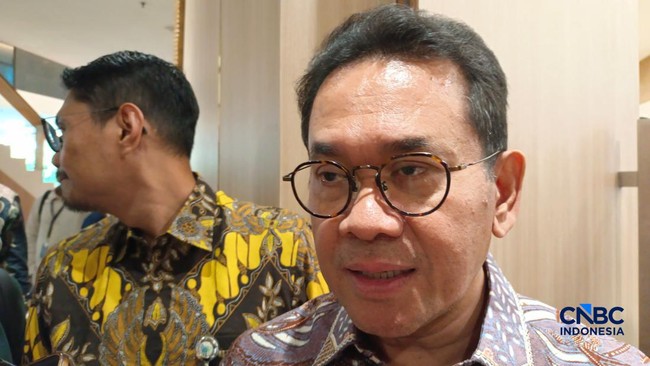
Jakarta, CNBC Indonesia - Trade Minister Budi Santoso is targeting a doubling of Indonesian exports to the European Union once the Indonesia-European Union Comprehensive Economic Partnership Agreement (IEU-CEPA) enters into force.
Budi said the target will be driven primarily by labour-intensive manufacturing products, such as ready-made garments, textiles, footwear and electronics. The government hopes these sectors can capitalise on the opening of EU market access once IEU-CEPA is implemented.
“Next year, once it is running, we hope exports can at least double from current levels. The commodities are mainly labour-intensive manufacturing products such as ready-made garments, textiles, footwear and electronics. Those are indeed our targets,” Budi said when met at his office in Jakarta on Thursday (27/8/2026).
The government, he said, is targeting Indonesian exporters to begin enjoying the benefits of IEU-CEPA from January 2027. To pursue this target, the government will accelerate the ratification process after the trade agreement with the European Union is signed.
“During the meeting with the EU Ambassador at the Coordinating Ministry for Economic Affairs, we are aiming for signing by the end of October 2026 at the latest. We are each preparing well. We have been preparing everything in parallel, and the EU is also preparing administratively. Hopefully it can indeed be signed by the end of October,” he said.
“Once it is signed, we want to accelerate ratification, because we hope it can be running by January 2027. Hopefully it will not slip,” Budi continued.
According to him, the Indonesian government has essentially prepared the administrative requirements for the ratification process. Currently, his ministry is still waiting for the administrative process from the European Union, which comprises 27 countries.
“We are actually ready, because what we are waiting for now is the EU side. The EU, perhaps because it has 27 countries, needs time administratively. Hopefully it will be completed quickly,” he said.
Budi explained that the government has even prepared the concepts and drafts required for the ratification process. If the signing takes place in October, the ratification process is targeted to be completed within approximately one to two months.
“If, for example, it can be signed in October, we will proceed with ratification. We have prepared all the administration, all the concepts, the drafts are ready, so it just needs to be agreed with the DPR and then we move forward. That means it should be completed in one to two months, and by January implementation can begin. That is our hope,” he explained.
EUDR and CBAM Pose Challenges
Despite optimism about export growth, Budi reminded Indonesian exporters that they must still contend with a number of EU trade provisions that fall outside the scope of IEU-CEPA.
One of these is the European Union Deforestation Regulation (EUDR), which relates to commodities such as palm oil and agricultural products, including coffee. In addition, there is the Carbon Border Adjustment Mechanism (CBAM), which relates to steel.
“Actually, regarding EUDR, that means CPO, CPO and also agricultural products such as coffee and so on, but that is indeed outside CEPA. Then CBAM relates to steel. But beyond that, there are relatively no problems,” Budi said.
He stressed that EUDR and CBAM are not policies that target Indonesia alone, but apply to all countries that have relevant products for the EU market.
“But those two are indeed outside CEPA. That means the treatment applies to all countries, not only Indonesia, all countries. CEPA is separate. However, we hope that with CEPA, there will be no other barriers outside CEPA. We want everything to be within the CEPA framework. That way we are safer,” he said.
The government, Budi continued, has also made preparations with exporters to face the EUDR requirements. Socialisation of the various requirements has been carried out over the past three years.
“EUDR applies to all countries, not only Indonesia. To all countries that have products designated by the EU. But currently its implementation is still pending. The plan was said to be next year, but it keeps being postponed by the EU, so we do not know yet. But in principle, for EUDR we have prepared ourselves well, with exporters as well. In fact, over the past three years we have continuously socialised what they need to prepare,” he explained.
Previously, Coordinating Minister for Economic Affairs Airlangga Hartarto said the trade agreement would provide broader access for Indonesian products to the European market.
Airlangga is targeting IEU-CEPA to be signed in October 2026. Currently, the process of finalising the English-language version of the IEU-CEPA documents is said to have entered its final stage.
“The documentation in the English version will be completed soon and is targeted for October. Hopefully it can be signed, and after signing it will be brought to the EU Parliament for ratification,” Airlangga said at a press conference at his office, as quoted on Monday (24/8/2026).
Domestically, Airlangga said Trade Minister Budi has consulted with the DPR regarding the ratification mechanism for IEU-CEPA. The results of the consultation point towards the use of a Presidential Regulation to ratify the agreement.
Airlangga said one of the main benefits of IEU-CEPA is the elimination of import tariffs for most Indonesian export products to the European Union.
“Some of the benefits of market access include Indonesia having 90% of tariffs immediately reduced to 0%, and this will be reduced gradually,” Airlangga said.
To ensure the agreement is implemented effectively, Indonesia and the European Union have also agreed to establish a joint task force. The team will identify various implementation issues, both related to investment and business activities of both parties, while seeking solutions to obstacles faced by businesses.
Beyond trade access, Airlangga said the European Union is also interested in increasing investment in Indonesia, including in the renewable energy, digital, cybersecurity, agriculture, health, industrial downstreaming, critical minerals and fisheries sectors.
“We have discussed many sectors: renewable energy, digital, cybersecurity, and also several other sectors. Agriculture is also a matter of attention for both countries,” he said.
Source: jawawa.id (https://jawawa.id/newsitem/ieu-cepa-to-take-effect-january-2027-trade-minister-sets-ambitious-export-target-1787835101)
Originally published by CNBC Indonesia (https://www.cnbcindonesia.com/news/20260827174642-4-762876/ieu-cepa-berlaku-januari-2027-mendag-langsung-bidik-target-besar-ini), translated from Indonesian