
IESR Welcomes Ambitious Target of 100 GW Solar PV Capacity and Electric Vehicle Conversions
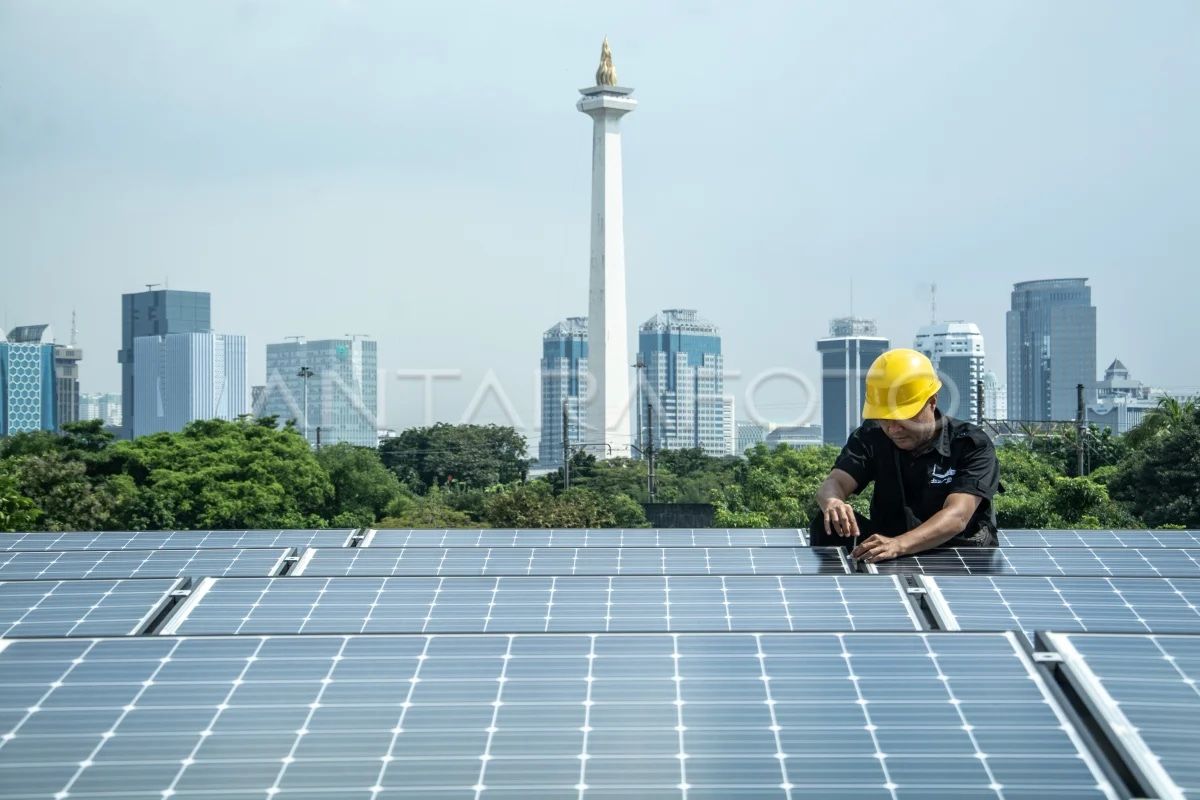
Jakarta — The Institute for Essential Services Reform (IESR) welcomed the ambitious target set by President Prabowo Subianto to develop solar photovoltaic capacity (PLTS) of up to 100 gigawatts (GW) in the next three years. The solar PV development will be paired with a programme to convert petrol-powered vehicles (BBM) to electric vehicles. Raditya Wiranegara, Director of Research and Innovation at IESR, in Jakarta on Thursday said the vision demonstrates the government’s political commitment to accelerating the energy transition while strengthening national energy independence. ‘Regarding the 100 GW solar PV vision, IESR regards this aspiration as a positive signal of political commitment,’ Raditya said. However, IESR cautioned that achieving the target in three years would require careful planning and implementation to ensure sustainability. Technically and in terms of the timeline, reaching the target within three years will be a major challenge. IESR also said clarity about the institutions that will lead programme implementation will be a crucial factor to ensure cross-sectoral coordination can run effectively. He also emphasised the importance of clarity on which institutions will be mandated to lead the implementation of the vision. In the transport sector, IESR supports the electrification of private vehicles as a key pathway in the national energy transition. The programme to convert BBM-powered vehicles to electric ones is seen as a way to utilise existing vehicles while reducing dependence on imported BBM. One of the challenges is that conversion costs remain relatively high today, in some cases higher than buying a new electric vehicle. The largest cost components arise from the battery and the conversion kit, which includes the electric motor and inverter. Moreover, Indonesia’s electric vehicle conversion ecosystem still needs strengthening. The number of conversion workshops remains limited, while some key components still rely on imports.