
IESR Urges Government to Recalculate Costs and Risks of B50 Implementation
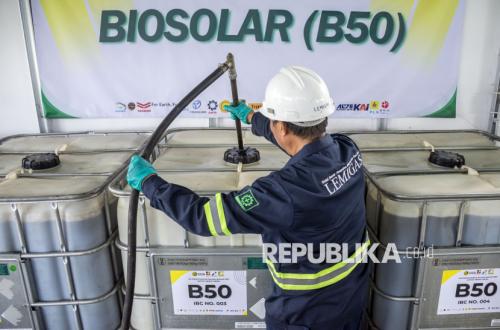
The Institute for Essential Services Reform (IESR) has urged the government to re-evaluate the mandatory B50 biodiesel policy, which came into effect on Wednesday (1/7/2026). IESR assesses that the policy can be a short-term solution to reduce diesel imports, but should not be the main strategy for the national energy transition. IESR Chief Executive Officer Fabby Tumiwa stated that every policy has benefits and consequences that need to be calculated thoroughly. He noted that the acceleration of B50 implementation occurred when Indonesia faced an energy crisis due to the closure of the Strait of Hormuz in late February, which triggered a spike in global oil prices and disrupted oil imports. ‘The government needs to look at the implementation of B50 comprehensively, not only from the perspective of reducing diesel imports, but also its impact on costs, raw material supply, food prices, smallholder farmers, and the environment,’ Fabby said on Wednesday (1/7/2026). According to IESR, the expansion of the biodiesel mandate has cross-sectoral consequences. The increased need for crude palm oil (CPO) to meet the B50 requirement could affect the supply of food raw materials, potentially driving up cooking oil prices, increasing inflationary pressures, and impacting the welfare of smallholder farmers. Furthermore, the rising demand for CPO must be anticipated to avoid putting pressure on environmental carrying capacity and land governance. IESR believes the economic basis for B50 also needs to be recalculated as the underlying conditions have changed. Global oil prices have started to decline, the risk of import disruptions has decreased, diversification of import sources is ongoing, and domestic diesel production, including from the Balikpapan refinery, has begun to increase. On the other hand, CPO prices remain high, a situation that could increase the cost of implementing B50 if the price gap between biodiesel and diesel widens. Therefore, IESR is asking the government to recalculate the cost burden of the policy and prepare mitigation measures before expanding the biodiesel mandate. IESR considers the electrification of the transport sector and the implementation of fuel efficiency standards to be more effective strategies for strengthening energy security while reducing emissions. Based on IESR modelling, the adoption of battery electric vehicles (BEVs) is projected to reduce emissions by up to 46 million tonnes of carbon dioxide by 2060. When combined with a vehicle age restriction policy, the number of electric vehicles is estimated to reach around 66 million cars and 143 million motorcycles by 2060, with a potential emission reduction of up to 210 million tonnes of carbon dioxide. Additionally, increasing public transport usage from 16 per cent to 40 per cent of travel share is projected to reduce emissions by up to 101 million tonnes of carbon dioxide by 2060. In contrast, IESR analysis shows that increasing the biodiesel mandate to B60 is estimated to only reduce emissions by around 88 million tonnes of carbon dioxide by 2060, and this estimate does not yet account for emissions from land-use change. IESR believes these results indicate that biodiesel policy alone is insufficient to support the decarbonisation targets for the transport sector. According to IESR, the government must ensure that the biodiesel policy does not divert focus from a more comprehensive energy transition agenda. In the long term, transport decarbonisation requires accelerating electric vehicles, strengthening public transport, implementing vehicle efficiency standards, developing renewable energy, and building charging infrastructure. IESR encourages the government to conduct an open evaluation of the benefits, costs, and risks of implementing B50 so that energy policy remains aligned with decarbonisation targets, energy security, price stability, and public protection. ‘Energy policy must be designed so as not to create new burdens for the public or other sectors,’ Fabby stressed.