
IESR Says Rp3 Million Electric Motorcycle Incentive Too Small
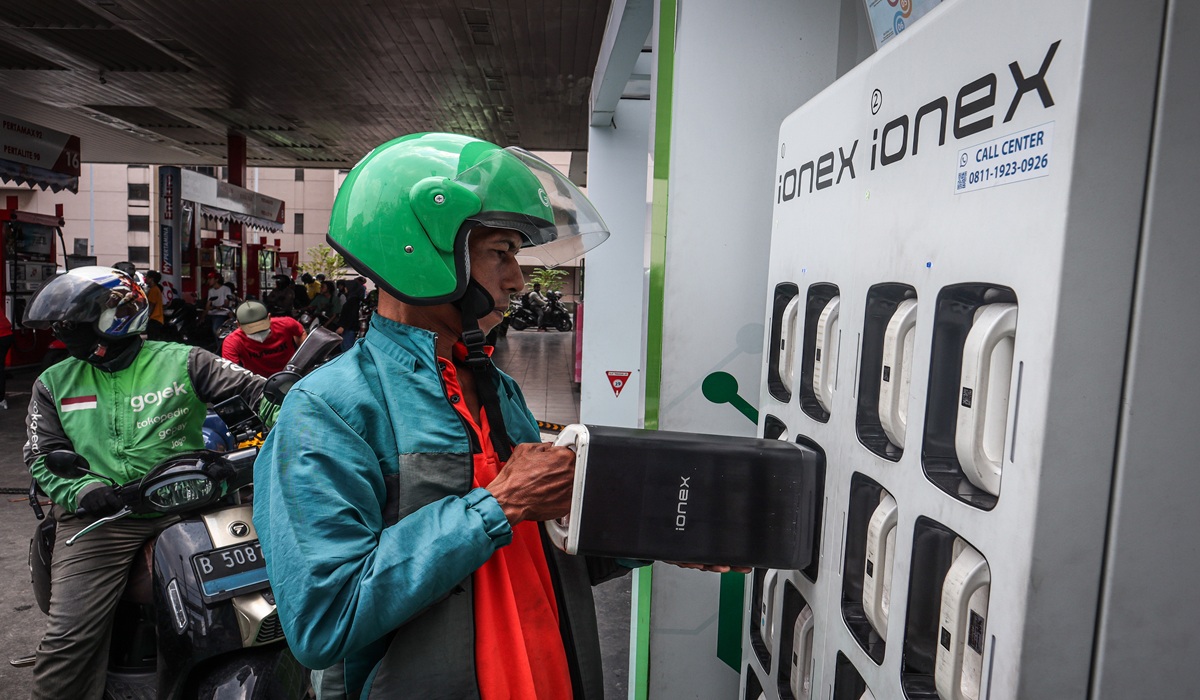
The Institute for Essential Services Reform (IESR) has assessed that the Rp3 million incentive for electric vehicles still needs to be reviewed because it risks being too small to encourage a significant shift. As previously reported, the government has set an incentive of Rp3 million per unit for electric motorcycle purchases, lower than the initial plan of Rp5 million per unit. The budget prepared for this programme is Rp3 trillion, targeting 1 million domestically produced electric motorcycles.
IESR Director of Energy System Transformation Deon Arinaldo said the incentive amount needs to consider the benefits that can be generated from each vehicle successfully converted to electric. Adequate incentives are said to increase the economic attractiveness of electric motorcycles for consumers, while also amplifying the policy’s impact on reducing fuel consumption as well as the burden of energy subsidies and compensation.
“The government needs to ensure the incentive amount is set based on the impact to be achieved. An incentive that is too small risks being insufficient to overcome the price gap and consumers’ economic considerations, so the allocated budget does not produce an optimal level of conversion,” Deon said in a statement on Monday (24/8).
IESR modelling shows that incentive effectiveness increases when the incentive amount is higher and combined with disincentive policies. With a purchase incentive of Rp5 million and an additional Rp3 million from a trade-in scheme for converting fuel-powered vehicles to electric, then combined with disincentives such as raising Pertalite prices closer to economic levels, electric motorcycle adoption could increase by 810,000 units compared to the business-as-usual scenario in 2030.
The conversion of one fuel-powered motorcycle to an electric motorcycle can provide benefits to the government of around Rp5.6 million over a ten-year period. If indirect benefits such as foreign exchange savings, reduced air pollution and carbon value are taken into account, the total benefit can reach around Rp28 million per vehicle over ten years.
“If one million motorcycles with a commuting pattern of 40 km per day switch to electric motorcycles, fuel consumption can be reduced by around 250-365 thousand litres per year,” he said.
From the user’s perspective, electric vehicles also offer lower ownership costs. IESR estimates the ownership cost of a battery-based electric motorcycle is around Rp346 per kilometre, lower than a fuel-powered motorcycle which reaches around Rp506 per kilometre.
“Electric vehicle incentives should not be viewed merely as purchase subsidies. If they can accelerate the shift from fuel to electric, the government benefits from reduced fuel consumption and import foreign exchange, while the public obtains lower mobility costs,” Deon said.
IESR emphasised the principle of a just transition in the distribution of incentives. The policy needs to be open to the public, but still have a mechanism to ensure state funds are not enjoyed by groups that can actually afford to buy electric vehicles without government support.
One mechanism that can be used is integrating recipients with the Population Identification Number (NIK) and the National Socio-Economic Single Data (DTSEN). The government can also apply an exclusion filter to exclude very high-income groups.