
IESR Maps Out Opportunities for Integrated Solar Energy Development
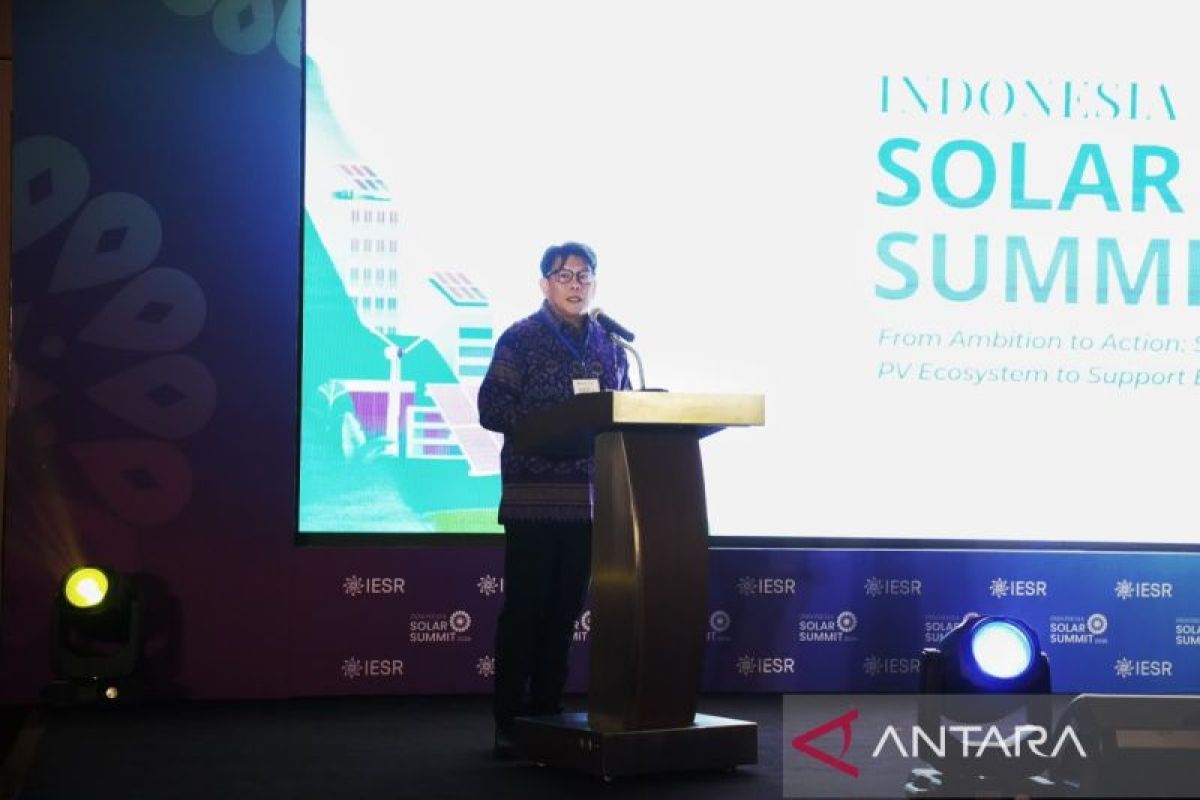
The Institute for Essential Services Reform (IESR) has released a study outlining a roadmap that highlights Indonesia’s opportunity to establish an integrated solar industry by improving several key aspects for domestic solar power plant development. The report, ‘Roadmap for the Development of the Domestic Solar Photovoltaic Supply Chain Industry in Indonesia’, shows the country has a significant opportunity to build an integrated solar industry, in line with the national solar power plant development target of 100 GW, which can drive growth in the domestic manufacturing sector.
‘We emphasise that developing the domestic solar power plant industry requires improvements in four main aspects: the market, industrial capacity, human resources, and research and development,’ said IESR Chief Executive Officer Fabby Tumiwa in a statement released in Jakarta on Tuesday. Fabby stressed that from the market side, the government needs to increase the absorption of local solar power plant products through procurement that is clear, consistent, and bankable. From the industrial side, Indonesia needs to accelerate the development of more integrated production capacity, including wafers and polysilicon.
Meanwhile, from the human resources side, a workforce capable of mastering the latest generation of solar power plant technology is required. On the research side, Indonesia needs to strengthen innovation centres and cooperation between the government, industry, universities, and research institutions. IESR also highlighted the importance of consistency in the Domestic Component Level (TKDN) policy and the acceleration of licensing. It stated that the government needs to create regulations that are more stable, transparent, and supportive of a gradual increase in industrial capacity, without hindering the acceleration of solar power plant construction.
‘Frequently changing TKDN rules and lengthy incentive processes can reduce certainty for investors and producers,’ he said. Through this roadmap, IESR projects that the development of the solar power plant industry will be carried out in stages, starting with strengthening module and solar cell production capacity, accelerating licensing, and preparing blended financing for manufacturing investment until 2030. In the medium term until 2040, Indonesia needs to begin integrating wafer and polysilicon production, developing new generation solar technology, strengthening national research, and establishing a solar module recycling industry towards 2060. This step is expected to create jobs, attract investment, and strengthen energy resilience while encouraging sustainable economic growth.