
IESR: Industrial solar power utilisation strengthens Indonesia's solar energy ecosystem
Jakarta (ANTARA) - The Institute for Essential Services Reform (IESR) has stated that consistent utilisation of solar power plants (PLTS) by the industrial sector can strengthen the national solar energy ecosystem and accelerate the transition towards a low-carbon economy.
IESR CEO Fabby Tumiwa said tangible adoption of solar energy by industry players is necessary to increase demand while expanding the practice of renewable energy use. “The Solar Awards are a form of appreciation for institutions that have demonstrated real implementation in the utilisation of solar energy,” Fabby said in an official statement received in Jakarta on Tuesday.
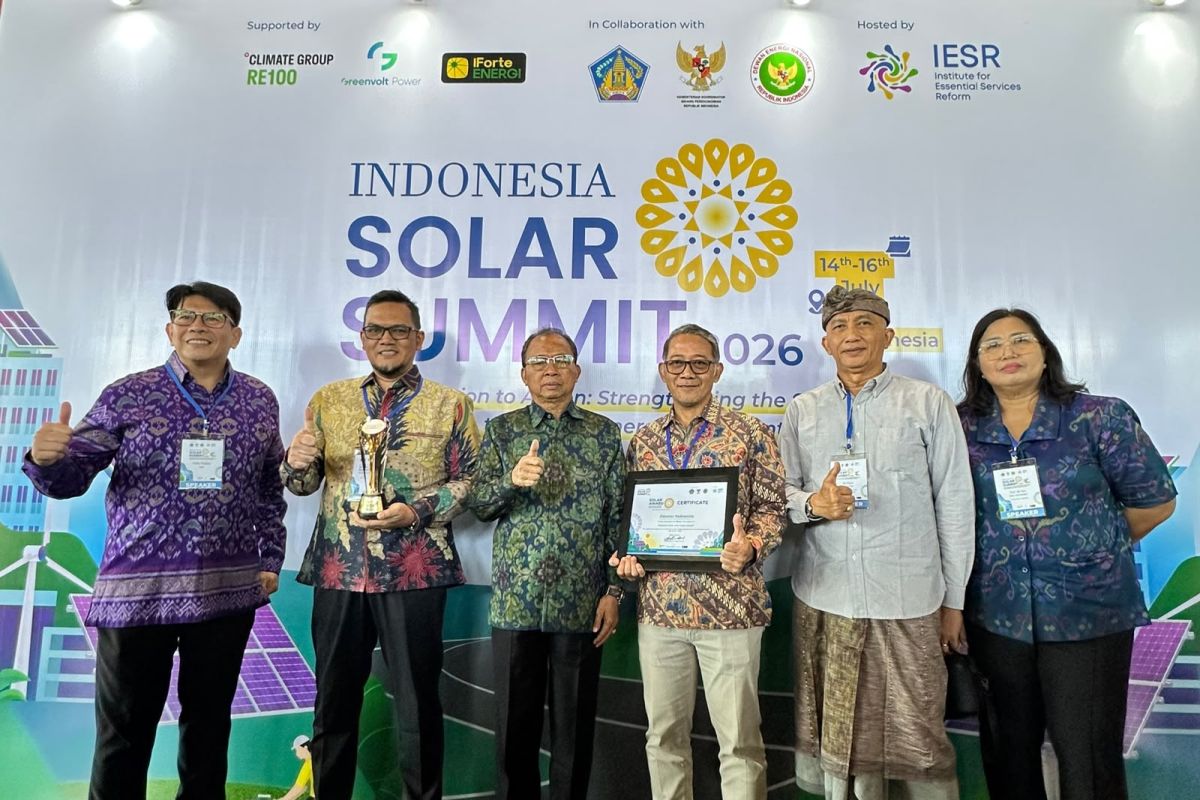
The Solar Awards are part of the Indonesia Solar Summit (ISS) 2026, held on 14–16 July 2026 in Bali under the theme “From Ambition to Action—Strengthening the Solar PV Ecosystem to Support Energy Sovereignty”. He said the award is expected to broaden good practices that can support the development of the solar energy ecosystem and the transition to a low-carbon economy.
During the event, awards were presented to regional governments, universities, and industries deemed consistent in developing and utilising solar energy. West Java Province won the regional government category, Gadjah Mada University took the university category, and Danone Indonesia secured the industry category.
Developing solar energy is a crucial part of the national energy transition agenda, as Indonesia has a solar energy potential of approximately 3,294 gigawatt peak (GWp). In April 2026, the Ministry of Energy and Mineral Resources (ESDM) recorded that the national PLTS capacity had reached around 1.5 gigawatts (GW), with rooftop PLTS contributing 895 MW. The government is targeting national PLTS development of 100 GW to create demand that can drive the domestic solar energy industry.
One example of PLTS implementation in the industrial sector is by Danone Indonesia at 11 production facilities in Klaten, Ciherang, Banyuwangi, Mekarsari, Mambal, Cianjur, Langkat, Prambanan, Yogyakarta, Sentul, and Ciracas. Danone Indonesia’s Director of Public Affairs and Sustainability, Karyanto Wibowo, said the total installed PLTS capacity at these facilities has exceeded 10.4 megawatt peak (MWp).
“Utilising solar energy across various production facilities is one of our concrete steps in reducing operational carbon footprint while improving energy efficiency,” he said. Karyanto added that solar energy utilisation is part of the company’s decarbonisation series, which also includes environmental rehabilitation and conservation, biodiversity protection, transport and operational efficiency, and the use of biomass as an alternative energy source. The company has also recorded planting more than 2.6 million trees across a conservation area of approximately 6,000 hectares and developing 20 biodiversity parks. It also utilises rice husk boilers as an alternative energy source at its production facilities.
Karyanto said the company will continue to improve energy efficiency, expand the use of renewable energy, and develop innovations to reduce emissions across the entire operational chain. The utilisation of solar energy by the industrial sector is considered important to increase domestic demand for PLTS technology, enhance clean energy capacity, and support the development of a low-carbon industry in Indonesia.
Source: jawawa.id (https://jawawa.id/newsitem/iesr-industrial-solar-power-utilisation-strengthens-indonesias-solar-energy-ecosystem-1785239829)
Originally published by Antara (Indonesian) (https://www.antaranews.com/berita/5669579/iesr-pemanfaatan-plts-industri-perkuat-ekosistem-energi-surya-ri), translated from Indonesian