
IESR: Electrification holds potential to reduce ASEAN energy consumption by 2050
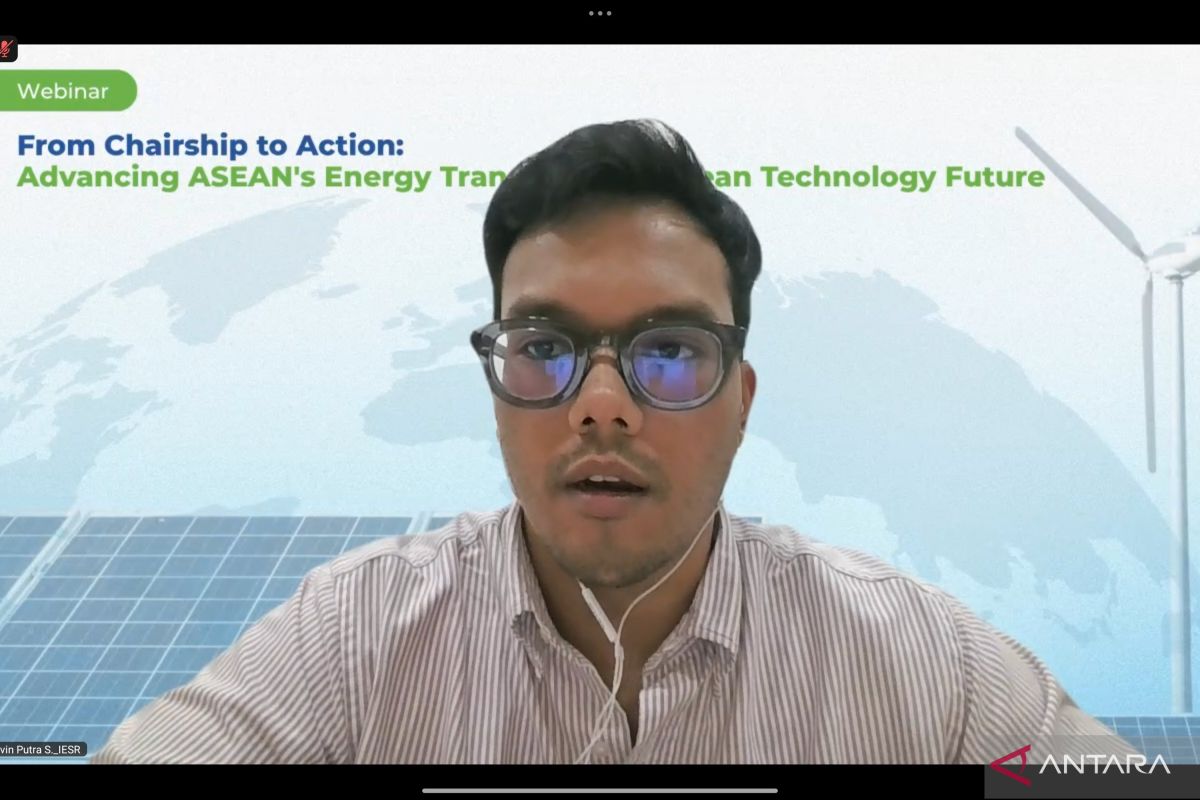
More electrification means greater efficiency and fewer thermal processes.
Jakarta (ANTARA) - The Institute for Essential Services Reform (IESR), in its study, revealed that electrification across various economic sectors has the potential to reduce primary energy needs in Southeast Asia by 2050, alongside increasing energy system efficiency and the transition from fossil fuels to renewable energy sources.
Alvin P. Sisdwinugraha, Project Manager of MENTARI Grids at IESR, stated that a modelling study of a 100 per cent renewable energy system in Southeast Asia for 2050 shows that the Best Policy Scenario (BPS) would require approximately 16,000 terawatt-hours of primary energy.
Meanwhile, other policy scenarios require larger amounts of energy, up to 20,000 terawatt-hours, demonstrating the potential efficiency gains from increased electrification.
“More electrification means more efficiency and fewer thermal processes,” Alvin said during a presentation at a webinar held online in Jakarta on Monday.
The study was conducted in collaboration with a university of technology in Finland. The background of the study highlights that currently, around 70–80 per cent of electricity generation in Southeast Asia still comes from fossil fuels. The transport sector is also heavily dependent on fossil fuels, accounting for approximately 95 per cent.
Alvin noted that increasing electrification is one of the main drivers of energy system changes, which are projected to occur rapidly during the 2030–2040 period and are expected to reach 92 per cent by 2050 as the use of renewable energy increases.
He stated that an energy transition strategy involving electrification in Southeast Asia could reduce emissions in the transport sector. The BPS scenario projects an electrification rate of around 33 per cent, significantly higher than the approximately 6 per cent seen in the Current Policy Scenario (CPS).
This increase in electrification is considered vital for reducing dependence on fossil fuels while simultaneously improving energy use efficiency.
Furthermore, the Southeast Asian region possesses vast renewable energy potential, particularly due to its location within the Sunbelt, which offers significant solar energy potential.
Consequently, the study identifies solar PV as one of the primary sources of future electricity generation, with batteries projected to become a crucial energy storage technology. The development of both technologies is deemed necessary to accelerate the energy transition in Southeast Asia.
Alvin stated that by 2050, the Levelised Cost of Energy (LCOE) under the BPS scenario could reach nearly 0.05 USD per kilowatt-hour, compared to nearly 0.11 USD per kilowatt-hour under the current policy scenario.
“Looking at the implications and economics of this energy system, we can see that the BPS provides the cheapest electrification and energy in 2050, with an LCOE nearly 70 per cent lower than the current scenario,” said Alvin.
Alvin also noted that the study emphasises the importance of strengthening cross-border electricity connectivity through the ASEAN Power Grid, which is believed to assist in the decarbonisation of the energy system. Grid integration allows countries in the region to share electricity supplies and utilise renewable energy sources more optimally.
By implementing these policies, fuel emissions could be reduced from 2,000 million tonnes in 2020 to zero by 2050. The study concludes that Southeast Asia has the opportunity to achieve a 100 per cent renewable energy system and carbon neutrality by 2050.
A more ambitious energy transition scenario is believed to result in lower emissions as well as cheaper long-term energy costs.
However, achieving these targets requires stronger policy decisions, increased investment in renewable energy, the electrification of economic sectors, and a reduction in dependence on fossil fuels.