
IESR and Greenvolt Power Indonesia Highlight Business Role in Driving Energy Self-Sufficiency
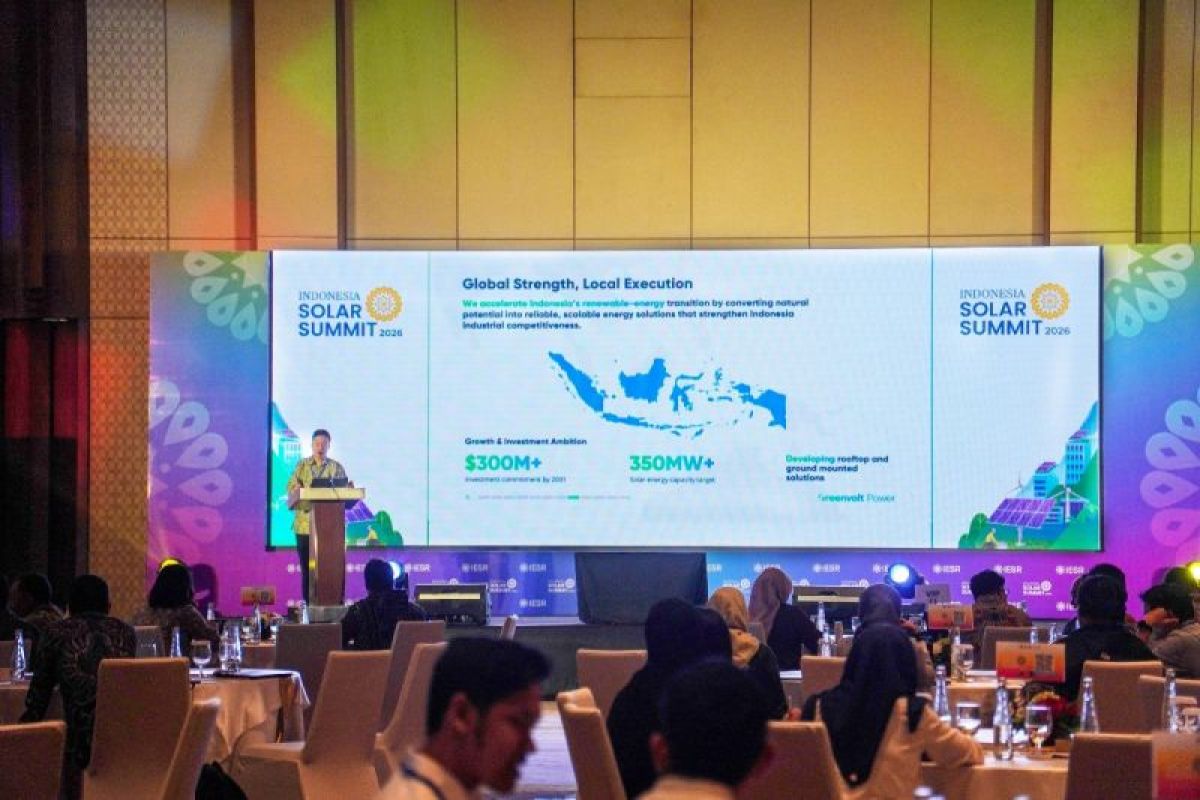
The realisation of Indonesia’s energy self-sufficiency ambitions will not depend solely on government policy, infrastructure investment, or renewable energy development. The decisions made by business actors in managing energy are also a crucial factor that will determine the direction of the national energy transition. Amid Indonesia’s efforts to accelerate the energy transition, Greenvolt Power Indonesia believes the biggest challenge is no longer the availability of technology or financing support. The next stage of the energy transition will be determined by the extent to which the business world dares to commit to making long-term energy decisions. This statement was made by Bobby Benly, Head of Business Development at Greenvolt Power Indonesia, during the Indonesia Solar Summit (ISS) 2026 organised by the Institute for Essential Services Reform (IESR) with the theme ‘From Ambition to Action: Strengthening the Solar PV Ecosystem to Support Energy Sovereignty’. According to Bobby, the acceleration of the energy transition will be determined by how quickly industry players change their perspective on new and renewable energy. Instead of focusing on short-term considerations such as operational costs, business actors need to view clean energy as a strategic investment that strengthens operational resilience, enhances competitiveness, and supports long-term business growth. In a presentation titled ‘The Missing Link to Energy Sovereignty: Making Energy Transition a Business Decision’, Bobby stated, ‘Business actors can no longer view energy merely as an operational cost burden or solely as part of ESG initiatives. Energy needs to be viewed and managed as a business strategy that strengthens business resilience, while creating long-term value, especially amidst geopolitical dynamics and energy volatility that increasingly underscore the importance of energy security for the business world. Ultimately, the decisions of business actors in managing energy will be one of the determining factors for Indonesia’s success in achieving energy self-sufficiency.’ Based on data from the Ministry of Energy and Mineral Resources (ESDM), the national solar energy potential is estimated to reach more than 3,000 GW. However, to date, the installed capacity of solar power plants (PLTS) in Indonesia has only reached around 1.3 GW. The potential to accelerate the energy transition is increasingly open with the availability of various flexible investment and financing schemes, including zero CapEx (capital expenditure) and OpEx (operational expenditure) models. This model provides flexibility for the business world to adopt solar energy according to their respective operational and financial needs. This ease of access makes solar energy increasingly easy to adopt and commercially competitive, thus opening greater opportunities for companies to play an active role in Indonesia’s energy transition. This is where business actors hold an important role as decision-makers who will shape the future of Indonesia’s energy landscape. Furthermore, accelerating solar energy adoption also requires close collaboration between the government, business actors, energy solution providers, and financing institutions to create an ecosystem that provides certainty, reduces investment risk, and accelerates the implementation of renewable energy projects in the industrial and commercial sectors. Fabby Tumiwa, Chief Executive Officer (CEO) of IESR, stated that investors do not invest solely based on the size of the potential. Investors require policy certainty, manageable risks, bankable projects, and a clear long-term return on investment. Therefore, Indonesia’s main challenge is no longer proving the vastness of its solar energy potential, but rather transforming that potential into projects that are attractive to investors and financing institutions. Greenvolt Power Indonesia, part of the Greenvolt Group, has over 20 years of global experience in developing and managing renewable energy solutions across various industrial sectors. During five years of operation in Indonesia, the company has partnered with various business actors in the premium hospitality, manufacturing, and retail sectors to support the transition to renewable energy. Through this collaboration, Greenvolt Power Indonesia is committed to supporting business actors in enhancing business resilience and achieving sustainability targets, while contributing to the effort to realise Indonesia’s energy self-sufficiency.