
IEA: Cutting Methane Could Unlock Additional Gas Supplies in ASEAN
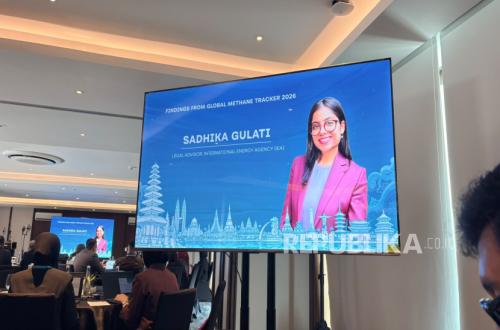
BALI — Cutting methane emissions from the oil and gas sector could unlock additional gas supplies and strengthen energy security across South-east Asia. The International Energy Agency (IEA) estimates that mitigating methane emissions from oil and gas operations worldwide could make almost 100 billion cubic metres of gas available each year. Ending non-emergency gas flaring could add almost 100 billion cubic metres more annually.
Sadhika Gulati, legal counsel and regulatory analyst at the IEA, said reducing methane emissions was important not only to limit climate change but also as a strategy for strengthening energy security, particularly amid geopolitical uncertainty affecting global energy supplies.
According to the IEA’s analysis, mitigating methane emissions from oil and gas operations worldwide could supply almost 100 billion cubic metres of gas to markets each year. The volume could rise further if non-emergency gas flaring were eliminated.
“Cutting methane emissions from oil and gas operations and ending non-emergency gas flaring could make almost 200 billion cubic metres of gas available to markets each year,” Sadhika said at the ASEAN Council on Petroleum (ASCOPE) 2026 event in Bali on Monday (26 October 2026).
She said the prospect of additional supplies had become more relevant as energy markets faced disruption linked to geopolitical developments in the Middle East. In her presentation, she said the effective closure of the Strait of Hormuz in 2026 had disrupted global energy supplies, including around 110 billion cubic metres of gas a year.
Reducing methane emissions and gas flaring could therefore unlock gas supplies on a scale comparable to the volume affected by the crisis. However, bringing these additional supplies to market would require time, adequate infrastructure and suitable equipment.
The IEA estimates that if countries with spare export capacity and gas-importing countries adopted available mitigation measures across their gas networks, around 15 billion cubic metres of gas could be made available relatively quickly to ease pressure on energy supplies.
For the upstream oil and gas industry in ASEAN, methane reduction also presents an opportunity to improve operational efficiency. Gas previously released into the atmosphere through facility leaks or wasted in certain operating processes could potentially be captured and reused, provided this is technically and economically viable.
Sadhika said most methane reduction measures could be implemented without additional net costs for operators. The IEA estimates that around 60% of methane emissions from ASEAN’s oil and gas sector in 2025 could potentially be reduced at no additional net cost.
The potential is underpinned by the economic value of recovered gas. In some cases, the value of gas that can be sold or used may exceed the investment and operating costs required to reduce emissions.
“Most methane emissions can be reduced without additional net costs for operators,” Sadhika said in her presentation.
The IEA says that globally, more than 35 million tonnes of methane — around 30% of total methane emissions in 2025 — could in fact be reduced at no additional net cost. These opportunities are expected to become more attractive when fuel prices are under upward pressure.
For Indonesia, this potential is relevant to efforts to optimise natural gas production and use. Reducing leaks, making use of associated gas and controlling gas flaring could help improve the efficiency of upstream oil and gas assets while cutting operational emissions.
However, the scale of Indonesia’s potential additional gas supply needs to be assessed according to field conditions, gas characteristics, infrastructure availability and project economics. Captured gas cannot automatically be delivered to consumers without suitable processing and transport facilities.
The IEA also says global methane reduction efforts continue to face challenges. Although commitments by governments and companies are expanding, methane emissions from fossil fuel operations have not yet shown a consistent decline.
In its Global Methane Tracker 2026, the IEA estimates that methane emissions from the fossil fuel sector reached around 125 million tonnes in 2025. The sector accounted for approximately 35% of methane emissions caused by human activity.
Meanwhile, average global methane intensity in upstream oil and gas operations fell by around 10% between 2019 and 2025. The IEA considers this decline insufficient to realise the available mitigation potential.
Sadhika identified three main factors that could strengthen the business case for the industry to accelerate methane reduction: costs, transparency and market competitiveness.
Transparency is needed to give companies an accurate baseline for measuring emissions, choosing mitigation measures and assessing results. The data can also help companies identify leak sources and calculate the economic benefits of the gas saved.
In terms of competitiveness, methane management is attracting increasing attention in international energy trade. Some countries and import markets are paying closer attention to emissions embodied in oil and gas products, including through the development of emissions measurement and reporting standards.
This could encourage oil and gas operators to focus not only on production volumes and costs but also on emissions intensity throughout the production process.
Methane reduction could therefore form part of ASEAN’s upstream oil and gas strategy to safeguard energy security while maintaining competitiveness in global markets.
Source: jawawa.id (https://jawawa.id/newsitem/iea-cutting-methane-could-unlock-additional-gas-supplies-in-asean-1793080341)
Originally published by Republika (https://esgnow.republika.co.id/berita/tnju0a522/iea-pengurangan-metana-buka-peluang-tambahan-pasokan-gas-di-asean), translated from Indonesian