
IDX Threatens Forced Delisting of 59 Issuers, Investors Urged to Exercise Caution
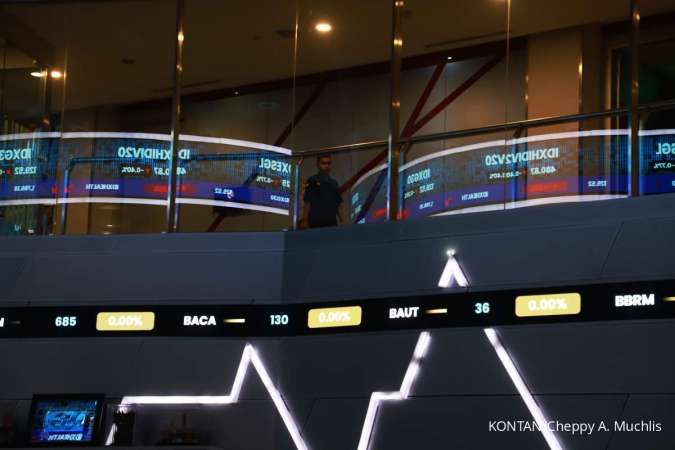
JAKARTA. A number of listed companies face the threat of forced delisting by the Indonesia Stock Exchange (IDX) because their shares have been suspended for too long.
The IDX announced that 59 listed companies are at risk of forced delisting from the exchange.
According to the official IDX Announcement Number Peng-S-00019/BEI.PLP/06-2026 dated 30 June 2026, all of these companies have had their shares suspended for more than six months as of 30 June 2026.
The IDX explained that shares can be delisted if a company experiences conditions or events that significantly and negatively affect its business continuity, whether financial or legal, and shows no adequate signs of recovery.
In addition, delisting can be carried out if a company no longer meets the exchange’s listing requirements, or if its shares have been suspended on the regular market, cash market and all markets for at least 24 months.
Among the 59 companies are several state-owned enterprises (SOEs), including PT Wijaya Karya Tbk (WIKA), PT Waskita Karya Tbk (WSKT), PT Solusi Bangun Indonesia Tbk (SMCB) and PT Indofarma Tbk (INAF).
WIKA shares have been suspended for 16 months, INAF for 24 months, SMCB for 17 months, and WSKT for 38 months.
SMCB’s Corporate Communications Manager, Novi Maryanti, said the suspension of the company’s shares on the IDX has not affected its operational, legal and financial activities or business continuity to date.
Among the options SMCB is currently considering are a voluntary delisting, the issuance of new shares through a rights issue (HMETD), a secondary offering through the sale of existing shares of PT Semen Indonesia (Persero) Tbk (SMGR) to the public, and other options permitted under applicable regulations.
In this process, SMCB continues to coordinate with SIG as its parent company, in line with directions from Danantara and the Ministry of SOEs.
“The company is committed to ensuring the entire process proceeds with minimal impact on business activities, operations and services to customers,” she said.
Capital market observer from the University of Indonesia, Budi Frensidy, explained that the companies most at risk are those unable to meet the exchange’s requirements within the stipulated time, particularly regarding prolonged suspension, going-concern status and information disclosure obligations. SOE status is not automatically considered to make a company safer.
“If the exchange’s requirements are not met, SOEs can still be subject to forced delisting. However, SOEs generally have greater restructuring opportunities because of the support of their controlling shareholders,” he told Kontan on Thursday (23/7/2026).
Ester Mulyani, investment analyst at Infovesta Kapital Advisori, said the companies with the highest forced delisting risk are those suspended for more than 24 months, with negative equity, that fail to meet certain listing requirements, face solvency problems or bankruptcy, and have yet to show a credible recovery plan.
However, the final decision rests with the IDX and is not determined solely by the length of the suspension.
“The exchange’s rules provide room for delisting if there are conditions that significantly and negatively impact business continuity, or if shares have been suspended for at least 24 months,” she told Kontan on Thursday (23/7/2026).
WIKA has been suspended for around 16 months, so its risk is not as severe as WSKT and INAF, but it still depends on the success of restructuring and meeting its obligations.
SMCB’s risk is also different because its suspension relates to compliance with free float requirements, not because its business has stopped operating. SMCB even recorded a net profit of Rp101.89 billion in the first quarter of 2026.
However, the final decision remains with the IDX after considering the overall condition of each company. SOE status can indeed provide greater rescue opportunities due to the support of state shareholders and access to funding.
“SOE status does not provide immunity from delisting. The IDX’s rules apply equally, so any rescue must be demonstrated through the completion of debt restructuring and improved cash flow,” she said.
Elandry Pratama, analyst and Branch Manager of Panin Sekuritas Pondok Indah, said the potential for forced delisting is not determined by ownership status, but by a company’s ability to meet listing requirements and resolve the problems underlying the suspension.
“In the end, all listed companies remain subject to the same rules,” he told Kontan on Thursday (24/7).
Edwin Sebayang, Director of PT Purwanto Asset Management, views the IDX announcement as more of a warning than a final determination.
For WIKA, the main problem is high leverage resulting from infrastructure project expansion in recent years.
However, its projects are still running, the company is still operating, debt restructuring continues, and the government retains an interest in the company’s survival.
“WIKA’s delisting risk is relatively lower compared to companies that have genuinely ceased operations,” he told Kontan on Thursday (23/7).
WSKT faces greater challenges than WIKA, because its debt burden is far larger, profitability has not recovered, and room for expansion is increasingly limited.
Nevertheless, WSKT is still undertaking a major restructuring and remains an important part of national infrastructure development.
For SMCB, the situation is different because it is a cement company that still has assets and ongoing business operations. Its challenges relate more to business conditions and ownership structure.
“The delisting risk certainly exists if all the exchange’s requirements are not met, but fundamentally its condition cannot be equated with companies that have genuinely ceased operations,” he said.
Meanwhile, INAF enjoyed significant momentum during the pandemic. However, after the pandemic ended, its performance weakened again.
“INAF’s success in maintaining its listing status will depend heavily on the success of its business transformation and its ability to generate sustainable profits,” he said.
Edwin stressed that, under the exchange’s rules, there is no special treatment between SOEs and private companies regarding forced delisting. The IDX applies the same principle to all listed companies.
However, in practice, there are several factors that give SOEs greater chances of survival.
For example, SOE-listed companies find it easier to obtain government support, easier to restructure debt, have better access to funding, hold strategic importance for the state, and receive greater attention from regulators and creditors.
“But that support does not mean immunity from delisting. If all the exchange’s requirements are not met within the stipulated timeframe, SOE status offers no protection.
“Meanwhile, the IDX, the Financial Services Authority (OJK) and other self-regulatory organisations need to strengthen risk-based supervision, provide early warnings, and ensure enforcement actions are carried out consistently to maintain the quality of listed companies,” he said.
Ester noted that, from the perspective of obligations to investors, existing regulations already provide a share buyback mechanism in the event of forced delisting.
Under certain conditions, the company or controlling shareholder is required to announce a buyback plan no later than 30 days after the delisting decision is announced. Its implementation must be completed no later than the effective delisting date, or within six months of the information disclosure.
However, the buyback obligation does not automatically guarantee that investors will recover the full value of their investment.
“If the company’s cash position is already very weak, its assets are limited, or the company is in bankruptcy proceedings, its ability to meet that obligation remains a challenge,” she said.
Source: jawawa.id (https://jawawa.id/newsitem/idx-threatens-forced-delisting-of-59-issuers-investors-urged-to-exercise-caution-1784847014)
Originally published by investasi.kontan.co.id (https://investasi.kontan.co.id/news/bei-ancam-forced-delisting-59-emiten-investor-wajib-waspada), translated from Indonesian