
IDX Targets 25 Company IPOs in 2027, but Investor Confidence Remains a Challenge
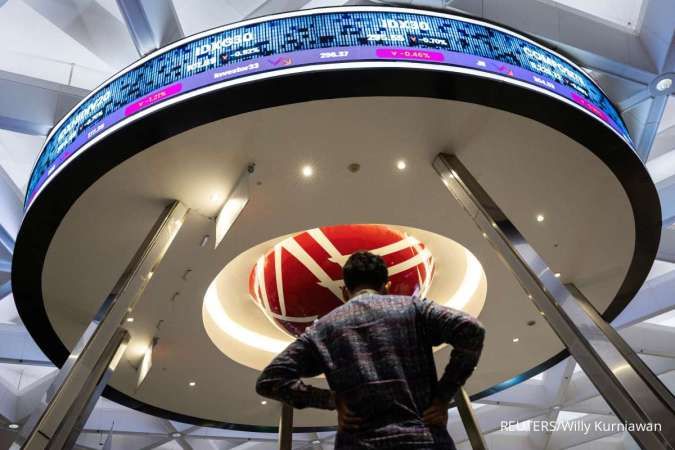
Restoring investor confidence is the main challenge facing Indonesia’s capital market as it seeks to revive initial public offering (IPO) activity.
The Indonesia Stock Exchange (IDX) is targeting 905 securities listings in 2027, up 13.1% from the revised target of 800 in its 2026 Work Plan and Budget. The 2027 target comprises 25 new share listings, 175 bond and sukuk issues, and 705 other securities, including structured warrants and collective investment products.
The IPO target for 2026 has meanwhile been revised down to 15 companies from 50, a reduction of about 70%. By the end of October 2026, only seven companies had listed on the IDX, leaving eight more needed to meet the revised target.
IDX President Director Jeffrey Hendrik said the exchange hoped capital-market conditions would improve, enabling it to meet its securities-listing target for 2027.
The IDX also sees an active role for the government in stimulating the economy, including through the development of industrial estates. The restructuring of state-owned enterprises (SOEs) under state investment agency BPI Danantara could also act as a catalyst for IPO activity next year.
Jeffrey did not specify how many state-owned companies might list through the initiative.
2027 IPO target seen as still lacking realism
Capital-market observer and Avere Investama director Teguh Hidayat said the IDX’s IPO targets would be difficult to achieve.
He said the 2026 target was unlikely to be met because little time remained before the end of the year. The 2027 target was also not entirely realistic given high market uncertainty, particularly over how Morgan Stanley Capital International (MSCI) classifies Indonesia’s market.
Uncertainty is expected to remain high through June in the first half of 2027, when MSCI is due to decide on Indonesia’s market classification.
“Whatever the decision, Indonesia’s stock market will only return to normal after June 2027. Only then can we reassess IPO targets,” he told Kontan on Thursday (29 October 2026.
Budi Frensidy, a capital-market observer at the University of Indonesia, said a recovery in IPO activity in 2027 remained possible, but would not happen immediately.
He said IPO prospects would depend heavily on economic stability, the direction of interest rates, foreign fund flows and investor confidence in Indonesia’s capital market.
Plans for Danantara-backed SOE IPOs could provide a positive catalyst. However, companies offered to the public would need sound fundamentals and governance, as well as reasonable valuations.
Capital-market analyst Alfred Nainggolan also saw scope for an improvement in IPO activity in 2027. He said the sharp correction in the Jakarta Composite Index (JCI) could create an opportunity for capital-market activity to grow again.
External risks nevertheless remain, particularly geopolitical conflicts that could affect investor sentiment.
“Geopolitical conflict remains a challenge. However, the market is beginning to show resilience, having become accustomed to escalations in the Middle East,” he told Kontan on Thursday (29 October 2026).
Investor confidence and issuer quality are key
Harry Su, managing director of PT Samuel Sekuritas Indonesia, said missing the IPO target could constrain the IDX’s revenue growth from new share listings and reduce the range of investment options available to investors. However, it would not automatically depress the JCI.
To help meet its IPO target, the IDX should make the listing process more predictable, provide stronger support to prospective issuers and enhance investor protection without compromising the quality of companies admitted to the exchange, Harry said.
Amid sluggish IPO activity, companies still have other funding options, including bank loans, bond issuance and bringing in strategic investors through private placements.
Alfred said the prospect of central-bank interest-rate rises towards the end of 2026 could make companies more cautious about choosing funding sources for expansion through 2027. They would need to reconsider the cost of financing through loans or debt securities.
“The government must also create a more conducive climate, because market confidence is important for boosting business expansion,” he said.
Teguh Hidayat expects backdoor listings to become more common while IPO activity remains limited. Under this route, a company can gain access to an exchange listing by acquiring or merging with a company that is already listed.
Confidence in the government is also becoming increasingly important, particularly amid initiatives undertaken by Danantara and its officials.
Teguh said retail investors had few options for changing market conditions in the short term. However, those with funds available to invest in shares could consider accumulating stocks in companies with sound fundamentals.
Budi Frensidy also expects companies to rely more on bank loans, bond issuance, retained earnings or strategic investors to finance expansion.
Debt financing has limits, however, as it can increase interest costs and companies’ financial risk.
This does not mean businesses must halt expansion. They should be more selective in choosing projects and consider postponing investments offering less attractive returns.
IDX urged to prioritise restoring market confidence
Budi said the priority for capital-market self-regulatory organisations (SROs) should now be restoring investor confidence. This could be achieved through greater transparency, stronger law enforcement and improvements in issuer quality.
In his view, the IDX should not focus excessively on the number of companies conducting IPOs. It would be better to have fewer IPOs involving companies with strong businesses and large market capitalisations than a greater number of listings that later become illiquid or perform poorly.
“The government also needs to maintain stable economic policies and provide certainty for businesses,” he said.
Alongside improvements by regulators and the government, retail investors should exercise greater care when assessing IPO opportunities. Not every IPO will generate quick returns.
Investors should examine a company’s valuation, profit outlook, cash flow, use of IPO proceeds, controlling shareholders’ track records and the quality of its underwriters.
“Especially for SOE IPOs, do not assume that government backing automatically guarantees an investment return,” he said.
Source: jawawa.id (https://jawawa.id/newsitem/idx-targets-25-company-ipos-in-2027-but-investor-confidence-remains-a-challenge-1793289074)
Originally published by investasi.kontan.co.id (https://investasi.kontan.co.id/news/target-ipo-bei-2027-sebanyak-25-perusahaan-kepercayaan-investor-masih-jadi-tantangan), translated from Indonesian