
IDX Plummets, Indonesia Stock Exchange Cites Pressure from Multiple Directions
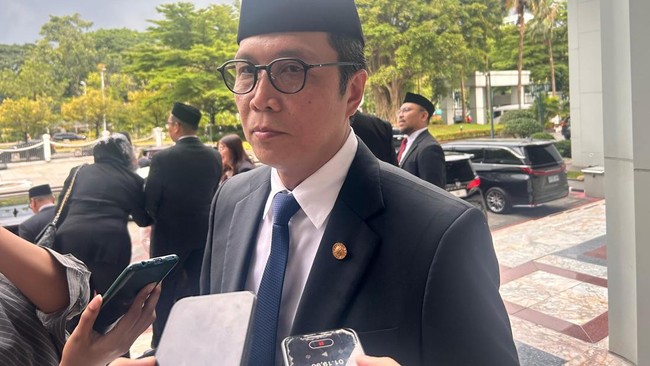
Jakarta, CNBC Indonesia — The Indonesia Stock Exchange (IDX) assesses that current global uncertainty is impacting the Indonesian stock market. The Indonesia Composite Index (IHSG) has been hit by various factors triggering sell-off actions by foreign investors. During this morning’s trading, the IHSG saw a decline of more than 4%.
Acting President Director of IDX, Jeffrey Hendrik, stated that this phenomenon in the stock market is drawing attention not only from market participants but also from the government. As a regulator, the IDX will continue to coordinate with the Financial Services Authority (OJK) regarding the continuous outflow of foreign funds from the domestic exchange.
“We are certainly coordinating with the OJK, and we are monitoring the activities of investors, particularly foreign investors,” he said when met at the IDX building in Jakarta on Monday (18/5/2026).
According to him, investor decisions, specifically these sell-off actions, are a natural response from market participants to investment activities. “With the rebalancing plans being undertaken by foreign investors, this is certainly a normal activity,” he added.
Jeffrey explained that the sources of uncertainty weighing on the stock market are diverse, ranging from fluctuations in oil commodities and exchange rate volatility in various countries to the geopolitical uncertainties regarding the Middle East and Russia.
“Therefore, all these uncertainties will certainly have some impact on our market movements,” he added.
On the other hand, domestic stock market pressure is also being influenced by policy adjustments from several rating agencies such as MSCI and FTSE. “We certainly cannot predict this downward trend. We continue to monitor the movements day by day,” he said.
Nevertheless, Jeffrey emphasised that the IDX will continue its efforts to improve the long-term investment climate in the capital market so that foreign investors can return to the Indonesian exchange as a preferred investment instrument.
“We will ensure that the trading infrastructure operates well, and that regulation and supervision are also functioning effectively,” he concluded.