
IDX Plummets: Conglomerate Stocks Crash, Who is Hit Hardest?
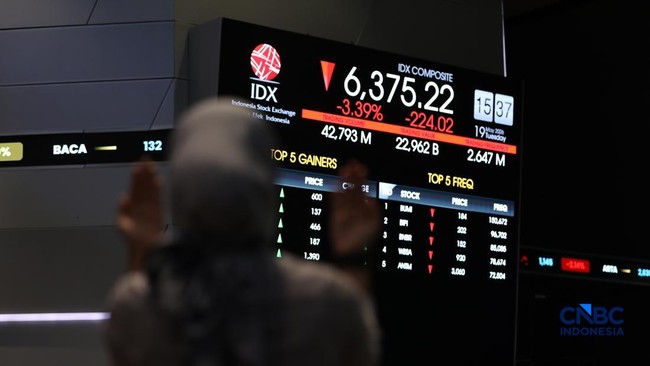
The movement of the domestic capital market during today’s trading, Wednesday (3/6/2026), was marked by significant selling pressure, particularly among stocks with large market capitalisations. By 15:36 WIB, the IHSG plummeted 4.2% to 5,934.56.
Several issuers recorded sharp price declines within a single trading day. This mass weakening of conglomerate group stocks aligns with the broader correction of the Indonesia Composite Index, resulting from portfolio rebalancing by market participants.
Three Main Sentiments Pressuring the Market
The sharp correction in these stocks was triggered by three negative macroeconomic and institutional sentiments. The first sentiment stems from circulating rumours regarding S&P Global Ratings reports, which are projected to be unfavourable for Indonesia’s economic stability this June. This issue has prompted investor caution regarding the retention of high-risk assets domestically.
The second sentiment is the impact of a release from rating agency Moody’s, which downgraded Danantara Investment Management to Baa2 with a negative outlook, thereby increasing uncertainty regarding long-term investment flows.
In addition to these two factors, the continuous depreciation of the Rupiah has become a heavy burden on corporate operations. In today’s trading, the Rupiah was observed weakening further to the level of Rp17,945/US$. This weakness risks increasing foreign exchange liabilities for companies, ultimately triggering sell-offs by both institutional and retail investors.
Details of Conglomerate Stock Performance
The impact of these negative sentiments is clearly visible in the daily performance of conglomerate group stocks. Based on today’s price movement data, the deepest decline was experienced by TPIA, which corrected by -15%.
Significant declines were also recorded by PTRO at -14.38%, followed by CDIA at -13.79%, and BUVA at -13.77%. Other stocks in the energy and infrastructure sectors, such as CUAN, DEWA, PGUN, and JARR, also recorded corrections of more than -11%.