
IDX Plummets, Analysts Attribute Decline Primarily to Domestic Factors
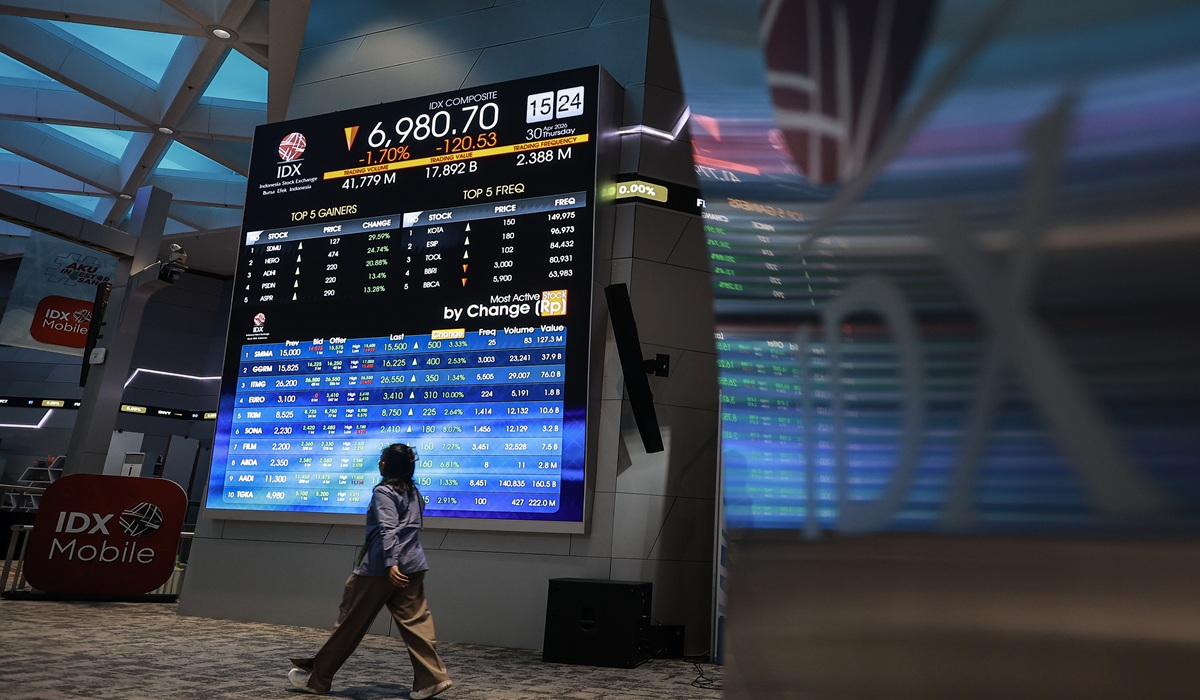
A sharp correction in the Indonesia Composite Index (IHSG) saw it breach the 6,000 psychological level, closing at 5,941 during trading on Wednesday, 3 June 2026. Capital market observer and Founder of Republik Investor, Hendra Wardana, suggests this condition signals a serious crisis of confidence in the market.
“Looking at the data, this decline is not solely triggered by external factors, such as the heating up of the US-Iran conflict driving global oil prices towards US$100 per barrel, but is also exacerbated by various domestic sentiments that have yet to find a resolution,” Hendra stated on Thursday (4/6).
He noted that the weakening of the Rupiah against the US Dollar, concerns regarding single-door export policies, and the ongoing outflow of foreign funds have led investors to reduce their exposure to risky assets in Indonesia. “While most Asian markets are actually strengthening, this condition shows that pressure on the domestic market stems more from internal factors than external ones,” he added.
Hendra warned that markets do not move based on optimistic speeches or statements alone, but rather on perceptions of risk and future prospects. “When the government conveys that economic fundamentals remain strong, yet at the same time the Rupiah continues to weaken, the IHSG becomes one of the worst-performing indices in the world this year, and foreign investors continue to sell, a gap emerges between the narrative and market reality,” he explained.
According to him, investor confidence is a highly valuable asset. When policy certainty diminishes and market participants struggle to project the future economic direction, investors tend to wait or move their funds to countries perceived as more stable. Foreign capital flow data reflects this; during Wednesday’s trading, foreign investors recorded a net sell of approximately Rp864 billion. Accumulatively since the start of the year, foreign outflows from the Indonesian stock market have reached around Rp67 trillion.
He noted that this figure is substantial and explains the continued selling pressure on large-cap stocks that typically support the index. “As long as foreign outflows continue and there is no positive catalyst to restore global investor confidence, market volatility is likely to remain high in the near future,” Hendra clarified.
However, Hendra noted that the current situation should not necessarily be met with panic. From a valuation perspective, many blue-chip stocks have undergone deep corrections, entering attractive areas for long-term investment. Nevertheless, he cautioned that investors must realise that a market experiencing a sentiment crisis often moves irrationally in the short term. “Therefore, the IHSG may still face further pressure, testing the next psychological areas around 5,800 to 6,000 before finally finding a new equilibrium and having the opportunity for a gradual recovery.”