
IDX Opens 1% Lower, Here Are the Causes
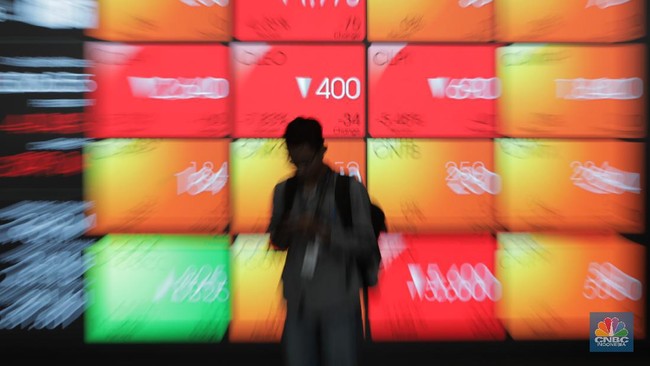
The Indonesia Composite Index (IHSG) showed no signs of recovery at the start of trading on Tuesday (29/09/2026). According to Stockbit data at approximately 09:04 WIB, the index stood at 6,086.35, down 61.51 points or 1.00% from the previous close of 6,147.86. This decline was deeper than the position recorded just minutes earlier, when the index was still holding above the 6,119 level.
The IHSG opened at 6,118.81 and briefly touched a high of 6,126.62 before dropping sharply in the opening minutes. After moving sideways around the 6,120 range, the index gradually slid further to reach a daily low of 6,086.14.
In terms of trading activity, transaction volume increased rapidly to 35.12 million lots, with a transaction value reaching Rp741.93 billion. This surge indicates increasing market activity as the session progressed, with most transactions occurring amidst downward pressure.
The cause of the IHSG’s weakness today stemmed from the technology sector, which fell by 0.17%, followed by the healthcare sector, which weakened by 0.12%, and the real estate sector, which dropped by 11%.
Stocks weighing down the IHSG this morning included PT GoTo Gojek Tokopedia Tbk (GOTO), PT Bank Central Asia Tbk (BBCA), PT Fortune Indonesia Tbk (FORU), PT Bumi Resources Minerals Tbk (BRMS), and PT Telkom Indonesia (Persero) Tbk (TLKM).
Meanwhile, stocks supporting the IHSG against the correction included PT Dian Swastatika Sentosa Tbk (DSSA), PT Bank Rakyat Indonesia (Persero) Tbk (BBRI), PT Olympus Strategic Indonesia, PT VKTR Teknologi Mobilitas Tbk (VKTR), and PT United Tractors Tbk (UNTR).
Pressure on the IHSG occurred alongside the commencement of a new Indonesia Stock Exchange (BEI) policy, which reduced the minimum share price from Rp50 to Rp1 per share in the regular and cash markets starting Monday (28/09/2026).
This change is accompanied by adjustments to auto-rejection limits. For shares priced between Rp1 and Rp10, the Upper Auto Rejection (ARA) and Lower Auto Rejection (ARB) limits are set at Rp1, while the 15% asymmetric ARB remains applicable for shares priced above Rp10 until the end of 2026.
The BEI stated that the change in minimum price is intended to expand the trading range of stocks, improve the quality of price discovery, boost liquidity, and provide greater flexibility for investors in managing their portfolios.
Simultaneously, external pressures continue to shadow the domestic market. Tighter global monetary policies, the strengthening of the US dollar, rising energy prices, and high global interest rates still have the potential to drive volatility in emerging market financial markets, including Indonesia.
In the currency market, the rupiah weakened again against the US dollar at the start of the week. According to Refinitiv data, the rupiah closed depreciated by 0.53% to the position of Rp17,965/US, just35pointsawayfromthepsychologicallevelofRp18, 000/US.